
It is apt that one of the deadliest computer viruses was named after the Trojan Horse. The original Trojan Horse, made of wood, was a giant automaton-like statue that, in Greek myth, provided the only way for the Greeks to finally defeat the Trojans after a ten-year stalemate of a brutal war. The Horse was a trick—its wooden body hollow by design, so warriors filled it to the brim. When the Trojans brought the statue into their city, choosing to believe it was a sacred gift to the gods, the warriors poured out at night, taking over the city unawares.
Then the slaughter began in earnest. None of the men survived. Women and children who survived were captured, brutalized in the most horrific ways imaginable—and some that we thankfully cannot even fully imagine—then sold into slavery. In other words, the simple technological advancement that the Trojan Horse represents made possible the destruction of an entire civilization overnight.
The presumed sacred nature of the Horse is apt as well—as is its deceitful presentation as a gift. So often do we coo now over technological innovations as gifts sent to liberate us from the drudgery of work and everyday life—the sort of laborious existence that takes getting up in the morning, and pursuing day in and day out the same mundane tasks that have been part and parcel of human existence ever since, perhaps, Eden itself. The work that we do, especially in taking care of each other, is exhausting. Creative work is challenging too for many, who understandably grow eager to outsource it now. But could such simple daily acts be good for us—an integral part of what makes us human and also what affirms daily the Imago Dei within each of us?
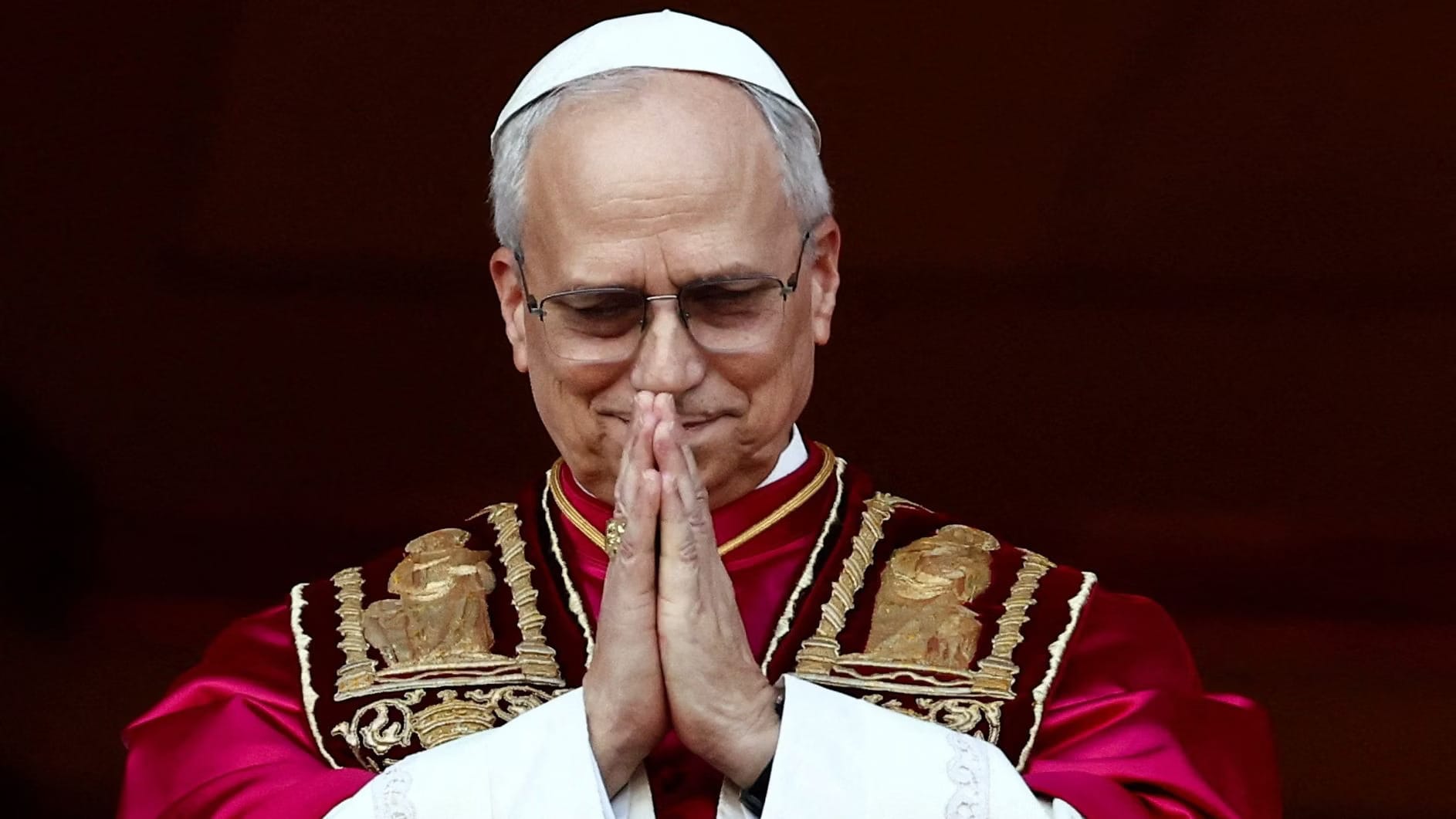
The importance of the affirmative answer to this question undergirds Pope Leo XIV’s first encyclical, issued on May 25th, and titled Magnifica Humanitas—the sort of Latin that probably requires no translation to understand even for those who have never set foot in Latin class (although it’s not too late even for you, by the way, but I digress). The wording in the document’s title is highly significant for reasons to which Leo returns in concluding it. But at its core, this encyclical is a response to AI. At the same time, it is also a powerful theological manifesto on the value of human work, human thought, human creativity, and (most important of all) human worship of God. Leo opens the document as follows:
“Humanity, created by God in all its grandeur, is today facing a pivotal choice: either to construct a new Tower of Babel or to build the city in which God and humanity dwell together. Each generation inherits the task of shaping its own era, of guiding history to become a place where the dignity of every person is safeguarded, justice is promoted and fraternity is made possible. Yet every era also runs the risk of creating an inhumane and more unjust world.”
So how should the Church respond to this challenge? It is important to note that while Leo’s concern is specifically with the Catholic Church’s response—thence his decision to begin with an overview of Catholic social teachings—ultimately, his recommendations are simply good theology that, for the most part, any conservative evangelical should be able to affirm as well. Consider, for instance, this powerful reminder of the importance of the Imago Dei for any conversations about humanity, including the acknowledgement of the value of motherhood:
At the heart of the Christian understanding of the human person lies the great biblical affirmation that men and women are created in the image and likeness (cf. Gen 1:26-27) of the Triune God. Created for relationship, every human person is planned and willed by God to enter into communion with him, with others and with creation. Human dignity does not depend on a person’s abilities, wealth or position in life, nor on the right or wrong choices made; instead, it is a gift that precedes and transcends each person, endowed by God as an expression of his unfailing love.
So what does AI have to do with this? Leo explains: “The use of AI is never a purely technical matter: when it enters processes that affect people’s lives, it touches on rights, opportunities, status and freedom.” And one implication of this is: “we cannot consider AI to be morally neutral.” Leo is concerned over the abuses of power that those wielding technological tools can now exercise to disrespect the humanity of others, not to mention their own. In his discussion of transhumanism and posthumanism he shows awareness of such debates as those over the optimization of human embryos in IVF and the artificial enhancements that could optimize human bodies to become the stuff of Sci-fi novels—not fully human anymore, but possibly part machine.
As Christians, we proclaim the Resurrection of the body, because Christ rose again. Because of this conviction that Christ died for all of us that we may rise again, we also affirm a commitment to the preciousness of every human life in God’s eyes. But to those who do not believe, the technology exists now to make themselves into their own gods. Why is this a problem? Because it ultimately threatens the weak and the vulnerable—especially those at the extremes of life (the very young and the very old), but also those who are sick. Leo’s concern is clear:
Our relationship with life seems to be in crisis today. Everything that appears as a “limit” — incapacity, illness, old age, suffering, vulnerability — tends to be seen primarily as a defect to be corrected, rather than as a reality through which our humanity matures and opens itself to relationship. And yet we must remember that humanity flourishes not despite limitations, but often through them.
The section of the encyclical on the significance of embracing our limitations is, in my view, the most beautiful in the entire encyclical, combining theological, historical, and practical insights. Yes, we are all morally flawed beings—sinful and fallen. And yes, suffering is the lot of each and every human life. But God loves us in our flawed state, and God is working even these things for our good and for His glory. Such are the reminders we get from the study of history—yes, there have been many wars and abuses and violations of human dignity. And at the same time, history records many beautiful stories of goodness and mercy, some of them arising in response to the most horrific of abuses.
In his conclusion, Leo connects the title he selected for this encyclical, Magnifica Humanitas, to another document—Mary’s Magnificat, the song of praise to God that she sings early in her pregnancy with Jesus. The first name of the song in Jerome’s Vulgate translation is “Magnificat,” and it has become its title. “My soul magnifies the Lord,” the English translation holds, but the verb comes first in Latin—“magnifies,” the action each of our souls should be doing up front, no matter our task at hand.
As I finish typing this essay, my daughter is seated in the middle of the living floor nearby, drawing flowers in vibrant colors, her concentration uninterrupted by my typing or her brother’s traipsing around and at one point even stepping deliberately over her in an impressively large stride. Such is the nature of human lives lived together in ordinary wonder and gratitude. Not all technology is evil, as Leo notes and as many of us would agree. Some outsourcing of work to machines may enhance our human dignity rather than eroding it. I am grateful, for instance, that the dishwasher could clean the dishes after lunch, so I could sit down and read this encyclical and write about it. And I am grateful that a tiny robot lawnmower can cut my in-laws yard in Maine, now that they are no longer up to this task themselves.
It is human community illumined by the gospel that we are after, the encyclical concludes—and community is a distinctly human delight. As beings who are bodies as well as souls, we rejoice in our families, churches, friendships, and neighborhoods—whereas no robot could feel delight or joy over the fellowship of fellow robots. Leo is right. Our humanity is indeed magnificent—but only because God who created us in His image deserves all the glory.
The Weekly Digest
Premier Thought Every Thursday.
All of our recent essays and podcasts, delivered to you. Free.
Free. Delivered Thursday mornings.