
In late June, Donald Trump's Religious Liberty Commission released a 224-page report on the state of religious freedom in America. Ironically, this document, which is supposed to defend religious freedom for all Americans, is exclusive. It also misconstrues the Founders. It reads more like a defense of a religious establishment than an endorsement of liberty. Still, the report is worth taking seriously because it reflects how some American evangelicals now understand the relationship between church and state.
To begin with, the commission that produced the report does not reflect the religious pluralism it claims to defend. Eight of the commissioners are evangelical Protestants aligned with the MAGA movement, including Paula White-Cain, Dr. Phil McGraw, Eric Metaxas, and Franklin Graham. Three are Catholic. One, Rabbi Meir Soloveichik, is Jewish. The commission includes no Muslim, no atheist, no Mormon, no Hindu, no Buddhist, no Sikh, and no representative of the historically Black Protestant tradition.
Yet the Commission insists that it exists "for everyone — to ensure that all Americans of all faiths, from Christians to Jews to Muslims to Sikhs to Hindus can approach God freely to worship him fully and to express their faith without government interference." When commissioner Ryan Anderson, the Catholic president of the Ethics and Public Policy Center, writes that "Jewish students should be authentically Jewish, Muslim students could be authentically Muslim," the irony is that no Muslim voice was in the room to say so for themselves. A report that claims to speak for American religious pluralism while mostly excluding non-Christians from the drafting process should raise red flags before a single policy proposal is articulated.
The report calls for repealing the Johnson Amendment, the tax-code provision that bars clergy from endorsing candidates while speaking in their official capacity. Whatever one thinks of its constitutionality, repealing the Johnson Amendment would be bad for the church. Evangelical pastors who chafe against the amendment seem to value free speech over their gospel witness. Many conservative evangelical activists urge Christians to get engaged in political life without acknowledging that partisan politics and the advancement of the Gospel do not mix cleanly.
American evangelicals should thank God that we live in a nation that celebrates religious freedom. The United States is built upon the idea that all citizens have human dignity to practice their faith and to pursue truth without government interference. The idea that humans possess such rights comes, of course, from the great thinkers of the seventeenth- and eighteenth-century Enlightenment, but these ideas are also rooted in the Christian tradition. (And according to many scholars, including Tom Holland and Nicholas Wolterstorff, the Christian tradition informed the development of these ideas to begin with.) Human dignity, not particular Christian doctrines or beliefs, must order a free and diverse society.
America’s Founding Fathers understood this, but I am not sure that the members of Trump’s commission do. So it may help to briefly review the history of religious freedom in America. In the founding era, three competing visions of church and state emerged.
In Massachusetts, John Adams and the other framers of the 1780 state constitution gave the government the power to tax residents to support the “institution of the public worship of God, and for the support and maintenance of public Protestant teachers of piety, religion, and morality, in all cases where such provision shall not be made voluntarily.” Such a tax was necessary because, as Article 3 of the Constitution states, “the happiness of a people, and the good order and preservation of civil government, essentially depend upon piety, religion and morality….” The Congregational Church remained Massachusetts’s established church until 1833.
Massachusetts also required a religious-test oath for officeholding. Candidates for election to the state legislature needed to be “Protestant.” When Benjamin Franklin heard about this stipulation, he wrote his friend, the Unitarian moral philosopher Richard Price: “I am fully aware of your Opinion respecting Religious Tests; but tho’ the People of Massachusetts have not in their new Constitution kept quite clear of them.”
Franklin opposed religious tests, but, as he understood it, the place of his birth and the colony established by 17th-century Puritans was at least moving in the right direction: “...if we consider what that People were 100 years ago, we must allow they have gone to great Lengths in Liberality of Sentiment on religious subjects; and we may hope for a greater Degrees of Perfection, when, their Constitution, some years hence, shall be revised.” Franklin would give Massachusetts a pass, at least for now. “When a Religion is good,” he told Price, “I conceive that it will support itself; and when it cannot support itself, and God does not take care to support it, so that its Professors are oblig’d to call for the help of the Civil Power, ‘tis a Sign, I apprehend, of its being a bad one.”
Patrick Henry, the two-time governor of Virginia, proposed another model of church-state relations. In “A Bill Establishing a Provision for Teachers of the Christian Religion (1784), he called for a general religious tax in Virginia to fund religious teachers who would offer “the general diffusion of Christian knowledge…to correct the morals of men, restrain their vices, and preserve the peace of society.” Henry suggested that county sheriffs would collect religious taxes in their communities and keep a list of the religious society to which the taxpayer wanted their money distributed.
But for fellow Virginians Thomas Jefferson and James Madison, Henry’s “General Assessment” (as it was called) was still a religious tax. Madison challenged it in his 1785 petition, Memorial and Remonstrance Against Religious Assessments, which most of the state’s Baptists, Methodists, and Presbyterians supported. These evangelicals suffered religious persecution for decades under the colonial Anglican establishment in Virginia and thus welcomed a complete separation of church and state. For them, religious freedom was not about building a Christian or moral nation; it was, more importantly, about freeing up the opportunity to build the Kingdom of God.
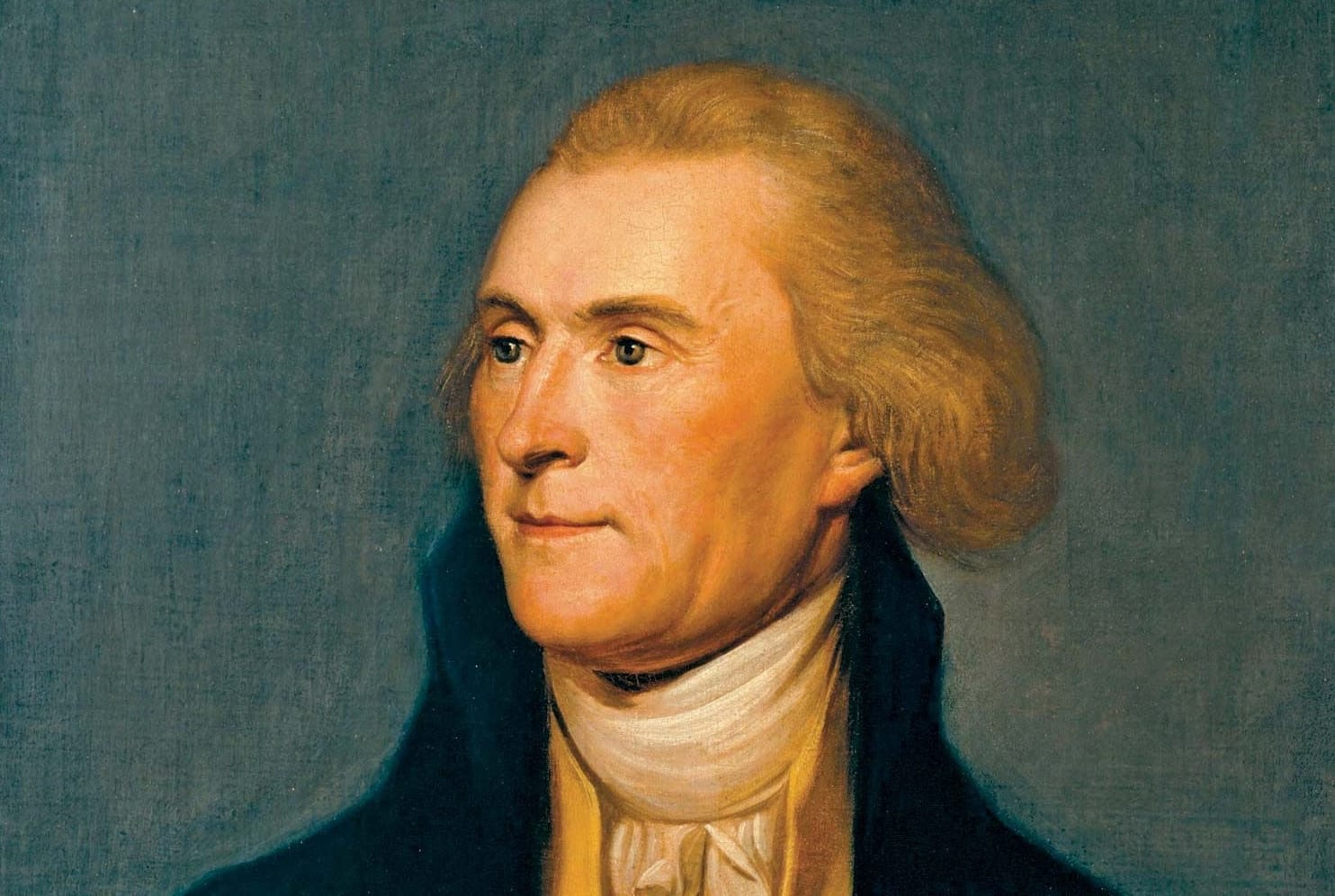
Madison’s Remonstrance did not pass in the Virginia Assembly. Still, it certainly paved the way for Jefferson’s Virginia Statute for Religious Freedom in 1786, considered by many to be the greatest statement of religious freedom ever written. The future president of the United States argued that the government should not be in the business of promoting religion through taxpayer money and wrote that compelling anyone to fund a religion he does not believe in is "sinful and tyrannical." Because of this statute, Jefferson, a man who did not believe in the resurrection of Jesus Christ and removed all references to the supernatural in his edited version of the Gospels, became an evangelical hero. In many parts of the United States, he rode evangelical support to two presidential terms.
Of the three major models on the relationship between church and state available to Americans in the early republic–Adams, Henry, and Jefferson/Madison–the Virginia Statute for Religious Freedom most directly informed the First Amendment to the United States Constitution.
The Trump Commission's report does not cite Jefferson’s statute. Its recommendations point the other way, toward direct funding of faith-based institutions and toward public endorsement of religious practice in schools. The report quotes Trump: "We're bringing back religion in our country... because for America to be a great nation, we must always be one nation under God." That is not a defense of religious liberty, but an endorsement of religion by the state.
The same tension appears in the report's call to place the Ten Commandments in public school classrooms. A sacred text that opens with "I am the Lord thy God. Thou shalt not have strange gods before Me" is not a neutral document; it is a claim about which god a schoolchild should worship—endorsing it as classroom decor is a form of religious establishment.
A common critique of what I just wrote in the preceding paragraph goes something like this: American law is built on the 10 Commandments, and we should thus display them in public school classrooms for historical, not religious reasons. This argument is correct in its claim that “Judeo-Christian” ideas informed the U.S. legal system. But the 10 Commandments are also (and primarily) part of sacred scripture for two major world religions: Christianity and Judaism. This makes their placement in school classrooms a First Amendment violation. The effort to post them is more about culture war politics than an honest interpretation of the Bill of Rights.
Much of the report's historical argument rests not on published scholarship but on the testimony of commissioners like culture warrior Eric Metaxas and television pop psychologist Dr. Phil McGraw. For example, the report calls for restoring service members discharged over their religious objections to the COVID-19 vaccine. Still, for all its appeals to American history, the report ignores the fact that George Washington himself mandated smallpox inoculation for the Continental Army in 1777.
Elsewhere, the report attributes Virginia's 1776 constitutional definition of religion to James Madison, but George Mason actually wrote that document. Madison's actual views on religion's relationship to government—he opposed military chaplains and later in his life rejected days of fasting and prayer—run counter to the report's broader argument.
A separate claim, sourced to Dr. Phil, asserts that "In God We Trust" dates to the nation's founding. The phrase did not appear on currency until 1864, and not on paper money until 1957. These kinds of sloppy historical errors further undermine the report's credibility.
The report also invokes religion's "prophetic" role in American life. Like the 17th-century Puritan clergy who called the Massachusetts Bay Colony back to its spiritual founding, Trump’s commission calls the United States back to its stated ideals. This is the best argument in the document, and I largely agree: a healthy society needs spiritual voices willing to criticize it, not simply bless it. But I am not entirely sure that the Founders shared such a prophetic view of religion. Washington and his contemporaries valued religion chiefly as a support for civic order — a "pillar," in Washington's own words from his Farewell Address (1796), not an independent moral authority that might one day call out the American republic for its sins. Genuine faith, of the kind that produced abolitionists and civil rights activists, is not submissive. This is why the commission report's own celebration of religion's humanitarian record sits so awkwardly beside the administration's cuts to USAID and PEPFAR. As Mr. and Mrs. Beaver reminded Lucy in C.S. Lewis’s The Lion, Witch, and the Wardrobe, Aslan is not a tame lion. True religion never serves the state, despite what some of the founders may have believed.
Much of the report's factual foundation comes from testimony gathered from 100 self-selected witnesses who testified before the committee over 10 months. These accounts likely contain real experiences of genuine mistreatment. Still, a self-selected sample skewed toward people already engaged in high-profile disputes is not a representative picture of how religious liberty functions for most Americans day to day. It is also worth noting that almost all these witnesses describe being persecuted for Christianity rather than other religious faiths.
None of this means the document is without merit. Its section on healthcare conscience protections — shielding medical professionals from being compelled to participate in procedures that violate their beliefs — is reasonable in principle, even if its actual application will call for careful, case-by-case judgment. Its defense of faith-based colleges competing for public funding on an equal footing with secular institutions, rather than as a special exemption, is fair. And the report’s condemnation of attacks on churches and disruptions of worship should be obvious to all readers, regardless of political conviction.
The report references Aleksandr Solzhenitsyn, urging Americans to refuse to participate in lies as the surest defense of a free society. Coming from a commission built on a skewed committee, thin history, and selectively gathered testimony, and serving a presidential administration not known for its truthfulness, the citation reads more as irony than moral exhortation.
The deeper question this report raises is not whether religious Americans deserve protection — they do and always have under the First Amendment. It is whether "religious liberty," in this administration's hands, means freedom for all faiths to practice without government interference, or freedom for one faith tradition to receive government favor. A genuine defense of religious liberty would welcome faith into public life on equal terms for everyone without asking the state to put its thumb on the scale for any of them. This report never quite gets there.
The Weekly Digest
Premier Thought Every Thursday.
All of our recent essays and podcasts, delivered to you. Free.
Free. Delivered Thursday mornings.