
What gives life meaning in a post-religious age? Philosopher, biographer and ascendent public intellectual Clare Carlisle suggests in her Gifford lectures—published as Transcendence for Beginners—that Spinozian panentheism and eastern spirituality hold the answer. The Giffords are an endowed series of lectures dedicated to promoting ‘natural theology.’ Past lecturers include a roster of luminaries including William James, Reinhold Niebuhr, Charles Taylor, and Jean-Luc Marion. Carlisle situates herself not only within but also against this tradition. Natural theology, she gripes, is often ‘annoying.’ Many of its prominent practitioners are not so much incorrect as ‘uninspiring.’ She proceeds on a self-consciously unconventional tack, uniquely attentive to personal biography.
She narrates the story of Vedanta sage Ramana Maharshi who, from the summit of sacred mount Arunachala, drew generations of disenchanted westerners seeking enlightenment. Yet the ‘transcendence’ on offer was of a decidedly immanent variety. Carlisle links this eastern spirituality with Spinoza, whose famous dictum, Deus sive natura (God or nature), implies that all lives have meaning because ‘without dualism, without separation…we are all already in God.’ Each of us is an incarnation. This non-dualist panentheism promises transcendence to a world weary with ‘doctrinal orthodoxy’ and institutional religion. She identifies both her lycra clad, Mancunian yoga instructor and Princess Diana as post-religious, moral exemplars directing us to this quotidian form of transcendence.
For Carlisle, Middlemarch’s concluding lines serve as a fitting manifesto for post-religious and post-secular life:
The effect of her being on those around her was incalculably diffusive: for the growing good of the world is partly dependent on unhistoric acts…[on] the number who lived faithfully a hidden life, and rest in unvisited tombs.
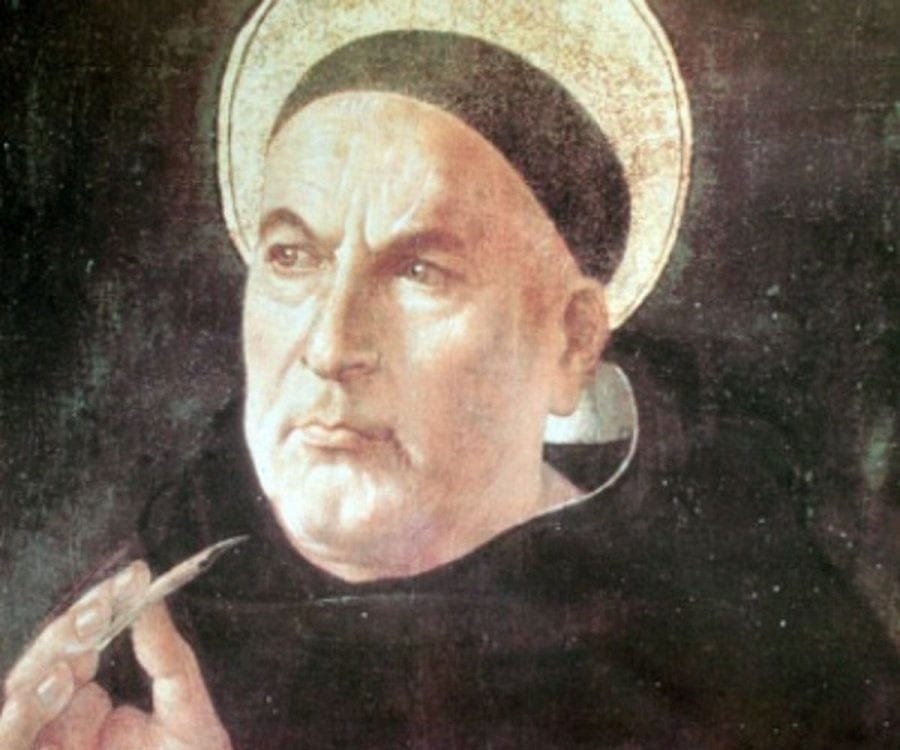
Yet can panentheism secure George Eliot’s vision of a meaningful life? Does it guarantee that individuals count even if their worldly impact is inconspicuous? Carlisle’s lectures build upon her earlier book Spinoza’s Religion, which sought to narrow the gap between Spinoza and paragons of classical theism like Thomas Aquinas. While Spinoza ‘identifies nature with God,’ God is nonetheless nature’s ‘ground’ or source. This, Carlisle thinks, retains a (narrow) space for divine transcendence. It is indeed true that for Thomas, creatures are not ‘outside’ God in a crude spatial sense. Both Spinoza and Aquinas agree with Marilynne Robinson that insofar as all things participate in God, ‘Wherever you turn your eyes the world can shine like transfiguration.’
However, despite this shared rejection of a self-sufficient world existing ‘apart’ from God, at a key moment in his Ethics, Spinoza says ‘all the philosophers’ admit God’s being and will are wholly actual. This entails, he suggests, that every existent proceeds with absolute necessity from the divine nature and is a mode of the divine substance. Each thing is necessary for Spinoza, because producing it in some small way ‘actualises,’ perfects, or completes God.
In sharp counterpoint, Thomas says that while God in Himself is wholly actual, ‘in respect of creatures we can call certain things potential…with regard to an active power which is not limited to one effect.’ He goes on to explain that God is not ‘actualised,’ perfected or completed by creating because God already contains within himself all possible perfections God might create. In contrast to Spinoza, for Thomas, God is indifferently free with respect to creation, not because God haphazardly selects between various possible worlds, but because God is perfected and ‘actualised’ just by being God not because of what God creates. This, for Thomas, is inseparably related to the doctrine of the trinity. The trinity is ‘necessary for the right idea of creation.’ God is ‘already’ perfectly communicative and wholly actualised by virtue of the Father’s begetting of the Son and spiration of the Spirit. Creation is free not because is it is arbitrary but because it is gratuitous. It does not contribute to God’s being but is a free overflow of God’s perfect triune love.
Therefore, while Spinoza and Thomas agree creatures are not ‘separate’ from God, for Thomas, creatures are not modes of God and are other than God in a way they could never be on Spinoza’s and Carlisle’s panentheism. Spinoza goes so far as to say ‘there cannot be in [God] any real love toward something else, since everything consists in one unique thing which is God himself.’
What does this have to do with George Eliot’s vision of a meaningful life? Carlisle says hidden lives have meaning because they contribute to and express the divine substance ‘just as each wave expresses the nature and power of the sea.’ Yet how much does an individual life contribute to the immeasurable sea of God/Nature? For Spinoza, each life is akin to a drop, drowned in the Pacific’s placid immensity. Were any H20 molecule, any single life to blink out of existence, the difference is less than negligible. Individual lives, even if modes of God, remain hidden and largely forgotten. It is not clear Carlisle’s brew of non-dualist panentheism with a dash of eastern spirituality offers a durable solution to modernity’s ‘meaning-crisis.’
Yet what if not nature, but something else is the measureless sea? What if the immanent trinity, as John Webster says, is a way ‘of articulating the infinite depth within the being of God, that ocean whose tide is the mission of the Son and Spirit by which lost creatures are redeemed and perfected?’ The glory of a human life is that while we do not contribute in some quantitative manner to God’s being, it is that limitless triune perfection which brought us into existence out of gratuitous love. God, in all His immensity, knows and intends us as an other, numbering the hairs on our head (Matthew 10:30). In that case, far from being swamped in nature’s immensity, no tomb is unvisited. No life, no matter how seemingly marginal, is forgotten. What gives our lives value is not what God stands to gain from us—He gains nothing, properly speaking, from the universe’s entire expanse—but God’s love for us. Far from the merely instrumental value of contributing in some infinitesimally miniscule way to nature’s greater whole, the Thomist Jacques Maritain marvels that: ‘The good of grace of one person is worth more than the good of the whole universe of nature.’
Carlisle is right, a meaningful life requires transcendence, but so long as we yearn for true transcendence, trinitarian ‘doctrine’ still has something to offer a post-religious age.
The Weekly Digest
Premier Thought Every Thursday.
All of our recent essays and podcasts, delivered to you. Free.
Free. Delivered Thursday mornings.

