Who Is Rich and Who Is Poor?

January 23rd, 2026 | 9 min read

By Eric McLaughlin

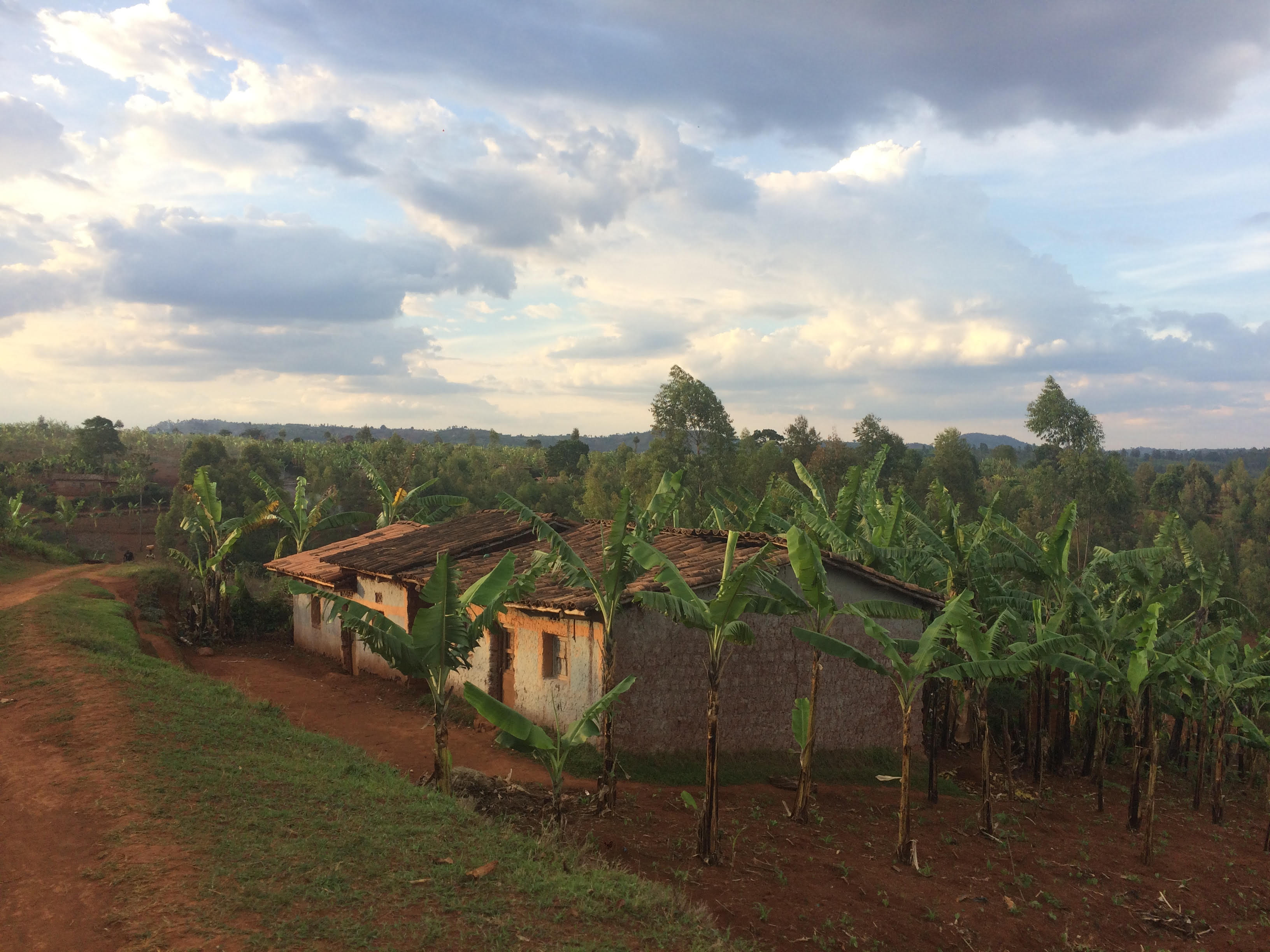
Sixteen years ago, my wife and I winnowed all our earthly possessions to eight suitcases, turned down a pair of six-figure incomes, and became missionary physicians in rural Africa. In doing so, I thought I was choosing a life of modest poverty. Instead, I discovered I was an amazingly rich tycoon.

Prior to arriving in Burundi in 2013, my understanding of poverty had come from growing up in the US. “Poor” was when we didn’t have the money to pay for something essential—like the month’s rent or an unexpected major vehicle repair—or when we couldn’t go somewhere for vacation. We understood in theory that we weren’t poor like some people in the world, but we certainly weren’t rich. Being rich meant having more than us.

This understanding of poverty and wealth was upended for me in a small brick-walled room in rural Burundi. During a morning chapel service for the hospital where I work, a Burundian pastor shared Jesus’ words that it is easier for a camel to go through the eye of a needle than for a rich man to enter the kingdom of heaven. I was just starting to learn some of the local Kirundi language and caught the next phrase: Twese, turi abatunzi. All of us, we are rich people.

Who was in the room besides me? Nurses, nursing aides, and cleaners, whose individual monthly salaries were perhaps 150 USD at most. In deeming them wealthy, the pastor wasn’t talking about spiritual riches—he meant it in a very material sense. Everyone in the room had a steady salary and some had advanced training, making them comparatively richer than many people in their home villages. Therefore, what Jesus said about the camel and the eye of the needle applied to them too.

In determining who is rich and who is poor, we subconsciously compare ourselves to those above and below us. We do this whether we are in an American suburb or in a rustic hospital room in East Africa. There is always someone richer and always someone poorer than us. This relative understanding of wealth and poverty can make Scripture’s teaching on the subject confusing. Who then is rich and who is poor—and how do Christ’s commands to generosity apply to each of us?

***

To answer these questions, we must first properly understand our own affluence. It doesn’t need to be a subjective matter. In 2024, the World Bank reported that 44 percent of the people in the world live on $6.85 or less per day, about $200 a month. If that is your income, then almost half of the global population is poorer than you. UNICEF reports that 60 percent of people globally don’t have a toilet at home that can safely manage human waste. If you own any kind of car (or could if you wanted to), you’re richer than nine-tenths of the world.

Dollar Street fleshes this out with profiles of families living on the global wealth median. One family of three in Kenya lives in a one-bedroom house with electricity and an outdoor water tap. Another family in India rents a one-bedroom house with indoor plumbing, a motorcycle, and a two-burner cookstove. These families are richer than half the world.

In comparison, the US Census Bureau reported in 2023 that only 10 percent of US households earned less than $1,581 per month. That means that for those of us Christians living in the US, we are far richer than most of the world and most of our brothers and sisters in Christ globally.

Admittedly, living considerably below the median in a rich country like the US can be legitimately difficult and frightening, even if you are well above the global median. The suffering involved in that doesn’t need to be denied. But at the same time, when we forget or refuse to reckon with our comparative wealth, our acts of generosity as Christians can either shrivel up or become too narrow.

***

Additionally, when we don’t recognize our affluence, we ignore (on a practical level) that wealth comes with inherent spiritual dangers. We glimpse such perils in Deuteronomy 8, when the Israelites are warned that multiplied riches could lead to forgetting God (vv. 10–14), and also in Proverbs, where we see the temptation to trust in riches (11:28). Even the celebrated wealth of Solomon ends up feeling like a cautionary tale, as the increasing splendor of his kingdom is accompanied by idolatry and harsh treatment of his subjects (1 Kings 11:5; 12:4).

The most direct statements about the spiritual dangers of wealth come from Jesus, like the camel and needle image shared by my Burundian pastor. Jesus says you cannot serve both God and wealth (Mark 6:24). He tells of the rich man in Luke 16, who had already received his comforts in his earthly life. In a parable, Jesus says the thorns that choke the word of God are the worries of the world and the deceitfulness of wealth (Matt. 13:22).

And wealth is indeed deceitful. We find ways to reason our way out of obedience. When we read passages like Mark 10, where Jesus tells the rich young man to go and sell everything he has, we question whether this command is for all of us. Because there are obviously other people among Jesus’ followers who retain their property, we quickly reassure ourselves of our right to keep pursuing comfort. We check out before truly hearing Jesus’ ending words: “How hard it is for the rich to enter the kingdom of God!” (v. 23).

“It is at least as difficult for affluent Christians to surmount the spiritual challenges of our affluence as it is for our poverty-stricken brothers and sisters in the rest of the world to survive their poverty,” wrote author Jonathan Bonk. Like the expert in the law who asked “Who is my neighbor?” so he could know whom he wasn’t obligated to love, we tend to filter the Bible’s words about poverty and riches to make sure that the responsibilities of the rich belong to someone else. There is always someone richer in the world, we say—and at the same time, we don’t hear how the Bible’s words to the rich could be directed at ourselves.

Over a century ago, G. K. Chesterton said that despite our efforts to look for the largest possible needle and the smallest possible camel, we can’t avoid reckoning with Jesus’ words. This reckoning is not easy. As Jesus reminds us in the same passage, it is only possible through God’s grace.

***

Living as an African missionary doctor instead of a doctor practicing in America, I may be less materially wealthy than I was before, but it doesn’t feel like it. I have a car and a refrigerator, and I put away money for retirement. My family has insurance that gives us access to American health care when we need it. We go on vacation sometimes. Even with all this, we have enough to give away too. I’m so rich. Realizing this was a shock, but it was ultimately also a gift.

Perhaps you are called, like the rich young ruler, to give all that you have to the poor. But if not, then the way forward is to recognize your wealth (in either a global or a relative sense) and to realize that what the Bible says about riches and rich people applies to you.

A few individuals in the Bible show us how a wealthy person is to live in this world before God and fellow human beings, which Bonk calls “the righteous rich.” Job responded consistently to the needs of the poor around him (Job 31:16–28). Nehemiah convinced his fellow noblemen to stop participating in a financial system that burdened those who were poorer in the community (Neh. 5:1–12). And Boaz makes room for the disenfranchised to safely glean in his fields (Ruth 2).

It may have been figures like these that Paul had in mind when he wrote to Timothy, “Command those who are rich in this present world not to be arrogant nor to put their hope in wealth, which is so uncertain, but to put their hope in God. . . . Command them to do good, to be rich in good deeds, and to be generous and willing to share” (1 Tim. 6:17–18). Why? Because “in this way, they will lay up treasure for themselves as a firm foundation for the coming age, so that they may take hold of the life that is truly life” (v. 19).

Like Job, Nehemiah, Boaz, and the wealthy in Paul’s time, I find myself in the company of the rich. I have mercifully learned that my provision and my security come from my Creator, and what he has given me is mine in order to love him and others. I am far from doing this well, but understanding that I am rich has made me more truthful and more generous—more truthful because I own that what the Bible says about riches applies to me, and more generous for the same reason.

It is not easier, though. On a typical day, I may be walking hurriedly to the hospital and get stopped by an old man asking for money for bus fare. He wants to go see his sick son, and no one else will help him. Two hours later in the clinic, as I type a note on my laptop, a student may tell me that my patient didn’t have five dollars for her essential medications. At the end of clinic hours, my nurse may turn to ask me for a loan to build his house, since bank loans have so much interest.

***

These are my local opportunities for generosity. But there are other questions for us too: Understanding our wealth on a global scale, how do we understand Paul’s command to do good “especially to those who belong to the family of believers” (Gal. 6:10) when millions of our brothers and sisters in Christ are among the poorest of this world? How do we choose which of the many overwhelming needs to give to?

The presence of tension and uncertainty in our day-to-day decisions about how we use our wealth does not mean that we are doing something wrong. We need to continue wrestling with difficult questions despite feeling uncomfortable, because tensions, when lived creatively, can lead us from fear to abundant life. In fact, my wife and I have concluded that the absence of tension would be the surest sign of having left the will of our Savior.

The command to generosity is universally applicable to all believers, no matter where we fall on the social ladder, but how we obey this command will look differently for each of us. For example, a friend of mine wanted to embrace generosity, but felt panicked by the sheer number of organizations she could support in the name of following Christ. So she decided to look to her church and see what causes, missionaries, and institutions she could commit to alongside her local congregation.

Indian Christians in the impoverished Mizoram region set aside a handful of grains each meal for Jesus, their unseen guest. The resulting accumulation from a million Christians was sold at a discount to the poor, and the proceeds funded the work of the church.

In my own setting, a typical rural Burundian family is among the poorest in the world, many earning only $27 a month. But I have seen my Burundian brothers and sisters give generously even when mired in considerable financial needs themselves.

This past week, a group of local construction workers who make less than $2 a day were figuring out how to pay the surgical fees for a young man they met in their work at the hospital. They don’t think of themselves as rich but rather as “richer than this guy,” and so they are assuming the responsibility of the rich in this moment. The same workers will later bring their request for a salary increase to my teammate, who will need to remember that he is not a poor missionary but rather a very rich man, also called to be generous.

However we live it, each of us is called to a life of costly giving. But we are not alone in this. Our Father opens our eyes to see our own wealth which gives us ears to hear the call to generosity. Heeding that call then reminds us that security and provision are truly found in our Lord. And having given what is costly, we find that it was the Holy Spirit who empowered us all along. We find our lives in Christ (Matt. 10:39). And we realize that these are the greater blessings that come in the wake of self-giving.

Eric McLaughlin

Eric McLaughlin is a family medicine missionary physician with Serge and a medical school professor for Hope Africa University in Burundi. Along with his physician wife Rachel, he has lived in East Africa for over ten years. He is the author of Promises in the Dark: Walking with Those in Need Without Losing Heart, which explores the myriad ways that his heart has been challenged to persevere in the long work of caring for those in need.

Topics:

Culture