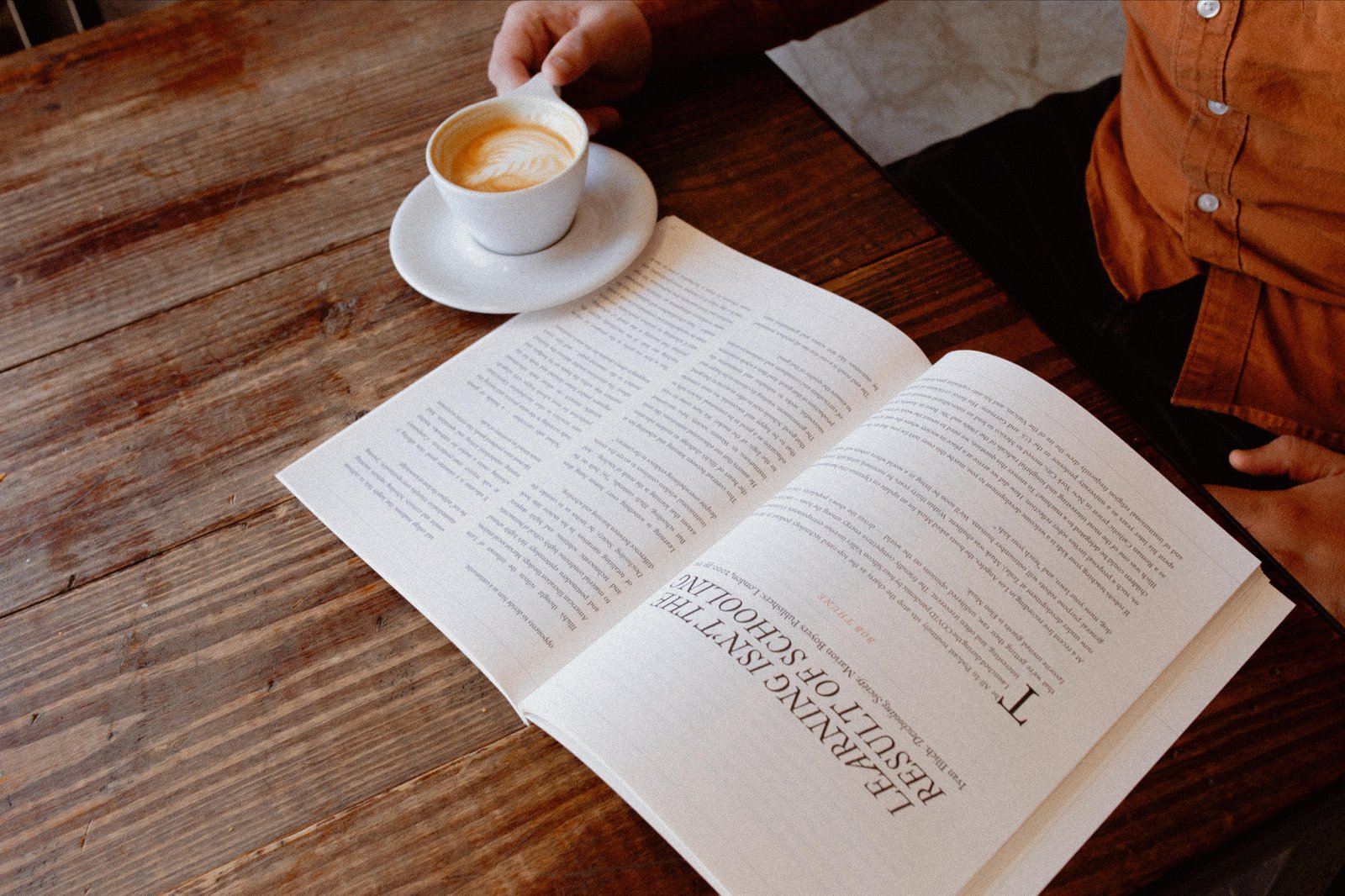

Does it matter how we arrive at outcomes?
I’d argue that Christianity says yes. Much of the Bible is demonstrating and emphasizing that not only is God intent on creating a particular kind of people for himself, but that we actually cannot arrive at the end Scripture envisions for us apart from certain and specific means and processes. The processes and means through which God uses to create and transform a people for Himself is an intentionally painstakingly long and arduous one. It requires the slowness of history slowly unfolding through the seemingly mundane moments of birth and death of generations upon generations of one family, and which now extends to us who have been adopted into the family of God living faithfully day by day the time allotted to us on earth. God in grace and wisdom commits to us in the slowness of the process, for to create the type of people who will be able to partner with him to bring about the redemption of this world requires, quite frankly, time and struggle.
This is opposite of what is often valued today in our society – efficiency, productivity, ease, and convenience. And while it is not necessary that we must always choose the difficult in order to be on the path of formation that uniquely creates the type of person God intends for us to become, I believe that given the abundance of options of convenience before us, it is especially crucial for us to be prudent and intentional with our choices because our choices form us.
It is an understatement to say that AI has revolutionized our current time and culture. The opportunities and possibilities it opens up to people (just about anyone can create an app now), the convenience and ease it offers to us (we essentially have a digital assistant for our daily needs), the accessibility of information (research is revolutionized with how many papers can be digested and summarized for any topic of your choosing)... it may be our Prometheus’ fire. As with all new technologies, AI, whether directly or indirectly, is already forming us into a certain type of people. If we are not careful, we as individuals and the broader church will be swept up in its currents and develop habits, inclinations, and ideologies that will put us farther away from the path of formation God has intended for us.
So how does AI usage impact our formation? There are many ways to consider. It can shape us in ways that devalue embodied persons and presence. It can shape us to value productivity and speed above all else, teaching us that the ultimate value of a person is in what they can produce, not who they are. But I’d like to focus on just one that I recently experienced: the eroding of our ability and desire to undertake and endure (or even appreciate) hard things, especially if doing so requires time.
Outcomes Without Effort
After five years of being a manager in a tech company, I recently went back to being an individual contributor. Having been out of the coding game for so long, I was nervous about my ability to relearn coding and meaningfully contribute, especially in the company’s high pace culture with an emphasis on productivity. But those around me assured me that with AI tools, coding had become much more accessible and the learning curve no longer so steep as when I had initially started out. And they were right.
The ease and convenience was exhilarating – with a few lines describing what I wanted to do, Claude was able to generate for me entire notebooks and production pipelines that would implement my idea and even test components of it for me. What would have taken me hours to ramp up and outline working code, now took me but a few minutes to set up and get nearly production ready code. The ease and the immensity of capabilities accessible to me through the AI tools made me feel that I myself were capable, and that I had the ability to implement anything that I wanted to. It was exciting and honestly, a lot of fun, but I also felt uneasy. Why? I couldn’t quite identify what led to the unease until I read this passage from The Lost Tools of Learning by Dorothy Sayers:
They learn everything, except the art of learning. It is as though we had taught a child, mechanically and by rule of thumb, to play “The Harmonious Blacksmith” upon the piano, but had never taught him the scale or how to read music; so that, having memorised The Harmonious Blacksmith, he still had not the faintest notion how to proceed from that to tackle The Last Rose of Summer.
Here was the articulation of my discomfort. I had all the exciting outcomes but did not need to do any of the hard work to get there. The more I did that, the more I knew my personhood would be formed by that experience. I was doing the equivalent of what Sayers says – memorizing how to play a song, but did not learn the fundamentals to know how to play all songs. I had all the excitement of the outcomes of learning (working code), but had experienced none of the difficulty and hard work that would have typically been required to get there. And so something felt amiss. One may argue that I am learning to use the AI tool – the optimization of prompts and such – but this is vastly different from learning to actually write code, which I had to do when I first joined the company.
Under the latter type of learning, when working code was produced, it elicited within me a kind of satisfaction that was rooted in having undertaken, persevered, and succeeded at something difficult and new. In short, I was training and cultivating something in my personhood and character more permanent than the feelings or the outcomes – the ability and the habit of persevering through the struggle and challenges required to learn something. This ability – the ability to submit and endure the difficult for what will be gained through it, and the ability to do so even if it involves an uncomfortable slowness – is necessary in my formation into a person who can submit to and faithfully walk in the costly discipleship Christ calls me. Without it, we will not be able to root ourselves deeply into the grace, love, and truth that meets us in the inevitable challenges that we must choose to walk through with God, though there may be plenty of opportunities to find alternate, easier paths. And that is what true learning entails – that it forms us into the type of people God intends for us to be.
So what do we do then in this tension of knowing that the process matters, but surrounded by the allure of tools that allow us to easily and with such convenience sidestep the challenges of such processes and yet still obtain the intended outcomes? What do we do as the ease of AI creates within us a drive for the immediate, and an undervaluing of learning processes, of doing hard things that take time, of sitting in situations that are awkward and uncomfortable because we have yet to learn fluency or competency? In short, what do we do to not inevitably become, (though we are likely already becoming) people who want all the ease, speed, and information without any of the work to get it? How do we lean into habits and situations that train and prepare us in what we need for discipleship to Jesus – a willingness to slow down our pace, endure difficulty, and wrestle with uncomfortableness – where the objective is not obtaining information, but growing in relationship with Jesus to be like Him?
I do not believe the answer is to avoid AI usage entirely, but what I am convicted and convinced of is that we are all called to have wisdom in determining when to use AI and when not to, and what counter-formational habits we must develop so that our formation is intentional, rather than accidental. For determining when to use AI and when not to, I have not found a better framework than the one put forth by Andy Crouch.
As for counter-formational habits, I propose for consideration two habits that would form us in the ways that AI will not – to be people who can not only endure but be comfortable with the slowness, struggle, and hardship that is required of us in our life of discipleship to Jesus
Reading Long Fiction
First, we can read long fiction that has stood the test of time. Reading fiction does not increase our knowledge, rather the objective is for the forming and shaping of our souls. This is precisely why the reading of fiction is so counter-formational. We read not to be productive or increase intellect, but because of what it does to our souls. By reading long fiction, we become habituated with the time-consuming nature of formation, and the resilience and endurance needed to sit through the long build-up of good, soul-satisfying stories so that we may deeply enjoy the story’s culmination. This habit forms and challenges us to undertake and commit to time consuming endeavors for our good.
Write Without AI
Next: We should write without AI. Since the beginning of the year, all the documents I had produced for work had been done through freeflow, stream-of-consciousness style talking to AI (speech-to-text) and having it organize and structure my thoughts and proposals for me – practicality and efficiency at its best as I juggled back to back meetings all day with the needs of developing statistically rigorous methodologies to enable partner teams to do their work.
But in undertaking this writing project, by purposefully not using AI, I have felt within myself the uncomfortable yet formational inconveniences and work of having to remember again how to write with clarity, structure, and logical coherence. At the same time, it has been deeply satisfying to re-train and re-exercise these writing muscles. It has forced me to slow down, to think of what is the right word to use, what is the right thought and idea to draw out, and it has done something wonderful for my soul and formation, something all together different and not replicable through AI usage.
In essence, the nature of this writing project has blessed me, and while I hope this piece has inspired that longing within you, I am grateful nonetheless for what it has allowed me to rediscover – the beauty of leaning into the process of being fully human in creativity and distinctiveness in this slow, time consuming, and, at times, challenging journey of everyday formation into who God is making me into.
The Weekly Digest
Premier Thought Every Thursday.
All of our recent essays and podcasts, delivered to you. Free.
Free. Delivered Thursday mornings.