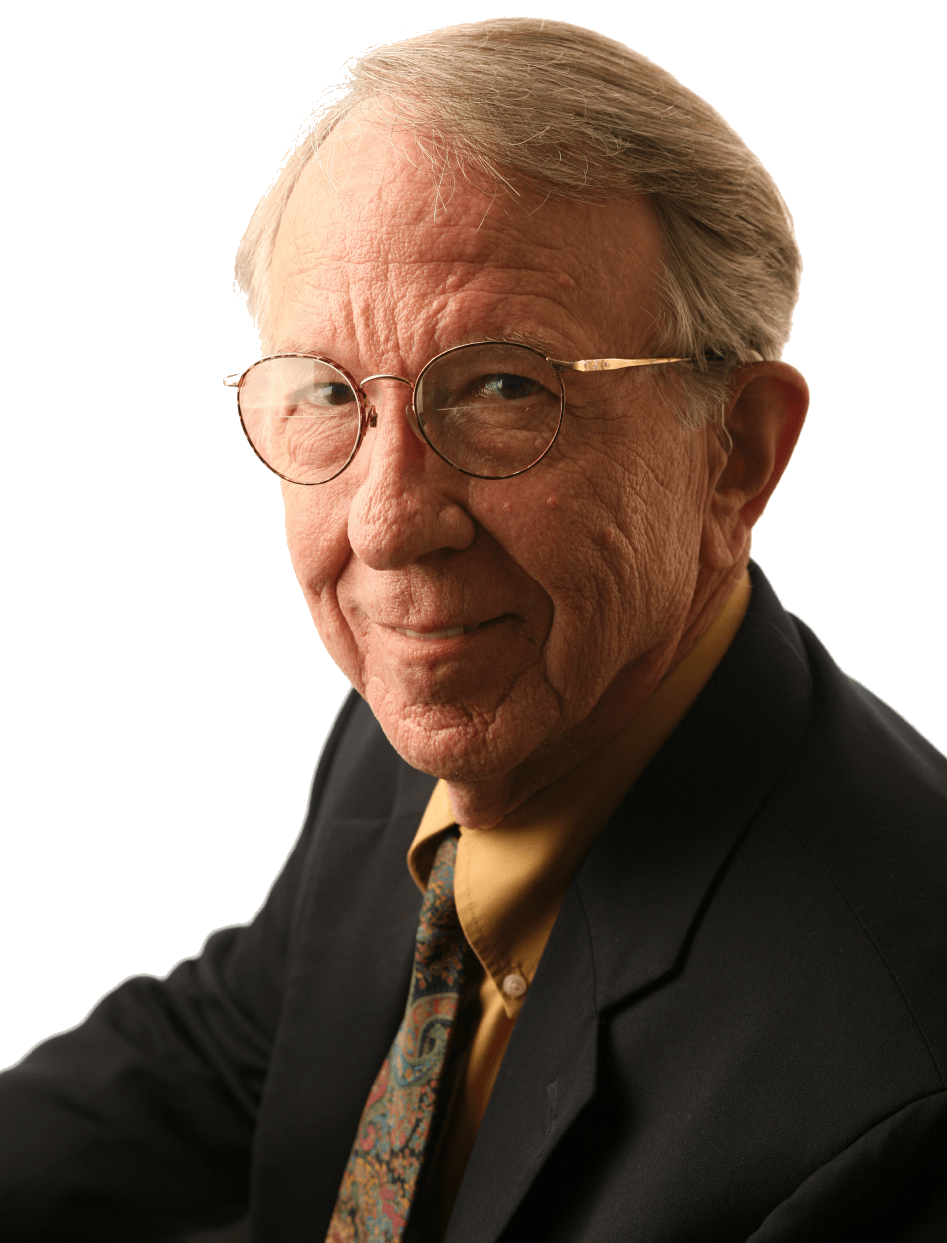
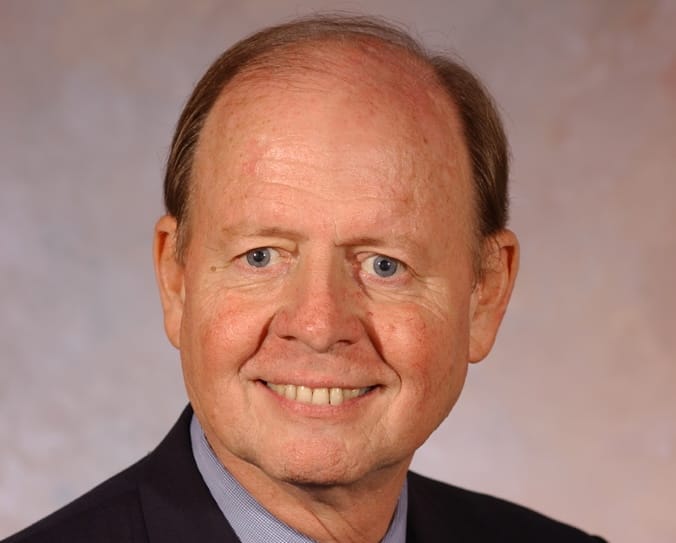
Unlike Catholics, Protestants have no calendar of feast days for honoring our saints. We need to create such days—lest the memory of our blessed dead fade into oblivion. A. J. (Chip) Conyers (May 29, 1944—July 18, 2004) was such a saint, though he would have spurned the term. Chip had become an effective classroom teacher and a well-respected scholar at Baylor’s Truett Seminary when I first met him in 1998. We became instant friends. Here follows the story of his saintly life and death.
In July of 20o3, I met Chip for lunch in Waco. He was preparing to begin a semester that would be like no other. He was working out a complicated system that would enable him to receive intensive chemotherapy treatments every week at the M. D. Anderson Hospital in Houston for Chronic Lymphocytic Leukemia, a cancer that had produced other cancers in his system, finally in his lungs, so severely weakening him that a requisite bone marrow transplant was impossible. At the same time, he was making sure that, with the help of a graduate student, all of his classes would be taught. I used the occasion to utter sentiments that I had never voiced before, since it seemed obvious that Chip was dying.
I expressed my admiration for the way he had dealt with his illness—neither raving with rage at being struck down in the full flower of his career, nor sinking in self-pity so as to make his disease the defining event of his life. (His widow Debby has provided this journal entry revealing Chip’s unblinking honesty: “Cancer is not, in itself, deadly. It is a very dynamic and aggressive form of life. Only it lives at the expense of the rest of the body.”) Unaware of this confession, I quoted a Presbyterian friend, a retired pastor who held to the difficult Christian doctrine of particular providence—the Romans 8:28 confidence that “in everything God works for good with those who love him, who are called according to his purpose” (RSV). God is at work for good not only in the things that happen to us but also in our redemptive response to them. He operates not via a vague general oversight, however, but by means of quite concrete intention. While visiting from North Carolina a few months earlier, this same Calvinist pastor had met Chip briefly, but even this cursory encounter had revealed what so many of us had found so remarkable. “Never have I seen a dying man face the end with such serenity, with such courage and grace, with such confidence that God’s will is being done.”
When I passed this tribute along to Chip, he received it with his typical humility, but then he offered a surprising addendum. “Among those splendid words,” he said, “there’s one that you’ve left out.” I inquired, of course, about the missing word. “It’s puzzlement.” How could he not be vexed at being cut off in his prime? Nearing the end of his sixth decade, Chip knew that his work was blossoming in fresh and unprecedented ways. He was producing books of remarkably high quality and deep theological insight. St. Augustine’s Press had recently reissued his fine 1999 study, Last Things: The Heart of New Testament Eschatology. In 2001, The Long Truce: How Toleration Made the World Safe for Power and Profit had enjoyed a positive reception from many quarters. At the time of our conversation, Chip was at work on a book dealing with vocation, and he had plans for yet another on baptism. He also had a large and faithful following among the students at Baylor’s Truett Seminary. How could one who believed in particular providence not be puzzled? So much promise coming to such an unpromising end?
That Chip spoke of his puzzlement with a smile assured me that he was not putting me on the spot, not demanding that I do the impossible, not insisting that I answer Job’s questions: “Why hast thou made me thy mark? Why have I become a burden to thee?” (7:29, RSV). Yet in a brief moment of inspiration I recalled an incident from the life of Flannery O’Connor, the salty Georgia writer who was also one of Chip’s favorites. I reminded him of O’Connor’s 1953 confession to the poet Robert Lowell upon discovering that her lupus would probably kill her earlier than later. It did so, for she died at age 39 in 1964. “I can with one eye squinted take it all [i.e., her disease and its likely result] as a blessing,” O’Connor declared. “Yes!” Chip instantly replied. “That’s it exactly.” We then affirmed our conviction that authentic faith in God does not exclude but requires an eye-squinting skepticism, a pained puzzlement over the seeming godlessness of the world’s natural processes.
This was the first but also the last time I ever spoke with Chip Conyers about his illness, even though we had several other visits, including one in the hospital only a few months before his death. It wasn’t that Chip avoided the morbid subject. Exactly to the contrary: He had so fully come to terms with his approaching death that he wanted to get on with his work, and thus to talk about the coming semester, the books we were reading, the theological ideas we were percolating, the students who showed special promise. Thus did he embody—like none other whom I’ve ever known—the central Christian belief that we are already living in the New Age, that the Kingdom of God is not an idealistic hope to be realized in some far-off time but a present reality, and thus that in Christ and his Church we are made vital witnesses of the glad tidings memorably voiced in the liturgy of Eastern Orthodoxy: “By death He has done down death.”
There are so many praiseworthy things to say about Chip Conyers’s life and death that one quails at saying anything at all, lest it be pathetically too small. Yet when I think of Chip’s unique contribution to Protestant life in particular and to the ecumenical Church in general, I am reminded of his steadfast avoidance of cliché. He refused the deadly error of making the obvious still more obvious—as one wag has added—in perfectly obvious terms.
A single example of Chip Conyers’ originality will suffice. It concerns the danger that David Solomon, the late Notre Dame philosopher, warned against when he said that Southerners and Baptists of our generation who came of age in the ’60s had cut our teeth on the most obvious moral issue of the 20th century: race. Once we discovered that segregation and discrimination were monstrous denials of the humanity of our black brothers and sisters, we were then tempted to treat other ethical and theological questions as if it they were equally obvious.
As a native son of the South and a convert to Baptist tradition, Chip Conyers avoided the obvious by penetrating the subtle evil that has so sorely vexed both his region and religion. In The Long Truce: How Toleration Made the World Safe for Power and Profit, he demonstrated that racism was not a uniquely Southern problem but a manifestation of a much more pernicious disease afflicting the whole of modern life—the commodification of almost everything. Chip discerned that the real root of our troubles lies in the 16th and 17th centuries with the burgeoning of the tools of production and conquest. With devastating clarity, he argued that our modern way of living no longer values human beings primarily as particular persons offering their unique and irreplaceable gifts to a communal enterprise.
Rather did the Enlightenment make us into solitary individuals having equal rights because we are equally interchangeable parts in the omnicompetent machine of the commercial and martial state. We are little more than instruments of production and profit and warfare. The masters of the market and the military are willing, in turn, to “tolerate” the Christianity of their slaves only if it is reduced to the private sphere, where it remains essentially harmless. Far from being the invention of allegedly benighted medievals—in fact, the Church came close to ending slavery in the 13th century—chattel slavery was what Chip rightly called “the eldest child of modernity.” Like enslaved Afro-Americans, we no longer derive our identity from family and clan, from region and community, from Christ and his Church. Unlike them, we derive it largely from untrammeled self-creation, insofar as those who possess political and commercial and military power permit it.
Yet Chip Conyer’s final word was not Nay but Yea, not sour admonition but joyful summons. In his last book, The Listening Heart: Vocation and the Crisis of Modern Culture, he addressed the clamant late-modern concern for diversity and difference. He embraced neither a bland universalism that makes differences essentially insignificant, nor an internecine tribalism that sets all against all. Chip saluted, instead, the difference that makes for ultimate unity:
While giving expression to what is temporally divided, we begin together to give witness to what is finally united. For the end of all things is the God who calls us, in whom we find rest, by whose one light we find our separate ways toward that city “not made with hands, eternal, in heaven.”
These were among the words read at the memorial service for Chip Conyers. In the mystery of divine providence, he was taken from us while still giving vital witness to the transcendent unity of all things in the love of the triune God. That he did it so very well in a life that seems so unjustly brief is a blessing beyond all telling. He was a Protestant saint. May we honor his faithful life and death every year on July 18. And may his memory be Eternal.
The Weekly Digest
Premier Thought Every Thursday.
All of our recent essays and podcasts, delivered to you. Free.
Free. Delivered Thursday mornings.