Today, we realized our church might be breaking the law. And yours might be, too. (UPDATE: After publication, several readers noted that there are religious exemptions for ADA compliance. See full correction below. We apologize for the error.)
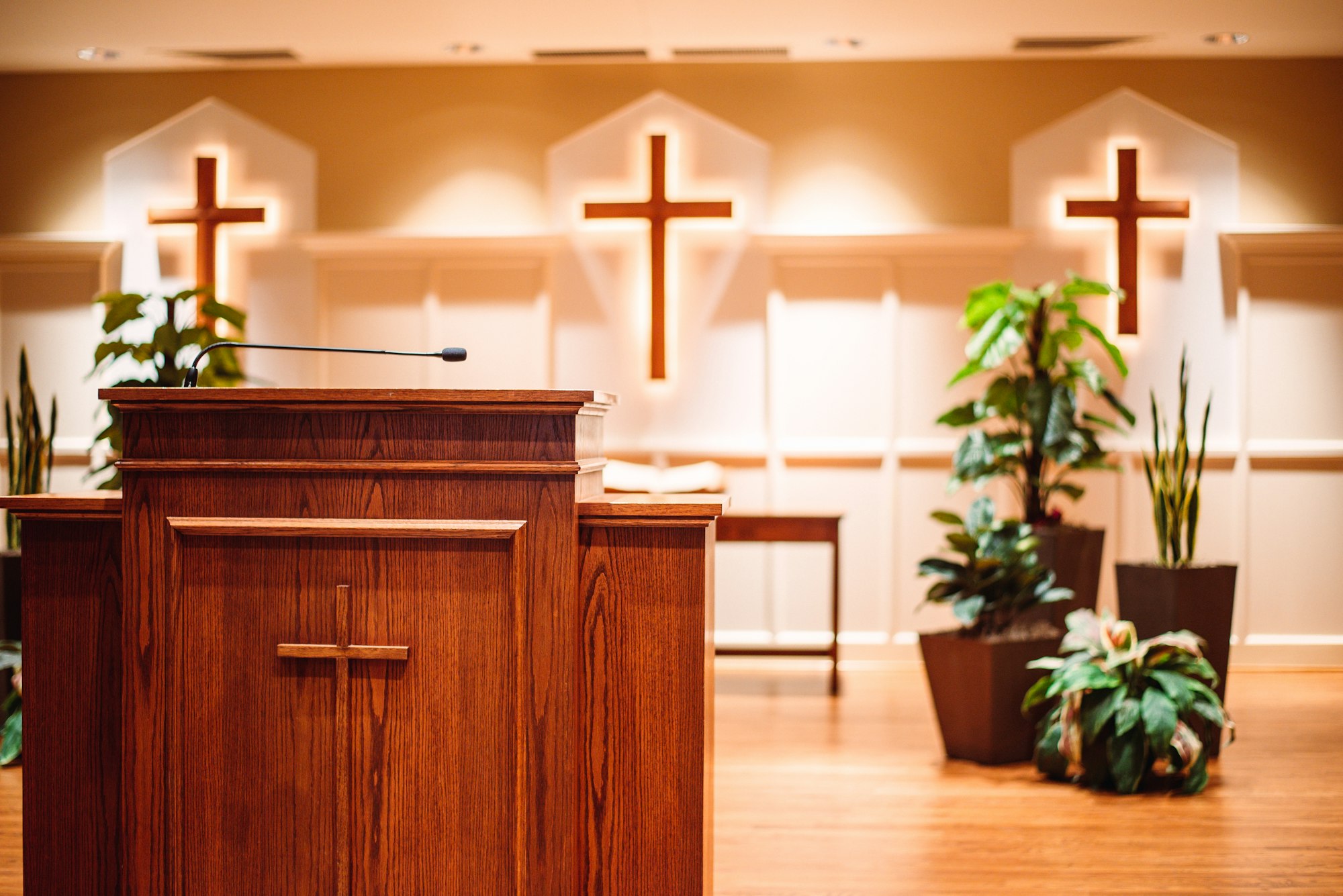
I discovered this because, being the worship leader at a medium-sized church plant, I am constantly fighting off the demons living in our sound system. We are blessed with wonderfully talented musicians, a congregation who loves good preaching, and a beautiful, though cavernous, worship space; three things which don’t always get along. A sound engineer friend once suggested that one way we could make our sound problems better is by investing in an Assistive Listening System; something I am only familiar with from art museums. This, he suggested, might especially help the older members and the hard of hearing. As I was researching options for this upgrade, I quickly realized many of these companies were marketing cheapest-possible-options to be “in compliance.”
In compliance? With what? Well, apparently, with the law of the land. The Americans with Disabilities Act (ADA) requires that public gatherings such as movie theaters, museums, and, yes, even churches provide assistive hearing for those with hearing loss. This might include electronic devices, captioning, or a sign language interpreter. That’s when I realized that many churches like ours are probably unknowingly out of compliance.
Luckily, the market has many options for churches such as ours. But purchasing that system reminded me of something: faith comes by hearing (Romans 10:17, Galatians 3:2-5). Even though it's a bit of a nuisance to shell out extra money and install a whole new component to our already complicated sound system, it might be the most important purchase our church has made in recent years. Everything we do in ministry is important: hospitality, catechesis, small group ministry, etc. But it's all in service of this one thing; the people of God hearing their Shepherd.
In his posthumous collection of sermons, Confronted By Grace, John Webster says that the Church is “the community that is brought into being and sustained by the fact that Jesus speaks…that community which is judged, acquitted, shaken, consoled, and encouraged by the fact that the Spirit - the risen Christ present before us - speaks to the churches.” Christians believe that by some miracle, the words we hear proclaimed, words written by mere mortals centuries ago, is truly the Word of God and ultimately authored by the Holy Spirit.
Even stranger, Christians believe that faithful preaching is God’s Word as well. In an age weighed down by countless stories of pastoral abuse, we must be careful with this claim. It should not be understood as elevating a mere mortal to divine status but rather as an act of graceful condescension. In fact, a healthy Word-centered piety, rather than stroking the egos of pastors, actually humbles us all. As Calvin says in The Institutes,
When a puny man risen from the dust speaks in God’s name, at this point we best evidence our piety and obedience toward God if we show ourselves teachable toward his minister, although he excels us in nothing.
If faith comes by hearing, then God’s speech is a public event where all believers are co-hearers to a singularly sovereign Word above all words. In Christian Dogmatics, Dr. Michael Horton says, “the unifying factor [of the Church] is not a pyramid of ecclesial grace cascading from the magisterium to the bottom.” There is something democratizing about God’s Word written and proclaimed.
Many evangelicals are experiencing a yearning for the Church’s ancient past. We are in a time of wonderful liturgical renewal and retrieval. But as I was putting together this sound system, I lamented the fact that my own Anglican tradition, while currently popular among a certain sort of post-evangelical, is understood as a natural foil against a more Word-centered piety.
Perhaps I am reading the room incorrectly, but I feel there is a sense that if we only had 30 minutes to worship, most Anglicans would want a song or two and a Holy Communion service with no sermon. There is certainly lip-service given to the Ministry of the Word, but the “main show,” so to speak, is the Eucharist.
In an old forgotten essay entitled “What Happened To Morning Prayer?”, Webster laments the loss of this Word-centered piety of a not-too-distant Anglican past. He reminds us that…
For the Anglican tradition, worship has its two-fold centre in Holy Scripture and the celebration of the gospel sacraments. Both Scripture and sacraments are properly God's actions which he undertakes in the assembly of believers…They are "means of grace", in the sense that they are the chosen means through which God presents to us his self-communication, graciously making use of them to give access to the reality of Jesus Christ…In this sense, all Christian worship has its center in the Word.
When the Word becomes just the prelude to the Sacrament, we lose something major. We might even be losing people. Rev. Dr. Paul Zahl, in an extensive study of American Anglicanism called “Where Did All The Galleries Go?” notes a strong correlation between attendance and pulpit-centered architecture. When we check our watches as the Scripture is read and the sermon is preached, we diminish God’s means of grace just as much as irreverently handling the elements of Holy Communion. Remember that Justin Martyr reported in his First Apology that the early Church read the prophets and the apostles “as long as time permitted.”
Faith comes by hearing. Luther says in his Lectures on Hebrews that the Christians only organ are his ears. Hearing is different from seeing because it is passive, humble, and receptive. The great Roman Catholic theologian Hans Urs von Balthasar in his book, Spouse of the Word, says that “it is in the highest degree symbolic that only our eyes – and not our ears – have lids…The basic relationship between the one who hears and that which is heard is thus one of defenselessness on the one side and of communication on the other.”
Hearing happens to you without your permission. Loud noises from your neighbors and crying babies keep you from sleeping. Spouses struggle in conflict resolution when one partner stops listening. What happens to our ears goes down deep into our hearts. And the Church yearns for this humble reception of her Lord. This is her very Life. That’s why it’s so important to fix your sound problems. It might seem like just another task, yet another regulation to check off, but this is where the action happens: at the feet of Jesus giving us His precious Word.
UPDATE: Following publication, I have learned that there is a religious exemption to the ADA act: https://adata.org/factsheet/religious-entities/. For reasons explained in this article, it is still a good idea for churches to consider ADA accommodations.
The Weekly Digest
Premier Thought Every Thursday.
All of our recent essays and podcasts, delivered to you. Free.
Free. Delivered Thursday mornings.