

It’s a truism that American trust in institutions is at a low ebb. As we look at the institutions that serve us, we tell stories of scandal, corruption, cover-up, overreach, hypocrisy, and incapacitating bureaucracy. The Victorian novels lining my office shelves launch similar critiques. Elizabeth Gaskell wrote about unsafe working conditions in underregulated factories; Charlotte Brontë depicted the abuse of children in charity schools; Charles Dickens satirized the court system; Anthony Trollope poked at self-righteous church leaders. And all critiqued the hypocrisy of “pious” Christians who don’t act according to the ideals they profess.
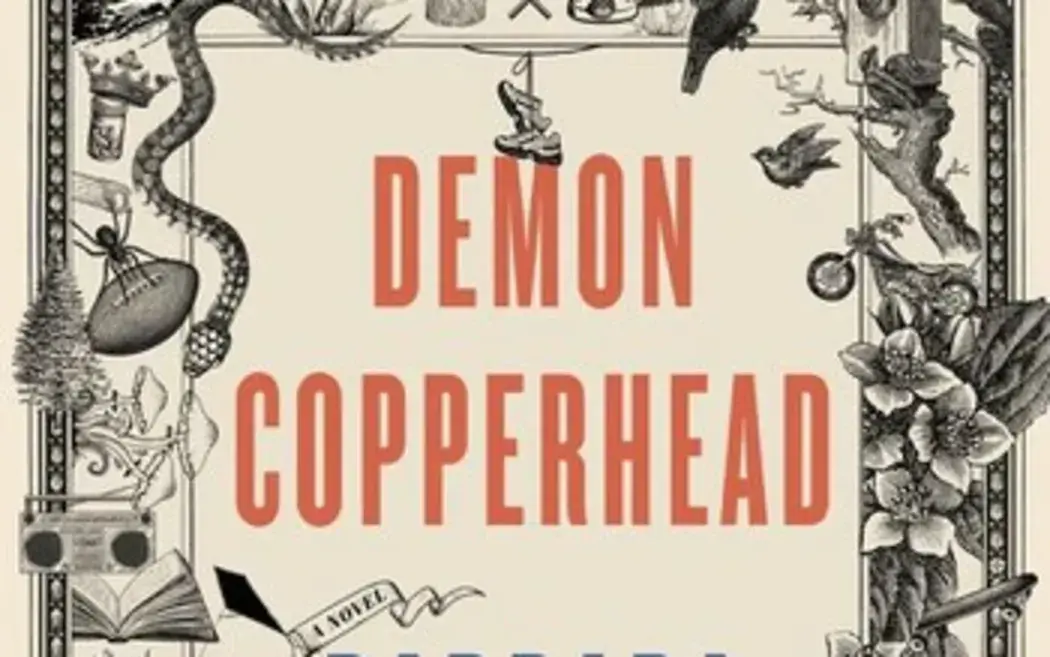
So in 2023, when Barbara Kingsolver won a Pulitzer by rewriting Dickens’ David Copperfield, a novel that depicts corrupt institutions contributing to the opioid crisis in rural America, it seemed apt. She acknowledged Dickens for inspiring her with his “impassioned critique of institutional poverty and its damaging effects on children.” Her novel, set in rural Virginia in the 1990s, highlights a variety of contemporary social problems, with drug addiction at the center of the story.
Novels that win the Pulitzer typically foreground ideas that appeal to America’s educated classes. Institutional poverty is such an idea. It plays a tune familiar to such readers, who take for granted that institutions are inept or inefficient at best and corrupt or criminal at worst. And of course, those readers care about vulnerable children. If they are also readers of Victorian classics, they remember when Oliver “asks for more” at the workhouse or when Bob Cratchit returns from Scrooge’s counting house with little to offer the suffering Tiny Tim. Kingsolver’s concern for children in rural Virginia in the 1990s must be the same as Dickens’ concern for children sent to the workhouse in Victorian London.
But what is “institutional poverty”? Is it what Dickens addresses in his fiction? And if Kingsolver’s definition doesn’t fit the pattern of Dickens’ concerns, what might we learn from his different perspective on poverty and institutions?
A little investigation using the search engine of one’s choice shows that the phrase “institutional poverty” isn’t common in popular or scholarly discourse. It sounds a bit like “institutional racism,” but also like it could refer to the poverty of institutions facing budget cutbacks or declining donor support. I found a couple of references on international development sites, but the top hit for the phrase is Kingsolver herself in the afterward to Demon Copperhead. She more or less coined the expression. Judging from the novel, Kingsolver seems to mean, by “institutional poverty,” poverty that is perpetuated through the conscious or unconscious injustice embodied in institutions.
Dickens didn’t think about institutions and poverty in this way.
In David Copperfield, the eponymous David has a harrowing childhood. He loses both his father and mother to illness, is put under the tutelage of a cruel school master and is eventually sent to labor in the London dockyards. He is loved by poor but kind family friends—a cluster of simple but morally pure people. A charismatic charmer whom he meets at school ends up seducing the niece of one of these friends. David makes a poor first marriage to a pretty but silly woman who dies young. By the end of the novel, he realizes that the morally impeccable woman whom he has regarded as a sister is his true love.
Kingsolver takes Dickens’ Victorian Bildungsroman and transposes it into late-1990s rural Virginia. The titular Demon loses his father to drowning and his mother to a drug overdose. The social-service system that should protect him is staffed by well-meaning but overwhelmed caseworkers. The poor but virtuous helpers in Kingsolver’s novel are neighbors who have so many broken lives to tend—a son dead in an accident, a daughter in prison for disfiguring her abusive partner, a grandson on drugs—that they don’t have capacity to care for Demon too. He ends up in the foster-care system, harvesting tobacco for an exploitative farmer and working for cash at a convenience store/junk yard/meth lab. The charismatic charmer whom he meets at school ends up leading a childhood friend into prostitution. Demon also forms a romantic union with a woman who is pretty but shallow—and an addict. She dies of a drug overdose. Like David, Demon realizes by the end of the novel that his true love is a sister-like figure who has been loyal to him throughout.
So far, so similar. There’s a crucial difference, however, between the way these two novels depict institutions—a difference that belies Kingsolver’s suggestion that she and Dickens are doing the same thing.
Kingsolver depicts institutions as perpetuating poverty, whether through explicit corruption or unconscious ineptitude. Demon notes the double standard of the Department of Social Services (DSS). DSS places him in a foster home with the exploitative farmer “Creaky,” yet monitors him closely during his visits at McDonald’s with his mother: “What do they think is going to happen here, Mom will haul off and shank me with a plastic knife? Put meth in my Dr Pepper? How screwed-up is it that the DSS can’t be bothered about Creaky being hateful as a snake, but they’re all high-beams and every step you take, as regards the druggie mother?” Here, “institutional poverty” means: the institution of DSS, overwhelmed by excessive bureaucracy, eroding a child’s relationship to his mother but failing to protect him from a greater danger.
Kingsolver also implies a link between poverty and the coal industry. Mr. Armstrong, a politically progressive teacher originally from Chicago, enlightens Demon and his fellow students at Jonesville Middle School about what the coal industry has done to Lee County, Virginia: “What the companies did, he told us, was put the shuthold on any choice other than going into the mines…these counties got bought up whole: land, hospitals, courthouses, schools, company owned.”
To make clear the connection between Big Coal’s near-monopoly on employment and rural poverty, Kingsolver has Demon narrate an epiphany he has as he listens to his teacher talk about the lack of job diversity in Lee County: “Not an accident, Mr. Armstrong said, and for once we believed him, because down in the dark mess of our little skull closets some puzzle pieces were clicking together and our world made some terrible kind of sense.” The institution of the coal industry is the reason the people of Lee County are poor: “The dads at home drinking beer in their underwear, the moms at the grocery with their SNAP coupons. The army recruiters in shiny gold buttons come to harvest their jackpot of hopeless futures.”
Big Pharma joins Big Coal in the novel as a third institution contributing to poverty. Demon Copperhead narrates the late-20th-century rise of mass opioid addiction. Demon’s mother dies of an oxycontin overdose. June Peggot, the nurse practitioner, discovers that her drug-rep boyfriend is profiting from widespread opioid addiction. Demon’s girlfriend Dori becomes addicted to painkillers. She also dies of an overdose. Demon becomes addicted to the Percocet he’s prescribed for a knee injury he sustains playing football.
Ineffective government. Monopolistic industry. Abusive marketers. All these are what Kingsolver seems to mean by “institutional poverty.”
But do Dickens and other Victorian novelists see ineffective, controlling, and exploitative institutions as the source of poverty in the Victorian era? Mostly not.
The chief sources of poverty depicted in Dickens’ novels are unlucky circumstances or fate. Poor people are poor because some turn of events beyond their control made them poor. The prosperous are blessed by circumstances. The poor remain poor when they are not treated generously by individuals who have the power and means to assist them. Greedy people certainly exploit institutions—often in comically hypocritical ways—but the institutions themselves and their governing imperatives are not the source of the problem. And when individuals engage with the central institutions of society, usually by forming families and tight interconnecting friendships, they can repair problems and heal social ills.
George Orwell makes this point in his 1946 essay “Charles Dickens”, in which he calls out those who claim Dickens as a kind of radical, wanting to overturn the social order and raise up the working class. Orwell says, “there is no clear sign that [Dickens] wants the existing order to be overthrown, or that he believes it would make very much difference if it were overthrown” (original emphasis). Orwell says that Dickens’ social critique is essentially a moral one: “If men would behave decently the world would be decent.”
David Copperfield illustrates Orwell’s point. David comes from a family of modest means, but his mother, after the unlucky circumstance of his father’s death, makes the poor choice to marry again—unwittingly choosing an abusive man. It’s this abusive stepfather who sends David off to Salem House school, where Mr. Creakle beats the boys. It is the cruelty of David’s stepfather—a cruelty largely motivated by greed and a desire for power—that separates David from his loving mother and sends him on a journey that culminates in his utter destitution.
One could push back on the claim that social problems as depicted in Dickens’ novels are only a result of individual choices; one could argue that the Victorian institution of marriage yokes women’s financial prospects to men’s and creates the necessity for David’s mother’s remarriage. Indeed, David’s aunt, Betsy Trotwood, who welcomes him at the end of his harrowing journey, is also fleeing an unhappy marriage. Or one could point out that the institution of the Victorian boys’ boarding school yoked learning and corporal punishment, creating abusers like Mr. Creakle.
But most of Dickens’ novels, including David Copperfield, end with a vision of happy, companionate marriage. Betsy Trotwood, as a sign of her virtue, honors her vows and nurses her estranged husband on his deathbed. And Dickens’ novels also contain examples of well-run schools, such as Dr. Strong’s school in Canterbury where David spends many happy days. Dickens himself sent his sons to Eton. His critique then cannot be of the institution of marriage or the institution of the boarding school, full stop. Dickens, unlike Kingsolver, can imagine individuals acting morally and justly within these institutions and the institutions themselves functioning well.
Demon Copperhead, by contrast, presents a critique of systemic problems that Dickens’ novels lack. The most heroic of Kingsolver’s characters act heroically despite the institutions that fence them in. They are anti-institutional heroes. June Peggot, the nurse practitioner, faces off against her drug-rep boyfriend; Mr. Armstrong enlightens his students about the coal-mining industry; Demon, by the end of the novel, is on the verge of a book-contract for a graphic novel about the exploitation of rural people throughout American history; he wants to tell the story of an “offensive to wedge people off their own holy ground and turn them into wage labor.”
The most functional institutions in Demon Copperhead are those that promote individual achievement: drug rehabilitation centers and universities. Institutions that support social bonds (family, church, or civic organizations), are part of the background condition of rural America, but seem to have no capacity to curb social problems. Demon and several other characters get successful drug treatment by leaving their rural community for the city. Moreover, the characters who don’t end in poverty and addiction all have college degrees: June Peggot, Mr. Armstrong, Demon’s love interest Agnes. In this way, Kingsolver illustrates an American paradox, highlighted by Yuval Levin in A Time to Build. Americans, right and left, benefit from strong institutions (like world-class universities) while performing Romantic anti-institutionalism in their rhetoric.
Levin argues that younger Americans, living in an era of institutional skepticism and decline, tend to think of institutions as obstacles to be navigated around, not as tools that assist in self-cultivation. Demon Copperhead exemplifies this attitude. The coal industry, drug companies, and social service agencies are the source of problems, not solutions. Even the church, though it is presented as a binding force in Demon’s community, is also presented as a site of institutional corruption.
Churches in the novel are the home of “church ladies” who fill backpacks of food for poor kids to take home from school, the locations of AA meetings, grief groups, and the place for funerals. Yet even as the characters assume that the church people will help you when you’re at your most desperate and will help you mark the passage from life to death, Kingsolver makes sure her readers know the dangers of religion. Demon tells the reader his mother’s issues with church which go back to “her earliest foster home with a preacher that mixed Bible verses with thrashings and worse, his special recipe for punishing bad little girls.” Demon’s biological father practiced snake-handling and his grandmother explains about that particular church: “Men wanting to get back to the Old Testament, reaping virgin girls and using daughters for their slaves.” Alongside the warm and generous Christianity of church ladies and recovery groups, Kingsolver reminds her readers of these extreme forms of Christianity.
Both Dickens and Kingsolver write about institutional failure: cruel schools, abusive families, dysfunctional government agencies, hypocritical churches. But at the end of David Copperfield, Dickens’ vision is a hopeful one of networks of individuals thriving within social institutions. The institution of the family has primacy for Dickens. The last chapter is a catalog of characters’ marriages and children. David is not the central figure at the end. He is part of a web of connections. And, although the novel (like Bleak House) satirizes the court system, one of the major characters goes on to become a judge. The novel presents this as a happy outcome.
Critics will argue that Dickens’ depiction of marriage and family life throughout his novels is sentimental and that his own marriage was a disaster. But Dickens does not create these associations. Victorian readers understood marriage and family as the happy ending of characters within a functional society and Dickens gives his readers the endings they want and expect.
At the end of Demon Copperhead, Kingsolver suggests how rural communities are shaped by institutions, but does not suggest how her central character might use those institutions to shape his life. The novel contrasts the soulless, wage-labor capitalism of the city with a nostalgic vision of social capital before the opioid crisis. Demon’s friend, Tommy, a journalist, tells him that the city (where Demon has gone for drug rehabilitation) is based on a “money economy” whereas the rural county where they grew up is a “land economy”: “having some ground to stand on…the bags of summer squash and shelly beans everybody gives you from their gardens…the porch rockers where the mammaws get together and knit baby clothes for the pregnant high school girls. Sandwiches the church ladies pack for the hungrier kids to take home on weekends.” Kingsolver maps this distinction as an urban/rural divide. But one could also say that it’s the divide between functional versus dysfunctional institutions. The novel recognizes, at a deep level, that social health needs social capital and that this social capital is formed in institutions like the family (baby sweaters knit by mammaws) and the church (sandwiches for hungry kids).
The forward vision of Demon Copperhead, however, is not one of using that social capital to repair the damage caused by the opioid crisis. Rather, it’s a distinctly American and individualist vision: Demon and his love driving away from Virginia toward the ocean like Huck and Jim “lighting out for the territories.” The happy ending involves two individuals finding fulfillment in each other and escaping the “institutional poverty” that blights their rural home.
Orwell’s distinction between two types of social critics—the revolutionary and the moralist—is a good fit for Kingsolver and Dickens: “the one [asks], how can you improve human nature until you’ve changed the system? The other, what is the use of changing the system before you have improved human nature?” Orwell himself doesn’t choose sides. He says that “the central problem—how to prevent power from being abused—remains unresolved.”
But perhaps there is a hint of a solution in Levin’s suggestion that the system itself can do a better or worse job of forming human nature. If we give up on institutions, we give up on a powerful tool of moral formation for individuals.
“Institutional poverty” sounds like something that progressive readers in the 2020s should condemn. But repairing the poverty engendered by failing institutions requires a closer look at institutions that connect. Demon Copperhead diagnoses an ailing society but David Copperfield suggests a treatment: self-sacrificing individuals working within institutions that knit individuals into families and communities and shape children into functional adults.
The Weekly Digest
Premier Thought Every Thursday.
All of our recent essays and podcasts, delivered to you. Free.
Free. Delivered Thursday mornings.

