

As it becomes clearer and clearer that global climate change is dangerous and will require enormous efforts to protect human lives from its effects, the debate about how our individual choices and corporate efforts affect us has only gotten sharper.
Take, for example, this recent discussion from David Roberts (expanded with this Twitter thread) about “climate hawks”: while concern for Earth’s climate has traditionally been linked to environmental identity and environmentalism as an ideology, ameliorating climate change will require a lot more involvement and support from people who don’t identify as “environmentalists”. The policy solutions required are orders of magnitude larger than anything like recycling; getting them into practice requires the support of people who couldn’t care less about things like protecting endangered species.
On the one hand, this argument is fair enough: environmentalist ideology as it is popularly understood has a hard time getting traction because it tends to be sanctimonious and living fully within its dictates requires a downright… well, monastic lifestyle. (Don’t worry, you can always buy indulgences — whoops, I mean offsets — for taking a plane to your climate change summit!) Roberts thinks that the religious nature of environmentalism is a bug, but I’d argue it’s a feature. Whether it’s about using less plastic or abstaining from pork, people want to believe in something bigger than themselves and live by a moral code that they believe is good for them and for the entire world.
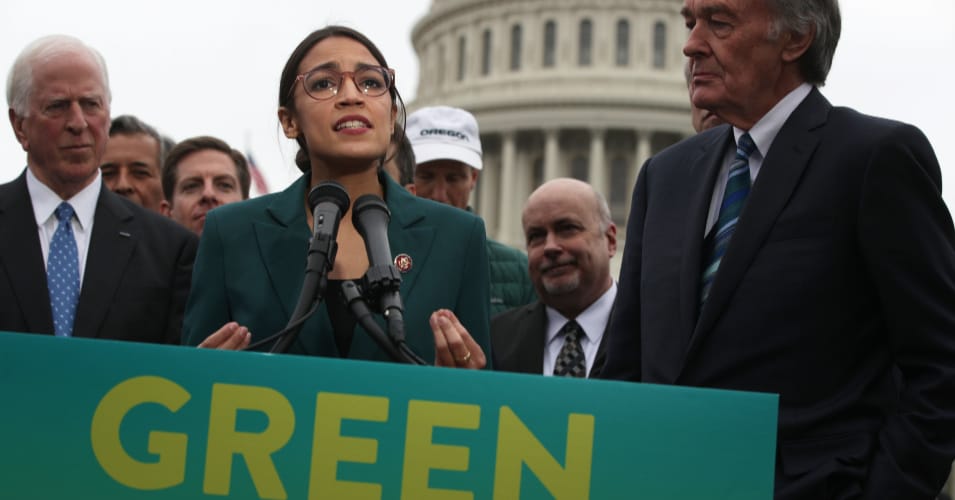
So while it is politically important that people who would let their motor oil drain right into a white tiger preserve get appropriately concerned about climate change (personally, I’ve found the writing of Robinson Meyer very helpful in understanding the scope of the problem), we can’t escape the need for a moral framework to collectively care for our planet and the people who live on it. Indeed, this sort of framework gets appealed to over and over when it comes to left-wing political causes: when politicians and pundits want us to support Medicaid expansion or the Green New Deal, it is because it is assumed that we have an obligation to work together and perhaps make sacrifices to our fellow human beings who might be less fortunate and we have a duty to care for the Earth we all live on.
This appeal to our moral obligations to other human beings and our environment is very strong because it is natural to us, part of the created moral order that goes back to the Garden of Eden. As Oliver O’Donovan says, “One cannot speak of the flourishing of any kind without implicitly indicating a wider order which will determine what flourishing and frustration within that kind consist of.” Any call for ethical action, particularly if it involves some sort of personal or collective sacrifice, is going to have to be situated in a moral system that has at least sketched out what the “wider order” is. Environmentalism’s appeal to its adherents is inseparable from the appeal of its vision for flourishing contained within its wider order that you can glimpse at the end every Captain Planet episode: humans properly stewarding creation and enjoying it without abusing it.
This is remarkably close to the Christian vision for stewardship of creation of as a gift, and it has inspired a great deal of personal and collective sacrifice for the sake of the Earth. (Sadly, it has often failed to catch on among Christians because it often substitutes the creation for the Creator as the center of worship.) We need this framework because we recognize how easy it is to abuse Creation to our short-term gain and long-term misery — and how easily Creation can turn against us. There are, thus, few religious impulses more ubiquitous throughout history than the desire to honor the world around us and care for it so that it will continue to take of us.
If there is any religious impulse more ubiquitous and natural than the one involving creation, it is the urge to regulate sexual desire. The two, however, are not nearly as different as we moderns used to dividing everything into categories might be comfortable with. Our cultural practices and religious rituals in the domains of agriculture and sex have always worked within concepts like fertility, husbandry, and purity even as the last few decades have seen strange transmutations within as the superstructure of religion has been thrown off. (Think, for example, of the discussions over organic foods and ethically raised meat!)
At the heart of both environmental and sexual ethics in recent years, though, is a general realization that there are natural limits to our bodies, our selves, and our world that cannot be transcended or avoided without severe harm. The recent #MeToo movement, for example, is seeking to impose a set of constraints to deal with the chaos and wickedness unleashed by proclaiming sexual “freedom” without limits even as the environmental movement recognized that we could not go about dynamiting and dumping as we pleased without consequences. Is it any surprise that the era in which we were burning the most carbon was also the time period in which we were casting off the sexual mores that had guided us for millenia?
Whether it comes to where we throw our trash or what we do with our most intimate members, we need discipline. Self-discipline, yes — but there is no self-discipline without communal discipline to support it and nurture it, and there is no communal discipline without a strong group of self-disciplined people living out the precepts that communicates and sustains the “wider order”, making that order coherent and accessible to the people who need it. Sin corrupts our desires that we might personally wrong others, but we also live in a world of “principalities and powers” (as Paul calls them) where we can combine our efforts to institutionalize good or evil.
Unfortunately, a great deal of our cultural and social efforts in the West over the last few centuries have been focused on demonstrating our domination over nature, giving us the freedom to indulge whatever desire we wish. Any sense of obligation or duty to other people or to a wider order is becoming more and more difficult to appeal to because our individualism has hallowed self-fulfillment at any cost, with the Republican eagerness to cut food stamps at every opportunity at one end of the political spectrum and the Democratic shibboleth towards abortion rights at the other. The Right loves guns because they tear through flesh more effectively to protect property, while the Left wants people to have the freedom to mutilate their own genitals because of the whims of desire. Both are rejections of the natural limits that allow life to flourish and the communal self-sacrifice on behalf of the vulnerable that we desperately need.
The political strategies to avoid catastrophic global warming are debatable. What is impossible to avoid is our need for a recovery of a shared moral framework that recognizes the natural limits of the world and our bodies within them — and then binds us together to sacrifice for the sake of meeting the obligations we have to the most vulnerable among us. Without a sense of duty, we will go on dynamiting. As Sandra McCracken sings,
Will we choose the noise of our desire,
Or the hope that makes no sound?
Enjoy the article? Pay the writer.
$ Donation Amount:Donate NowSelect Payment Method
- PayPal
Personal Info
First Name *
Last Name
Email Address *
Donation Total: $0
The Weekly Digest
Premier Thought Every Thursday.
All of our recent essays and podcasts, delivered to you. Free.
Free. Delivered Thursday mornings.