
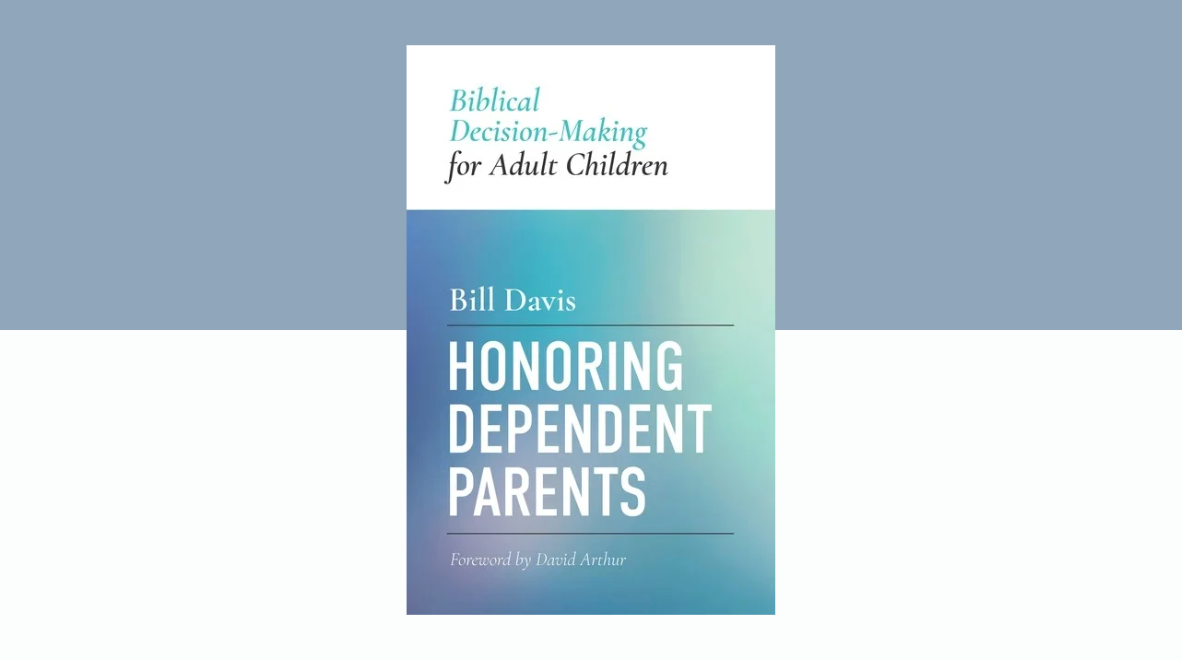
“How do we honor parents who depend on us in ways they never have before? Medical crises, complicated relationships, limited finances, differing values, and competing obligations create situations without easy answers.” Relying on interviews, research, and of course, theology, this is the question that professor and PCA elder Bill Davis considers in his new book, Honoring Dependent Parents: Biblical Decision-Making for Adult Children (P&R Publishing, 2026). The following excerpt from the book is published with permission from P&R Publishing.
***
As recently as three years ago, Arnold (79) was a friendly, upbeat retiree who loved working with his hands and tinkering with engines. He had been an aluminum-siding salesman all his life. Because he remembered details about his customers’ lives and took pleasure in getting them to talk about themselves, he was very good at sales work. After his children moved out of the house and his wife died, he used his disposable income to buy a Ford Mustang just like the one he had driven when he was a teenager. Maintaining the Mustang and cruising around town (just the immediate neighborhood) became his favorite “alone time” activity.
Over the last three years, Arnold’s short-term memory has begun to slip. Worse than that, his mood is beginning to shift more quickly than before. He has had the same primary care doctor for the last thirty years (a doctor now in his mid-sixties). He does not want to be tested for dementia, and his doctor is content to wait either for Arnold to notice that he is slipping or for a sign that Arnold has become a danger to himself.
Caroline is Arnold’s only daughter and the only child who still lives in town. (Her two brothers—both older—live more than a four-hour drive away. They visit every other Thanksgiving.) Last year, Caroline convinced Arnold to move in with her family so that he “wouldn’t get lonely”—and so that she could keep an eye on him. Caroline’s husband made room in his garage for Arnold’s “shop tools” and a place for Arnold’s Mustang. Bringing the Mustang was the only thing Arnold required before making the move.
Caroline is no longer willing to ride in a car that her dad is driving. The last time she did—more than a year ago—she returned home shaking from the many close calls with mailboxes and parked cars. Arnold had noticed that she was “jumpy,” but he thought he was making the ride fun. When Caroline complained that he was driving too close to objects on her side of the road, he responded with uncharacteristic anger, saying, “Who taught you to drive, missy?!” Caroline has found ways to avoid her dad’s every offer of a ride since then.
Last week, Caroline found the Mustang in the driveway with the passenger-side mirror broken off. When she asked Arnold about it, he said, “I’ve ordered a new one. I know how to install it.” Caroline asked how it came off. Arnold’s reply was to leave the room, muttering to himself.
What should Caroline do to honor her dad amid her concerns about his driving?
- She should try not to worry so much and let Arnold enjoy his car while he still can.
- She should hide all his car keys and only pretend to help him find them.
- She should work with the local police to set up a “sting” in which her father is pulled over and sternly warned about reckless driving.
- She should talk to her dad about her concerns and ask him to get retested for his driver’s license.
Caroline asked her older brother what she should do. He recommended option 1. He said that she was fretting, treating their dad the way she would treat an irresponsible child. Dad was not her child, he said, and the car was his. If he wanted to run into things, it was his business. His insurance rates would go up, but no one had taken his license away, and Caroline was not an expert on driving ability.
While the older brother is right that Arnold is not a child, option 1 does not honor Arnold well, since it treats too lightly his physical safety and his lifelong zeal to put others’ interests before his own. While he might not yet be a threat to his own safety, his driving puts other people in danger. Caroline knows that before Arnold’s memory and judgment started changing, he would never have gotten behind the wheel if he had been tired or tipsy.
Caroline’s other brother gave advice like option 2. He agreed that it wasn’t good for Arnold to be driving, but he thought it would be easy to use his self-confidence against him. If they hid the keys to the Mustang, Arnold would not be able to drive it. He probably wouldn’t ask for help to find the keys, but if he did, she could pretend to help and then fail to find them. This option would be the best way to honor Arnold if he had asked his children to hide the keys from him when they thought it would be best. Because Arnold did not ask to be treated this way, doing so is best only if his children are sure it is what he would choose if his powers were restored. Getting sure about this might involve talking to people who’ve known Arnold for years. In asking for others’ help, Arnold’s children will need to be careful to describe the problem in a way that protects his reputation.
Caroline should reject option 3. Her father would be mortified to be pulled over by police, and he would never choose to use police time for a fake “sting” if he were able to understand what was being proposed. While this option might be effective, it would come at the expense of Arnold’s dignity and reputation.
If Arnold’s driving is putting other people in danger, the police may need to be involved. Option 4 is probably best in this case, but Caroline should not trick her father. After telling him what she is doing, Caroline can honor her father’s reputation and health by asking the police for help. In that case, the police would have the authority to insist on a driving test. If the police are not willing to help, Caroline can ask the state or county department of Adult Protective Services for help if she is confident Arnold would support her were his ability to think clearly restored to what it was in his prime. Her desire to protect her father from hurting himself and others is good. She can honor him by finding a way to protect him that he would have approved before the challenges of aging made it harder for him to think clearly.
The most promising option may not be listed here. Every family would benefit if parents talked about what they would want their children to do should they become like Arnold.
The Weekly Digest
Premier Thought Every Thursday.
All of our recent essays and podcasts, delivered to you. Free.
Free. Delivered Thursday mornings.