
I wish someone had told me ten years ago that time would be the thing most needed for the rhythms of the church calendar to “get into my bones”, and this in spite of the great enthusiasm with which I began my own participation in the Year of Our Lord 2015.
Like many Christians born outside of traditional liturgical observances, a deep understanding of Lent, in particular, has often felt difficult and elusive to me, like threading a needle or wrangling a wild horse, and I have historically found myself in a wrestling match with discouragement over the details and results of various fasting attempts.
I’ll wager that I am not alone in this experience.
At various Lents I’ve given up coffee, alcohol, social media, snacking, and second helpings. I’ve also attempted to observe the traditional Wednesday/Friday fasts from meat and multiple meals. But it’s only been in recent years – undoubtedly the result of time in this decade-long immersion in the church calendar – that I have been brought to some degree of experiential clarity regarding the matter, and I am grateful for our Lord’s patience and wisdom conveyed to me through Scripture, the teachings of the church, and through the three parishes to which I have belonged during in that time.
What follows is an attempt to distill that clarity with a few important distinctions about fasting and feasting. A few caveats: first, this is not a theology of fasting nor an in-depth argument in its favor; I am presuming a level of agreement regarding the necessity of fasting and its Scriptural and historical support. Second, I’m writing in a proverbial mode, recognizing that within the vast catalog of human experiences any number of objections or exceptions might be made to these theses. Third, the following thoughts thus are undoubtedly influenced by my Protestant Anglican heritage, but I’d like to think they are in keeping with much of what the church catholic has taught about fasting for the last two thousand years. So without further ado, here are twelve theses on fasting, and, by extension, on feasting with the context of Lent and Easter.
I
A distinction first needs to be made between a Lenten fast and a Lenten discipline. Too often the language applied to the two is the same, such as “I’m fasting from meat during Lent,” and “I am fasting from social media.” Both observances are helpful in their own ways, but they must be understood as two separate Lenten practices; one is a fast (abstinence from meat) and the other is a discipline (abstinence from social media). We need to call these observances by their proper names.
II
Fasting happens when a Christian abstains for a time from a certain gift of God that is essential for human life, on which he or she is designed to have an ordered relationship of dependence. Food and sleep are the fountainhead gifts in this department.
III
Depending on who you talk to, such gifts could also include things like speech or fellowship, and also sexual relations with one’s spouse. But food is and always has been the benchmark fast: when we eat, we live. Without eating, we die. Sleep follows close behind for the same reasons, and the rest after that.
IV
Fasting is thus an exercise in voluntary dependency upon the sustaining grace of our Lord. We feel that dependency most quickly and most keenly when our stomachs aren’t full or when our eyelids are drooping for lack of sleep, in voluntary silence or solitude, or in separation from one’s spouse. We confess with our growling stomachs and saggy eyelids that God will sustain us for a time through other means.
V
This voluntary dependency is intended to prompt prayer and spiritual clarity about the extent of our need for Christ’s work in our lives through Spirit, Word, and Sacrament, paving the way for deeper postures of repentance and receptivity to the glories of the Gospel – and eventually into further proclamation of that Gospel and the service of our neighbor. The telos of a fast is never self-serving, but outward facing.
VI
Depending on our level of dependence upon them, things like coffee or alcohol may also constitute helpful candidates for a fast, though perhaps to a different degree than fasting from solid food. Though they are certainly gifts of God, coffee and alcohol are not essential to human life in quite the same way that food is (however, if you ask me this question at 6am, I will grunt an unqualified “yes” and reach for my second cup of joe).
VII
However, the further we get from food and sleep, from speech, fellowship, and sex, we eventually cross a line into the territory of Lenten discipline, rather than Lenten fast. Disciplines are habits or activities that are unessential to human life yet are still helpful for eliminating distractions and turning our eyes, ears, and affections to Jesus through the Spirit, Word, and Sacrament. Disciplines thus function as supplementary exercises to fasts.
VIII
Therefore, abstaining from TV is not a fast but a discipline, and the same can be said of signing out of social media, imposing limits on phone usage, etc. Unsurprisingly, many of the Lenten disciplines du jour have their eyes on releasing us from the clutches of our current digital malaise.
IX
But Lenten Disciplines are also not merely matters of abstinence. They also can be habits taken up – again, to more finely tune our attentions to the workings of the Lord and direct our attentions to the needs of others. This might look like reading of a difficult but spiritually rewarding book, undertaking certain kinds of physical activity, embracing opportunities for service to the poor, or shouldering a particular devotion to serve one’s neighbors throughout the forty-day journey towards Easter.
X
In cases of addiction (which represents a disordered relationship of dependence) to some of the things above, abstaining becomes more like a true fast than a mere attempt to eliminate distraction. However, abstinence from an addiction cannot prepare the way for a true feast; the alcoholic shouldn’t plan to binge on Easter Sunday, nor should the social media addict return to the scroll with abandon once Christ is finally out of the tomb.
XI
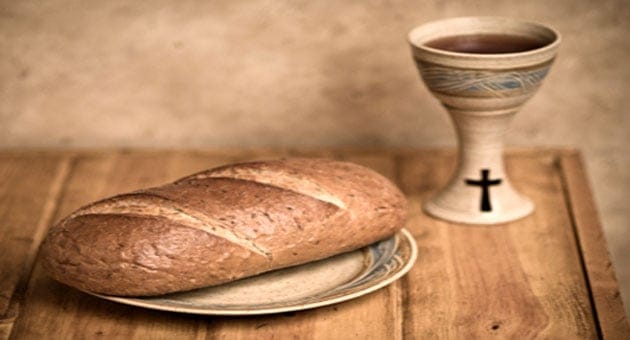
No fast is ever to be undertaken without a corresponding feast. Fasting and feasting are two sides of the same coin which point us to the heavenly, hidden, and very present realities of life in our Lord Jesus Christ. Advent ends at Christmas, Lent ends at Easter. Fasting in a vacuum is nothing more than self-flagellation, a different manifestation of disordered desire that rejects the goodness of our creatureliness and forgets that our Lord has promised to feed us with honey from the rock and the finest of the wheat (Psalm 81:16).
XII
Thus, the final distinction that defines Lenten fast from Lenten discipline comes in answering the question, “Will fasting from this during Lent allow for a feast at Eastertide?” Food, of course, is still the archetype here: a season of fasting is easily followed by feasts of holy conviviality and gleeful indulgence. A pie devoured after Easter Vigil, a cappuccino drained off at the Sunrise Service, a filet at lunch or a slow-sipped scotch in the waning afternoon (and a nap after!) are gifted glories worth the songs of a thousand poets, and especially if enjoyed in the company of other Christians newly arrived from the empty grave.
Like our fasts, our feast must be communal, and lifted out of the long wait of Lent, our shared abstinences become icons of the once and future Resurrection, foretastes of a life together with our Lord in which we will never again lack any good thing.
The Weekly Digest
Premier Thought Every Thursday.
All of our recent essays and podcasts, delivered to you. Free.
Free. Delivered Thursday mornings.

