
Edith Stein. A Sure Way: Following Truth in a World on Fire. Edited by Carolyn Beard. Plough Publishing (2026). $12.95. 168 pp.
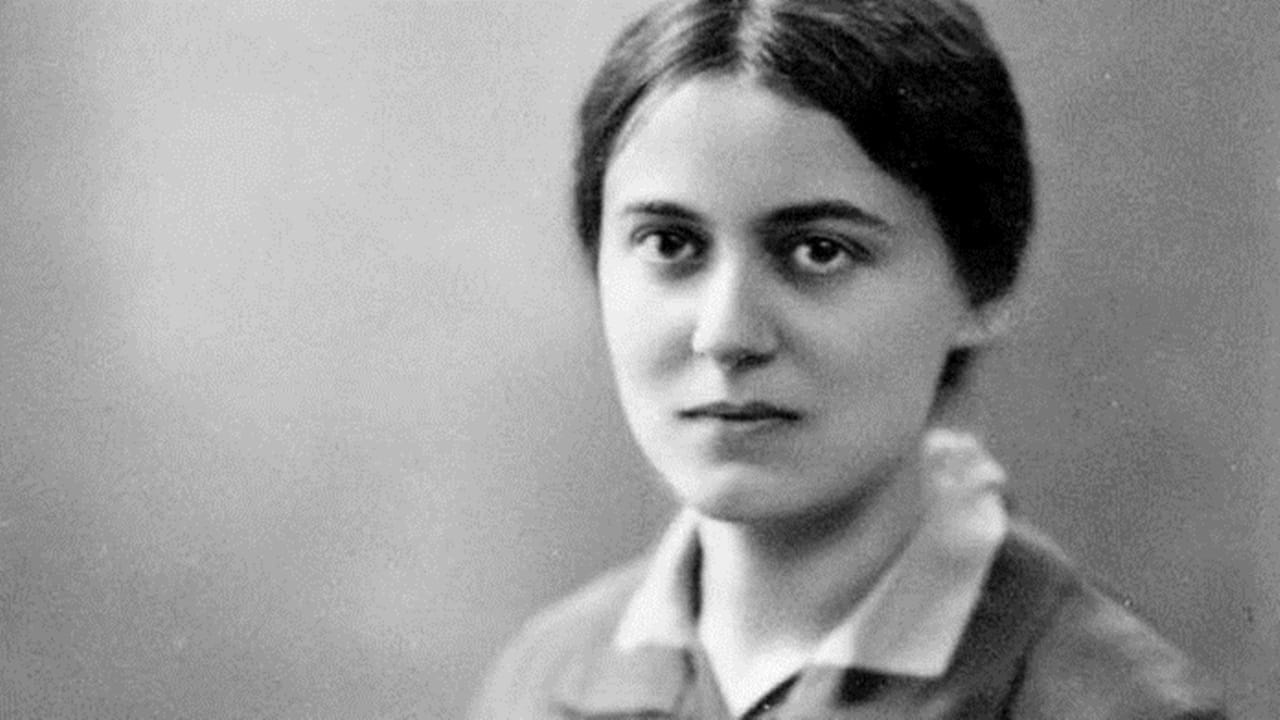
She was brilliant. She was faithful. In 1942, she was murdered in the gas chambers of Auschwitz. The German-born Jewish philosopher Edith Stein was a Catholic nun who took the name Teresa Benedicta of the Cross when she took her vows. She was canonized as a saint in 1998.
Though I am not Catholic, I am a Jewish follower of Jesus, and have long been inspired by Stein’s courageous story. I’ve wanted to get to know her better, but haven’t always found her writing accessible. Her training as a philosopher and her mystic’s soul, combined with sometimes-wooden translations of her work, have rendered her a somewhat dense read.
Thanks to a thoughtfully-curated little sampler of Stein’s work, A Sure Way: Following Truth in a World on Fire, published by Plough as part of their Spiritual Guides series, there is now an entry-level invitation for contemporary readers to listen to what a modern mystic and martyr has to teach us about navigating our own turbulent era. Editor Carolyn Beard frames Stein’s unique role and essential voice in history in her introduction to the volume: “Stein’s wartime writings, some of which are included in this book, are a compelling testament to what it means to live a life of faith in dark times. Written from Stein’s unique vantage as a Jewish-Christian monastic, these writings are also cutting reprimands of Christians who failed to advocate for or protect their Jewish brothers and sisters in their time of need.”
Stein’s words capture the push-pull that was constantly at work in her life. There was the push of the rationalist school of philosophy that trained her brilliant mind as an academic and the mystical pull toward her Messiah via the writings of Teresa of Avila, which immersed her thirsty soul in the mysterious and all-consuming love of God. Living in this seemingly-impossible tension turned out to be Stein’s superpower during a period in history that would lead to her murder in a gas chamber.
Though she grew up in an observant Jewish home, by the time she was a teen, she had embraced atheism and set her course as an academic, studying philosophy at the University of Freiberg. But after reading a biography of Theresa of Avila, she entered the Catholic Church in 1922. She wanted at that point to live a life of prayer as a cloistered nun, but her superiors felt that her education and teaching gifts would be best used in the classroom. She taught at a Jewish school in Speyer until forced from her job in 1933 by the first wave of virulently antisemitic Nazi legislation.
A Sure Way contains the text of a letter Stein wrote to Pope Pius XI that year, pleading with him to intercede on behalf of her Jewish people. She could see clearly what was coming next—and that it would not stop with the Jews. She warned that Catholics who wanted to survive in Nazi Germany would be required to abandon their faith and subsume their identity to the State. After detailing the horrors of what she was seeing in the early weeks of Nazi rule, she wrote:
Everything that has happened and continues to happen on a daily basis originates with a government that calls itself ‘Christian’. For weeks, not only Jews but also thousands of faithful Catholics in Germany, and I believe, all over the world, have been waiting and hoping for the Church of Christ to raise its voice to put a stop to this abuse of Christ’s name. Isn’t this idolization of race and governmental power, which is being pounded into the public consciousness by the radio, open heresy? Isn’t the effort to destroy Jewish blood an abuse of the holiest humanity of our Savior, the blessed Virgin, and the apostles? Isn’t this all diametrically opposed to the conduct of our Lord and Savior, who, even on the cross, prayed for his persecutors?
The following year, she entered full-time religious life. By 1938, hoping to keep her safe, her religious order sent her to live in a convent in the Netherlands. She wrote prophetically during this period, calling her sisters and others who’d read her words to single-minded, courageous faith that would counter the oppressiveness of fascism and the anguish of war that had blanketed Europe. In a 1940 Epiphany message she penned these words:
…the more an era is engulfed in the night of sin and estrangement from God, the more it needs souls united to God. And God does not permit a deficiency. The greatest figures of prophecy and sanctity step forth out of the darkest night…Certainly, the decisive turning points in world history are substantially co-determined by souls whom no history book ever mentions. And we will only find out about these souls in whom we owe the decisive turning points in our personal lives on the day when all that is hidden is revealed.
The book is divided into five tight sections that offer a glimpse into Edith’s inner world: Ways to Know God, At the Foot of the Cross, Light Breaks In, Women’s Spirituality, and A World in Flames. Though many of the words in A Sure Way call for activism, they are drawn from a deeply contemplative well. An excerpt from a 1928 lecture she gave before the Nazis rose to power highlights the contribution that women-as-nurturers could make to German society no matter what her vocation or station. Stein roots this conviction in both a generous vision of the dignity of imago Dei in all of humanity and in her experience receiving spiritual nourishment and inspiration from the life of Jesus’s mother, Mary.
Stein’s contemplative life held her during the final years of her life, but eventually, the walls of the convent could no longer protect her. She always maintained her Jewish identity, and never saw it at odds with her Catholic faith. And in the end, both of those things put a double bull’s eye on her back. She was rounded up along with some other Jewish Catholics and arrested on August 2nd, 1942. She was murdered a week later.
Edith Stein’s brilliance found sanctuary in God in a hostile world. A sense of both earthy groundedness and soaring awe saturate her work as befitting someone who lived in the tension of complex questions of faith and identity. As she entered religious life, she wrote,
How wonderful are your gracious wonders
All we can do is be amazed and stammer and fall silent
Because intellect and words fail.
Those were not religious platitudes for Stein, but a revelation of what fueled her until she breathed her last breath of Zyklon B in the gas chamber at Auschwitz. For those of us who see our own world on fire, spending time with Edith Stein’s words may help orient us to what it takes to walk through the flames, one foot in front of the other, on the narrow path with Jesus.
The Weekly Digest
Premier Thought Every Thursday.
All of our recent essays and podcasts, delivered to you. Free.
Free. Delivered Thursday mornings.