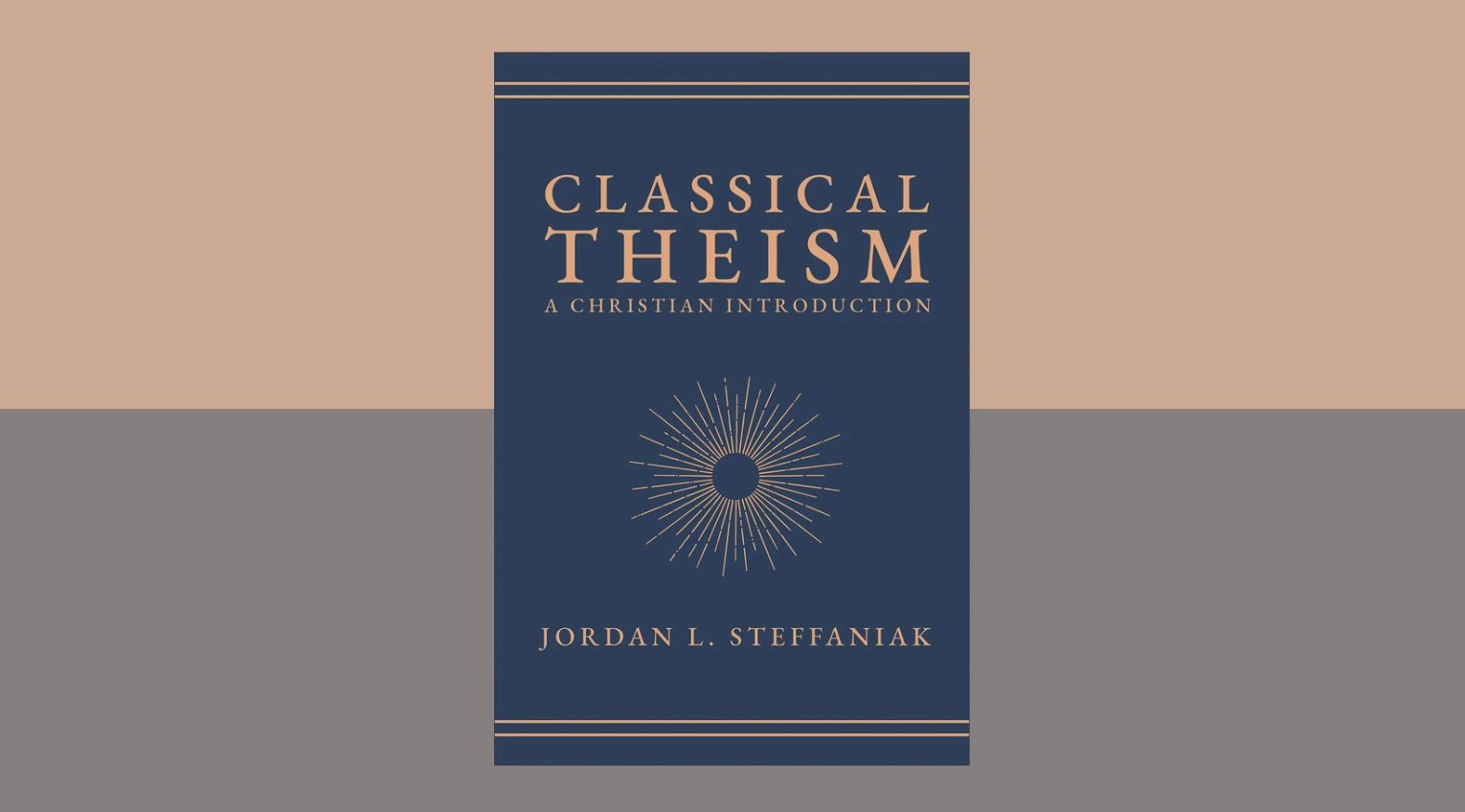
Jordan L. Steffaniak. Classical Theism: A Christian Introduction. Lexham Academic, 2026. $39.99. 376 pp.
These are the best of times and the worst of times for classical theism.
Times have never been worse, because modern and postmodern theological, philosophical, and hermeneutical challenges have eroded central pillars of theology proper, which in places have buckled or become so reworked as to become distorted and misshapen. Among mainline or modernist theologians, represented by Moltmann or social trinitarianism, classical doctrines like impassibility either must be dispensed with altogether or are so re-defined in revisionist reconstructions that they no longer are load-bearing structures distributed throughout the theological system as a whole.
But, perhaps surprisingly, not a few conservative evangelicals followed suit. While deeply committed to the doctrine of biblical inerrancy, for example, and desirous of a theology that is exegetically rooted in scripture, at times even adherents of a biblicistic theological method have departed sharply from the theological traditions of their Protestant and evangelical forebears on doctrines such as divine simplicity, impassibility, and more. In short, challenges to classical theism emerge from all quarters across the conventional progressive-conservative/ Mainline-evangelical/ liberal-traditionalist binaries.
Times have never been better, because contemporary students, teachers, and theological writers have genuinely unprecedented access today to primary sources of classical Christian theology, to an extent that would have been unimaginable to all Christians who have lived before us. Consequently, ours is a day of flowering projects of retrieval across several Christian traditions.
And yet, not all is well among those calling for a recovery of classical theism. Numerous pitfalls, if not temptations, beset such calls for retrievals. Here are only five.
First, “modernity” in such conversations is often a malleable and convenient bogeyman upon which any number of problems can be blamed. Can theologies of retrieval do more than harken for the past, but constructively and critically engage a steelman, and not merely a scarecrow, of modern theological concerns and insights?
Second, nostalgia for heroes of faith or a devotion to one saintly hero or another (whether Augustine or one of the fathers, or more commonly Thomas Aquinas) can distort projects of retrieval into repristination. Perhaps as an over-correction to a presentist mindset of chronological snobbery, which looks down upon the benighted past of Christian theology as something to be overcome, the charm of simply returning to a lost golden age can sound like a panacea for all that ails us. Yet our situatedness as finite creatures and theological vocation as human beings means that regardless of whether it is possible, it is not desirable to adopt another’s thought as our own whole-cloth. Further, the conditions of modernity mean that we only ever will retrieve broken shards from some past figure in ways that are misleading, especially if we are inattentive to the cultures from which their ideas and practices emerged.
Third, with respect to a definition, “classical theism” has suffered a very complicated fate in the past few decades of becoming a slogan. By now, I fear it has become a kind of hand-waving term: a vague gesture towards something that is probably real, but no one is quite sure what precisely it entails or refers to. Augustine and Aquinas are often named pillars of classical theism, but that is not necessarily a term they themselves would recognize, so what does it mean or involve?
Fourth, around ten years ago there appeared to be an emerging consensus of theologians like Craig Carter and Matthew Barrett (among others) calling for an evangelical recovery of classical theism as a course correction to errors, such as those that led to the Eternal Functional Subordination debates about the doctrine of the Trinity in 2016. Yet, that movement has to some extent broken apart, perhaps due to problems of repristination, as Jordan Steffaniak has identified.
Fifth, there is clearly a Protestant retrieval movement afoot, especially among younger theologians and students who aspire to be both Reformed and catholic. And yet, not a few of our evangelical brothers and sisters have already begun to ask, is it a dead-end, or just how evangelical can such a movement be? Does Protestant retrieval inevitably lead to swimming not only the Thames, but eventually the Tiber or the Bosphorus?
Clearly, someone needs to intervene in conversations about classical theism not only at the highest level of scholarly discussion, but especially for seminary students and undergraduate students of theology who were interested in going deeper. In my own journey in theological education, both as a student in the past and now as a continuing learner in my dual capacity as professor and pastor, I wish that I could have had a deep but accessible exposure to the profoundly generative doctrines, texts, and ideas of classical Christian theism much earlier than I did.
All of this to say that Jordan Steffaniak is to be especially commended. His Classical Theism: A Christian Introduction is an exhilarating and edifying read that should prove challenging yet still accessible for beginner theology students. This book might also be helpful to biblical scholars, especially those of more biblicistic bent, who would like to learn more about classical Christian dogmatics, especially as a resource for further illuminating Scripture.
In terms of posture, Steffaniak’s self-described disposition is that of a reformed catholic who strives to be at once modern and orthodox. Steffaniak helpfully notes that there is more to classical theism than Thomas Aquinas, but not less, and he cautions against some recent evangelical discussion of classical theism that is insufficiently attentive to Thomas’ body of writings. Steffaniak offers a nuanced and distinctively Protestant approach to theology proper noting that “dogmatic theology is chiefly an ecclesial theology.” Drawing upon Herman Bavinck’s Reformed Dogmatics, he notes that the church is the creature of the word, so it receives and does not create the rule of faith, since “the power of the church is not sovereign and legislative but ministerial and declarative.”
A real virtue of this book lies in Steffaniak’s interactions with the latest theological conversations while remaining deeply in touch with the classical Christian tradition. He does so in a manner that remains readable and broadly accessible to students and serious readers. To take a random example of this eclecticism and the span of his conversation, while discussing the Divine Names, he interacts with Richard Muller’s Post-Reformation Reformed Dogmatics, Petrus van Mastricht, Tyler Wittman, Herman Bavinck, Francis J. Hall, John of Damascus, John Calvin, Janet Martin Soskice, and Andrew Davison.
It almost goes without saying that Steffaniak’s book should prove a touchstone for future conversations or debates about classical theism. A serious contribution of this book is simply one of definition. What does classical Christian theism entail? At a bare minimum, it includes commitments to divine aseity, divine goodness, divine simplicity, divine immutability, divine eternity, and divine impassibility. Each of the chapters devoted to these four doctrines provides not only the scriptural basis of these doctrines but also incisive analysis responding to the foremost objections and challenges raised against them (for instance, responding to RT Mullins’s numerous critiques to divine simplicity and timelessness). The chapter on eternity, for instance, is especially insightful. I can envision this book being a helpful resource not only for a course on theology proper but for a pastor trying to understand how to navigate objections to doctrines such as immutability and eternity that arise in questions about unanswered prayer.
Steffaniak helpfully concludes his book by outlining eight theses of mere classical theism:
- Classical theism arises organically from the Bible.
- Classical theism is most fundamentally concerned with articulating the coherence and foundation of God’s love and covenant faithfulness.
- Classical theism is undergirded by divine aseity and divine goodness.
- The “classical” attributes are primarily negative in scope.
- Classical theism has shared sensibilities about the epistemological process.
- Classical theism is the consensus view of the church catholic.
- The classical tradition and classical theism necessitate piety.
- The telos of classical theism is doxology.
Finally, the tone adopted by the author throughout this book is worth briefly commenting upon. Steffaniak’s writing in this book is not only gripped by desiring and delighting in God, but he also expressly counsels and guides his readers, like an office hours chat between a professor and a student, on why classical theism is not only true but utterly captivating, not only defensible but fuel for fires of devotion and worship, for living and dying with repentance and faith amidst suffering, mission, and preparation for martyrdom. Since humanity’s chief end is to glorify and enjoy God forever, therefore “a deep appreciation and articulation of the classical doctrine of God fuels our confession of God as God. All true theology leads to worship. And this is the most practical of ends that we could ever labor toward.”
Steffaniak is further alert to how significant theology is for our sense of our own humanity, since “even difficult areas of theology are part of what fulfills our longings as humans. In some deep and mysterious way, laboring to know difficult dogmas for no purpose other than experiencing God is very good. It makes us more human and leads us to deeper union with God. There is no ‘practical’ justification need.” Further, something I can readily attest to from my experience in pastoral ministry is that “our churches are not made only of those uninterested in intellectual pursuits. The parishioners that fill the pews are not content to know as little as possible. Many in our churches are salivating for robust, sound doctrine. They are pining for serious dogma. They are searching for the challenge of Mount Everest.”
At times the tone of this book was a bit surprising, when the author moved from discussions to quite complex topics to first-person counsel to the reader, or short staccato sentences aimed at those new to studying theology. But here arguably Steffaniak is at his best, as he explains what theology is, or perhaps what it should be. He not only models charitable and respectful disagreement with his interlocutors, but expressly exhorts his readers to think about those he is disagreeing with like fellow saints one might see at church on Sunday. Consider this footnote on pg. 311, while advocating for a classical doctrine of impassibility over and against recent revisionist approaches:
While I am rather critical of [D.A.] Carson here, I should be clear that I owe him (as do many other evangelicals) a great debt. During my undergraduate studies he unlocked a love for Scripture and theology for me. Without his work I would not have progressed in my own understanding knowledge of the divine mysteries. Further, as with many of the evangelicals I have been critical of at points, one should be as charitable to them (and to older saints who can no longer speak for themselves!) as one would be to a fellow church member one sees in worship every Sunday. Many of them did not have the benefit of the classical ‘revival’ that many are seeing in Protestant evangelical circles today.”
It is not common in academic books to hear something adjacent to an altar call written in the first-person, that “for those that remain unconvinced of classical theism, I pray your heart still has been warmed… if you remain distant from classical theism, [I hope] that you feel welcome. Because you are. All are welcome at the table of our good God.” Given norms of academic discourse, perhaps that means this is not a conventional academic book; so be it. Though there was a parting of the ways between intellectual rigor and spiritually minded piety during modernity, things have not always been so. Perhaps these little comments to the reader are the most “classically theistic” thing about this book.
The Weekly Digest
Premier Thought Every Thursday.
All of our recent essays and podcasts, delivered to you. Free.
Free. Delivered Thursday mornings.