If you spend time in Anglican circles, you eventually will hear a number of claims about us. You will hear that we are neither Protestant nor Roman Catholic but a via media between them (with some throwing in a pinch or more of Eastern Orthodoxy as well). You will hear that we are not confessional. In fact, you might hear that we have no theology distinctly our own. You will be told that our unity resides in one or both of the following: liturgy alone as found in the Prayer Book tradition; or structure—the international “instruments of union” consisting of England’s Archbishop of Canterbury, the once-a-decade Lambeth Conference, the Anglican Consultative Council (ACC), and the Primates’ Meeting of the leading clergypersons of every Anglican province.
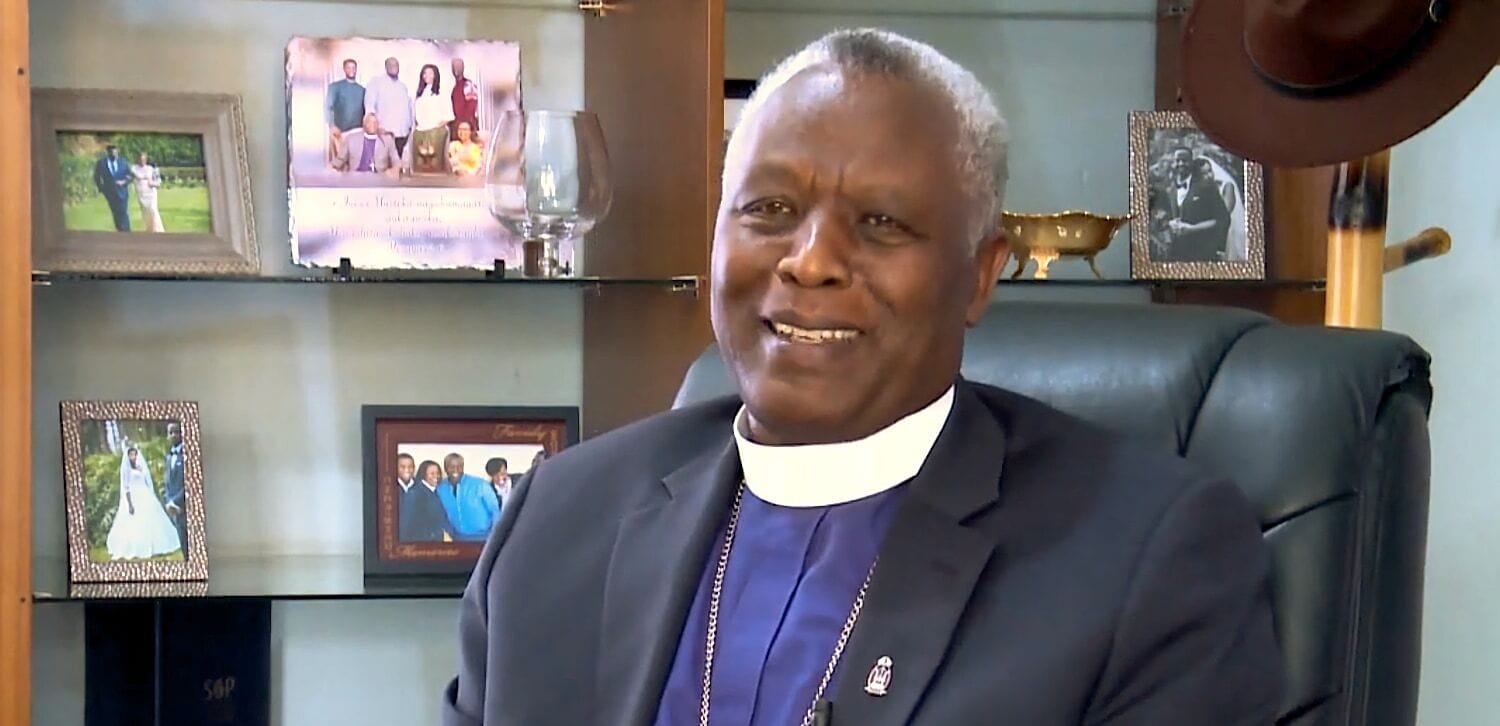
Earlier this month, a crucial meeting of worldwide Anglicans rejected these claims. The Global Anglican Futures Conference—GAFCON—met from March 3-6 in Abuja, Nigeria. GAFCON was formed in 2008 to seek reform and renewal within the Anglican Communion. This formation came in response to the actions of theologically progressive forces within the Communion, especially the Episcopal Church in the United States. GAFCON’s affiliated provinces have included the vast majority of Anglicans in the world.
At the end of this most recent meeting, GAFCON produced a statement called the Abuja Affirmation. The Affirmation sought to further act on previous calls to not just reform but to “reset” and “reorder” the Anglican Communion back toward orthodoxy. Along these lines, it pursued the already-stated hope for a Global Anglican Communion, seeking for it to take further shape. In doing so, the Abuja Affirmation continued to refine a definition of Anglicanism and of communion between its various provinces. It was in this articulation that the Affirmation gave a decidedly different set of answers to the definitions previously stated.
First, Anglicanism is decidedly Protestant. The Abuja Affirmation sees Anglican doctrine as that “expressed in its Reformation Formularies.” The Affirmation looks to the “English Reformers” as a model because they rightly, “understood that the gospel revealed in Scripture is the source of life for the church now and for our eternal life together in the age to come.” Thus, the English Reformation marked a defining moment in Anglicanism. It recovered important and precious truths about the Gospel from which we should never swerve.
Moreover, the Abuja Affirmation grounds Anglicanism’s character in the foundational Protestant doctrine of sola scriptura. The Affirmation declared that, “God’s Word is the final authority in the church and in the life of discipleship.” This point drew back to the Jerusalem Declaration—a document produced at the first GAFCON meeting in 2008 and which has become a rallying point for orthodox Anglicans. That Declaration claimed that Anglicans believed “the Holy Scriptures of the Old and New Testament to be the Word of God written” which should be “taught and obeyed in its plain and canonical sense.”
The Jerusalem Declaration had noted that Anglicans read Scripture, “respectful of the church’s historic and consensual reading.” This point has been raised by some more Anglo-Catholic camps who wish to contest either Anglicanism’s Protestant DNA, its commitment to sola scriptura, or both. But, while respectful, even deferential to historic readings, Anglicans should not treat any source in a way that would submit Scripture to it. Along these lines, statements in-between Jerusalem and Abuja have further affirmed and clarified sola scriptura as Anglican doctrine. The Martyrs Day Statement of 2025 said that Scripture is “the inerrant Word of God.” Though perhaps not immediately apparent, this claim was a blow struck for sola scriptura. For, as the Kigali Commitment reminds us, since “The Bible is God’s Word written” it thus “carries God’s own authority” as nothing and no one else does. No attempts, however subtle, should undermine that authority.
The Kigali Commitment of 2023 also said that the Bible, “is its own interpreter, and it does not need to be supplemented, nor can it ever be overturned by human wisdom.” The Kilgali Commitment further spoke of Scripture’s “clarity” and “sufficiency.” Thus, our reading of Scripture is aided by but need not and should not be enslaved to our theological ancestors. Scripture still can speak fully and clearly for itself.
Second, Anglicanism is confessional. We do have statements of faith which should bind us. The Abuja Affirmation here looked to the Jerusalem Declaration of 2008 as the modern confessional statement for Anglicanism. GAFCON documents published between the Jerusalem Declaration and Abuja Affirmation have, once again, made the same point. The Martyrs Day Statement called the Declaration, “the contemporary standard for Anglican identity.” In fact, GAFCON now has stated that members of the emerging Global Anglican Communion must “assent to” the Jerusalem Declaration. Therefore, confessional subscription is increasingly a part of today’s Anglicanism.
Yet the Jerusalem Declaration was merely a renewal of Anglican confessionalism, not its start. The Declaration itself looked back to Anglicanism’s confessional heritage. In particular, it referenced the 1571 Thirty-Nine Articles of Religion, a confession to which Church of England clergy for centuries were required to subscribe. The Jerusalem Declaration stated, “We uphold the Thirty-nine Articles as containing the true doctrine of the Church agreeing with God’s Word and as authoritative for Anglicans today.” Thus, to subscribe to the Jerusalem Declaration involved subscribing to the Thirty-Nine Articles. The Declaration is a renewal of confessionalism that also retrieves the heritage on which it is grounded.
Third, as Anglicanism is confessional, so it has its own theology. We find this theology expressed in the confessional sources already noted. The Thirty-Nine Articles describe it. The Jerusalem Declaration affirms it and adds further clarifications for the 21st century context. Here, the 1662 Prayer Book and the Ordinal attached to it contribute as well in how they order worship and understand Holy Orders.
In these and supporting historical documents, we see Anglican theology as a Reformed strand of Protestantism. We have strong overlap with Lutheranism, including its greater retention of the Church calendar as well as its normative as opposed to regulative approach to worship. Yet our view of the sacraments is squarely in line with the Continental Reformed, having gained so much historically from Peter Martyr Vermigli, Martin Bucer, Heinrich Bullinger and, yes, John Calvin. The English Reformation-era perspective on God’s sovereignty, especially in matters of salvation, also aligned more with the Reformed as opposed to the Lutheran perspective.
Unlike either, we fully retained the historic episcopacy, seeing it as warranted from God’s Word and practiced in conformity to that Word by the early Church. Anglicans therefore should resist and oppose a tendency among some to treat our tradition as an almost empty suit, as a chance to construct as one pleases out of other traditions. Instead, we should know the Reformational substance of our tradition in order to teach it and to live it.
Fourth, the Abuja Affirmation looks to a different standard for unity than that already mentioned. Those other means of unity proved woefully insufficient in the 20th and into the 21st centuries. The proliferation of Prayer Books negated any substantial liturgical union. Moreover, the Prayer Book showed itself inadequate on its own to serve as a doctrinal standard (a position it was not constructed to hold by itself, anyway). The “instruments” also could not bear the increasing centrifugal theological pull. They merely papered over them, as certain Western provinces drifted, or leapt, into heterodoxy, then outright heresy.
Meanwhile, quickly growing African and Asian provinces remained orthodox in theology along with strong pockets of resistance within faltering Western provinces. The Episcopal Church’s 2003 consecration of Eugene Robinson, the first openly gay bishop, unequivocally exposed the rifts and the rot in the Communion. The Communion then failed miserably in holding the line on orthodoxy then as it had in less dramatic fashion in preceding decades.
In contrast, the Abuja Affirmation states that, “True communion is confessional, rather than defined by a shared history or institutional structures.” Anglicanism is again to be united by a common faith, commonly confessed. The Affirmation proclaimed that, “The Church’s one foundation is Jesus Christ her Lord.” That is her confession. Yet how does the Anglican Church know her Lord whom she confesses? In line with other stated commitments, the Abuja Affirmation articulated one fundamental source for her confession and thus for Anglican communion: Scripture. Jesus’ “life and teaching is revealed in the Scriptures.” Thus, the Martyrs Day Statement desired to see that “the Bible is restored to the heart of the Communion.” To that end, it said that the Anglican Communion would be reordered with, “only one foundation of communion, namely the Holy Bible.”
While Scripture will hold unequaled and unquestioned authority, it will not operate without support in this renewed Anglicanism. The Abuja Affirmation pointed to the Jerusalem Declaration as the contemporary contribution to confessional unity. Moreover, it referenced the “Reformation Formularies” as an additional, needed source of union. The Formularies included the Thirty-Nine Articles, the 1662 Book of Common Prayer, and the Ordinal commonly attached to the Prayer Book. The Martyrs Day Statement agreed, declaring that the Communion will be, “bound together by the Formularies of the Reformation” in addition to the Jerusalem Declaration. However, the Jerusalem Declaration and the Reformation Formularies would not compete with Scripture. They willingly submit to and seek to obey the Holy Bible, building upon rather than providing an alternative to that unique unifier.
Along these lines, this reordering does not mean the Prayer Book has no ongoing role in Anglican unity or doctrine; far from it. Yet it will not bear that load alone, as some claim it does. Nor will it operate only with failed instruments of structural union. Instead, the Prayer Book will take its proper place among a broader group of documents. While displaying doctrine, the Prayer Book will be treated for what the Jerusalem Declaration rightly calls it: “a true and authoritative standard of worship and prayer.” It will be complemented by even as it complements the other Formularies. Thus, too, Anglicanism must and will continue to be, as the Jerusalem Declaration affirms, “sacramental and liturgical.” Yet its sacramental and liturgical nature will be commanded and shaped as it historically was by Scripture, consistent with its English Reformed confession of the Gospel.
Coming out of Abuja, questions remain regarding exactly how the emerging structure of the Global Anglican Communion will operate. Those developments do take time. They do not tend to develop with lightning speed or in one moment. In that uncertainty, we pray for wisdom for those involved going forward. Yet we do have great clarity on what the emerging structure seeks to support: an Anglicanism proudly Protestant as it is firmly rooted in Scripture; an Anglicanism confessional in its beliefs, distinct in its theology, unified by its Scripture-based confession of Jesus as Lord and reinforced by its contemporary and Reformational Formularies. That is an Anglicanism worth working for, an Anglicanism worth fighting for. This is the Anglicanism of Jerusalem, Abuja, and of the future.
The Weekly Digest
Premier Thought Every Thursday.
All of our recent essays and podcasts, delivered to you. Free.
Free. Delivered Thursday mornings.