
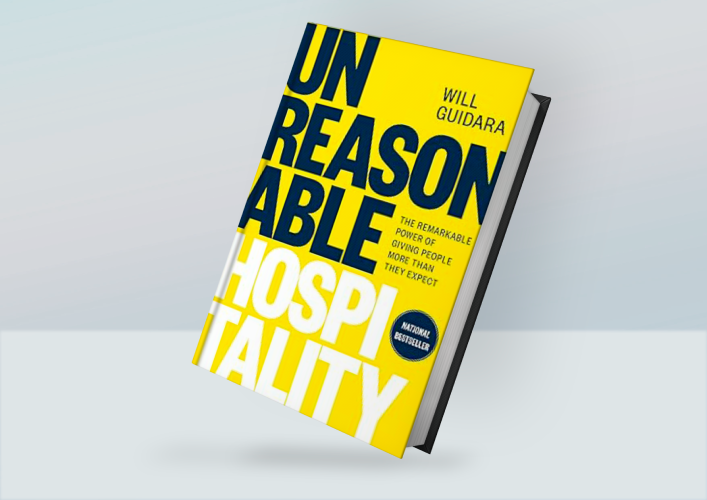
At the recommendation of a dear friend, I recently read Unreasonable Hospitality by Will Guidara. Guidara’s book has recently been widely recommended in leadership and business circles, and at first glance, a memoir about fine dining and world-class restaurants might seem like an odd place for a pastor to glean insights about ministry. But as I worked through the book, I was struck by how often I found myself underlining, highlighting, and thinking through many of the lessons and applications.
Guidara’s central idea is, simply, service is about doing a task well, but hospitality is about how people feel when they experience it. Unreasonable hospitality, then, is the intentional choice to go beyond what is expected in order to make people feel genuinely valued.
That distinction alone is worth lingering over, especially in the life of the local church.
Service Is Not the Same as Shepherding
Churches are often very good at “service.” We run Sunday School classes, organize volunteers, answer emails, publish bulletins, coordinate fellowship meals, hold committee meetings, and so much more. All of this matters. Orderly ministry, faithfulness in the mundane, and clarity in communication should not be optional features in the local church. Systems, committees, and effectiveness are nothing to scoff at.
But ministry can quietly drift into a transactional mode if we are not careful. People attend, volunteers serve, elders oversee, and everyone checks the box. The machinery works, but something vital can be missing.
Hospitality, as Guidara describes it, is not about efficiency or polish. It is about presence, attention, and care. That language resonates deeply with pastoral ministry. Scripture does not merely call elders to manage, but to shepherd. Shepherding is not only about guarding doctrine and administering discipline; it is about knowing the sheep, feeding them, leading them, and caring for them.
Ordinary Faithfulness, Extra Attention
One of the most compelling themes in Unreasonable Hospitality is that the most memorable moments are often small ones. A visitor’s name remembered, a fine detail noticed, or a thoughtful gesture makes a significant impact.
That principle applies directly to the local church. Most visitors who walk through our church doors are not looking to be impressed. They are looking to have true Christian community. They are looking for signs that this congregation is not just a place they can attend, but a family they can belong to.
So, what are some of the ways a pastor can create these “memorable moments” in the life of the church? Mail a handwritten note after a new family’s first visit, have a follow-up conversation that remembers what someone shared with you last week, or perform a quiet act of mercy, carried out without fanfare or recognition. None of these things are spectacular, but all of them reflect the Chief Shepherd’s heart.
The New Testament repeatedly emphasizes that the church is built up through the ordinary means of grace, the Word, sacraments, and prayer. We love the ordinary means of grace, but consider why God sovereignly ordained these means. It’s because He loves His people. Unreasonable hospitality does not replace those means; it adorns them. It displays our love, not only for those great means, but for the people who Christ has given us to shepherd.
Empowering the People Who Serve
Another major takeaway from the book is the way Guidara empowered his staff. Rather than scripting every interaction, he trusted people to make judgment calls in the moment. He prepared his staff to act with generosity, creativity, and care.
There is wisdom here for church leadership. Volunteers are not interchangeable parts, and officers are not merely functionaries. When we reduce ministry to scripts and systems alone, we unintentionally communicate that faithfulness is measured only by compliance.
When elders, deacons, and volunteers are encouraged to act wisely, compassionately, and personally within the bounds of their calling, the church’s work is carried out with discernment, care, and responsibility. Deacons notice needs and quietly meet them. Elders are proactive shepherds, rather than waiting for problems to surface. Members learn to see hospitality not as a program but as a posture.
This kind of culture does not emerge accidentally. It must be taught, modeled, and protected. But when it takes root, it demonstrates something amazing about the life of the body of Christ. Yes, the Lord Jesus is the Head of the Church, but we are the many members of it, and every member has a vital role in the church’s life for the mutual good of one another (1 Cor. 12:7).
Hospitality Without Confusing the Gospel
There is, of course, a necessary caution here. The church is not a restaurant, and the gospel is not an “experience” we curate. We do not measure faithfulness by how impressed people feel, nor do we soften the demands of repentance and obedience in the name of welcome.
True Christian hospitality is not about entertainment or emotional manipulation. It flows from the gospel itself. God did not merely serve us; He welcomed us. In Christ, strangers are made sons, enemies are made family, and sinners are brought near. The gospel did not come to us because they were impressive guests, but because God is gracious, slow to anger, and abounding in steadfast love (Ps. 103:8).
When hospitality is rooted there, it does not compete with discipleship. It supports it. It creates an environment where truth can be spoken clearly and received humbly, because love is visible and tangible.
A Worthy Challenge
Unreasonable Hospitality is not a ministry manual, but it is a helpful mirror. It forces us to ask honest questions about how people experience the life of the church. Are we merely efficient, or are we attentive? Are we faithful in form, but distant in posture? Do people leave our church feeling processed or shepherded?
Much of pastoral ministry is gloriously ordinary, and I am so thankful that it is! But ordinary faithfulness, carried out with deep care and love, reflects something of the heart of Christ. That, I think, is a lesson worth remembering.
originally published on Substack
The Weekly Digest
Premier Thought Every Thursday.
All of our recent essays and podcasts, delivered to you. Free.
Free. Delivered Thursday mornings.