
Every semester, new students pour into my classroom to learn systematic theology. With their sights set on ecclesial ministry or academic ministry, they are eager to break open textbooks, work through difficult doctrines, develop dogmatics, and simply pursue the theological life. While we get to all of that in due time, I start every one of my classes by opening our Bibles to 2 Corinthians 3:18 in order to set the stage for the end for which theology exists.
This singular verse, for me, lays bare the entire enterprise of Christian theology. Paul, writing to the Church in Corinth, says, “And we all, with unveiled face, beholding the glory of the Lord, are being transformed into the same image from one degree of glory to another. For this comes from the Lord who is the Spirit."
As unsophisticated as it sounds, Paul gives in this verse the verb that should characterize the many gears that turn when we exercise our theological imagination and contemplation—behold.
In reading this passage every semester for my students during the first day of class, I hope to show both the simplicity and the wonder of Christian theology. In saying that I hope to show the simplicity of theology, I mean that I want any student in the room who is coming in with insecurity about formal theological education, to see that the best theologians are those who have given themselves to developing the habits and virtues of those who can afford to simply behold. This is an activity even the simplest amongst us can perform—simply look. And yet, on the other side, anyone who has given themselves to this activity of beholding the beauty of the Lord knows that there is an inexhaustible well of glory to be seen when we dedicate ourselves to it. It is in setting our eyes on the Lord that we see the source of all that is true, good, and beautiful. Not even ten generations of beholding will resolve the majesty at which we look.
Framing the theological task in this way shows that theology itself is not the end for which we strive. Rather, theology is a gracious means to the great end of beholding God. If it is the Christian’s eternal vocation to behold God in the beatific vision in the life hereafter, we ought to be about participating in that great telos now by beholding God through theology in this life.
--
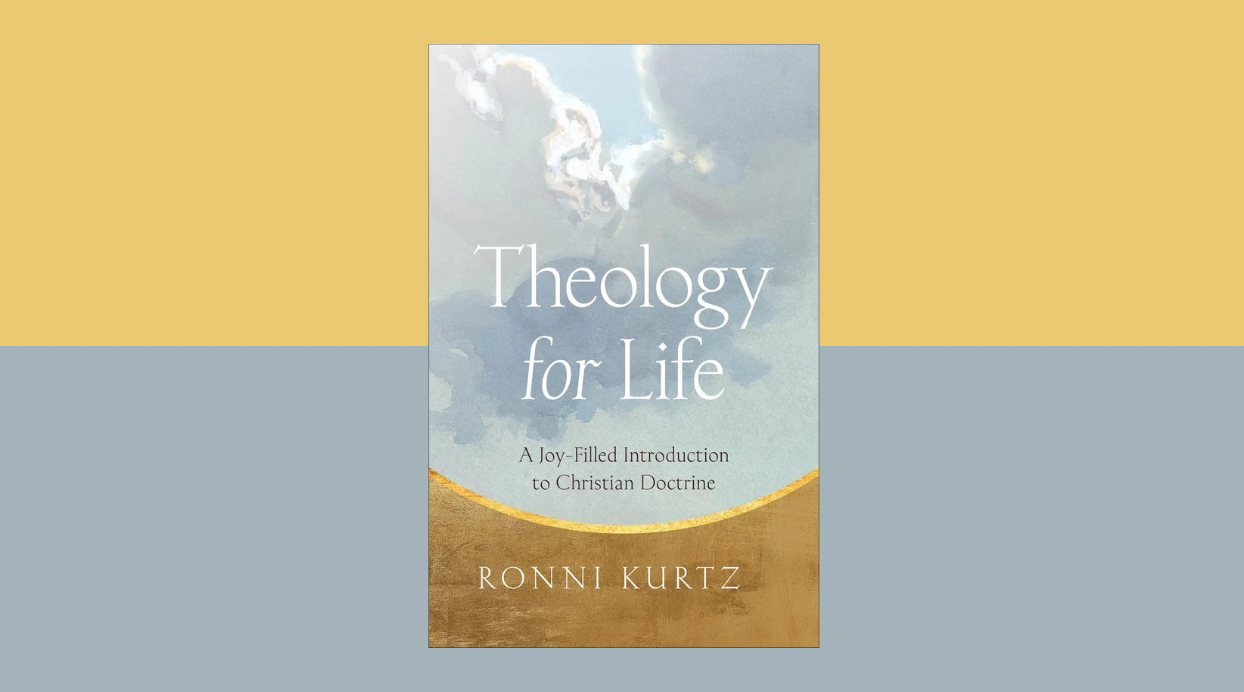
My hope in opening classes with the vision I describe above has spilled over into my hopes in writing Theology for Life: A Joy-Filled Introduction to Christian Doctrine. In the first sentence of the book, I say: “This book is built on a rather simple conviction: One of the most practical things we can do in the Christian life is get an eyeful of the beauty of the Lord.”
This new book, published by Baker Books, works through ten various doctrines, but as means not ends. Each of the ten doctrines works much like an optometrist adjusting our gaze that so we may focus well on God and his works. Each chapter is designed to have a flow that gives readers accessible handrails to hold while reading, but more important, to develop a rhythm thinking about doctrines. Each chapter begins with “defining” the doctrine before moving into “delighting” in the doctrine. This two-part rhythm reminds readers that the proper theological path is one in which their eyes will be lifted—lifted from the page, the words, the ideas, and even the theological truths themselves toward the Lord.
Readers ought to feel that upward tilt is not incidental to a chapter or two, but rather is the conviction of the book playing itself out throughout. Each of the ten doctrines—trinity, attributes, creation, scripture, incarnation, justification, preservation, union with Christ, ecclesiology, and eschatology—aims to go beyond mere examination and into exaltation.
However, it must be said that the book does not shy away from theological grammar in hopes of accessibility. A frustration I have felt, personally, is that when I am looking for introductory texts in Christian theology, I’m often forced to choose between technical precision and accessibility. Of course, there will always be tension here and my claim is not that Theology for Life has found the perfect balance between the two ditches. Rather, I want to take the “optometrist” role of each doctrine seriously. A good pair of glasses is only a means to the end of better vision, just as theology is a means to the great end of beholding God. The analogy goes further, though, as you would not want an optometrist who is careless about prescriptions since glasses are not the ultimate end. The optometrist’s care in issuing a prescription serves the sight just as the theologian’s rigor serves the beholding.
Theology serves a much greater end than merely being correct but being correct still matters a great deal. Where a bad prescription leaves patients with still blurry vision, imprecise theological contemplation and grammar still perverts the theologian’s sight and song.
For this reason, I have decided to utilize theological grammar developed throughout the Church’s long history in the hopes of giving readers clarity. I wade into conversations and use words that some readers may be unfamiliar with—things like eternal relations of origin, divine simplicity, dyothelitism, imputed righteousness, the beatific vision, and more. However, readers can expect clear definitions for each new piece of theological grammar and an articulation of why such a word, idea, doctrine, or teaching really is good, true, and beautiful.
--
In the end Theology for Life is not a brilliant book. That may be bad salesmanship, but it is truthful. Instead of brilliance, the book aims at wonder. I aim to put theology in line with its proper telos—God himself. Paul gives us the shape of this in a written doxology he tucks in toward the end of a long treatise about God’s faithfulness toward his people. The apostle writes: “For from him and through him and to him are all things. To him be the glory forever. Amen” (Rom. 11:36).
Theology, if it is anything worth doing, can find itself inside those “all things” Paul has in mind. Theology is from God, since he is the source of its subject matter and not merely its most interesting subject. Theology is through him since it is only the mind which has been made alive by the resurrection which bears the needed prerequisite of faith seeking understanding. Finally, it is meant to end in or to him, and this is a piece easily lost even in the most well-organized dogmatics. A theology which never moves a person toward God has misplaced its own ending however sound its propositions and ordered its footnotes.
So, in line with how I begin every semester, my hope for this book is quite simple: I want hearers to behold God, just as I want to behold him myself. I’m convinced that in Christ I have found the one worth looking at for a thousand generations, and this book is a simple offering for God’s people to come and see the treasure in the field. The end of theology is God himself, and it is my earnest prayer that readers’ eyes are taken from the book toward his worthy direction.
(A small concluding note: The team at Midwestern Baptist Theological Seminary has put together a high-quality, and more importantly—free—video course which goes along with the book. I have provided a 30-ish minute video lecture for each chapter which is intended for churches and individuals to use as study curriculum along with the book. You can find the free course at Midwestern Seminary’s For the Church Institute.)
The Weekly Digest
Premier Thought Every Thursday.
All of our recent essays and podcasts, delivered to you. Free.
Free. Delivered Thursday mornings.