

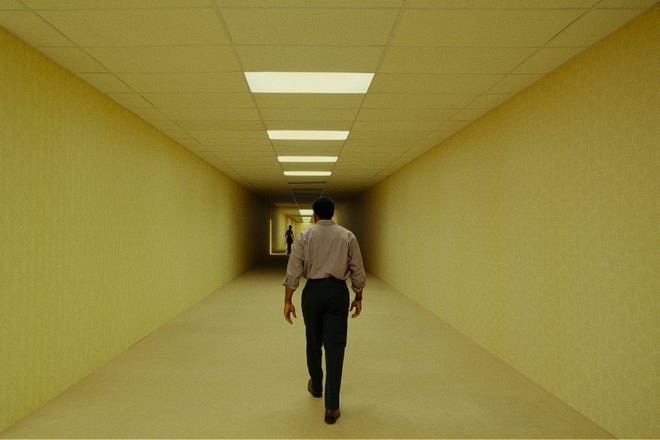
In R. J. Snell’s Acedia and Its Discontents, he compares the difference between living in the world of pre-modernism and the world of postmodernity.
The pre-modern person lived in an enchanted world where meaning was thought to reside in things themselves—the world was full, sometimes frighteningly full, of meaning. A bone fragment from a saint retained the sanctity and curative power of the saint…for things possessed their own meanings and powers and humans lived alongside those meanings rather than creating them…Things are quite different for the contemporary Western person occupying a disenchanted world where things mean only what we assign them.
…If one was irritated at the order of the cosmos in 1066, one was irritated, in a very real sense, at the ordering chosen by God; postmodern irritation is directed at nothing, just a coldly impersonal set of forces.
Much has been said about a cultural “vibe shift” away from cynical pessimism, about leaving the postmodern mood behind for something more aspirational. Metamodernism, what allegedly comes after postmodernism, is not a wholesale rejection of the irony and skepticism of postmodernism, but a decision to not make your home there, to dare to believe that there is something of meaning, beauty, and truth out there. Backrooms, A24’s latest box office gamble on a 20-year-old YouTuber-turned-director has paid off big time, mostly by rejecting this “vibe-shift.” The movie’s message is deeply postmodern.
The Loop of Trauma
The plot of the movie centers around two main characters set in the early 90s: a despairing middle-aged alcoholic, Clark, and his therapist, Mary. Both bring a long train of trauma with them. Clark’s dreams were set aside to help his wife pursue law school. Instead of becoming an architect, he runs a failing cheap furniture store to make ends meet.
But his drinking has pushed his wife away and so we meet Clark cocooned in despair and resentment, pursuing therapy but obviously not making much progress. He is trapped, Mary reminds him, in a “loop of trauma.” Bad things happened to him which lead him to spiral inward, rehashing the injustices of his past rather than forgiving and moving on.
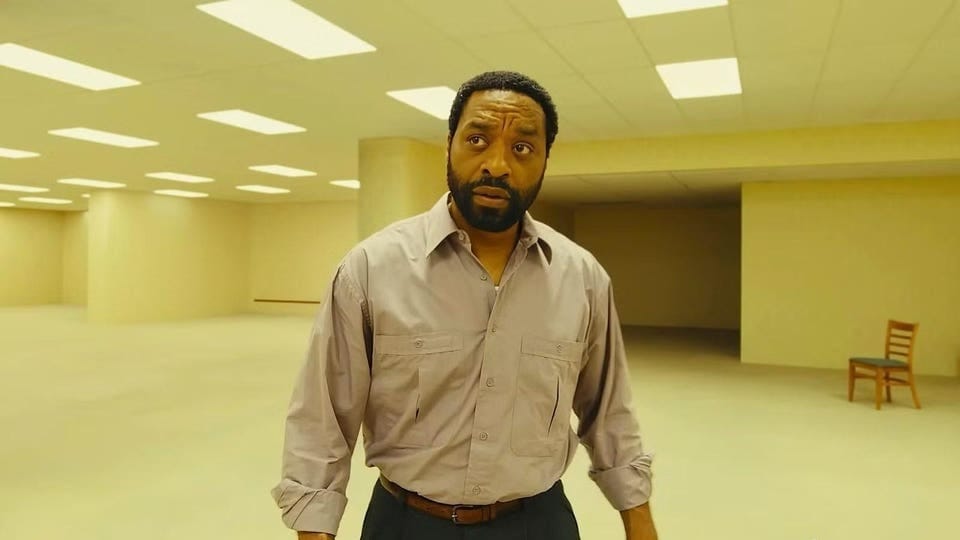
Mary, his therapist, reminds Clark he must escape this loop. Yet, she seems to be caught in her own. She pensively hides behind a mask, as if the real Mary is a thousand miles away. Her mind ruminates on her childhood when her mentally ill mother kept her trapped in her home.
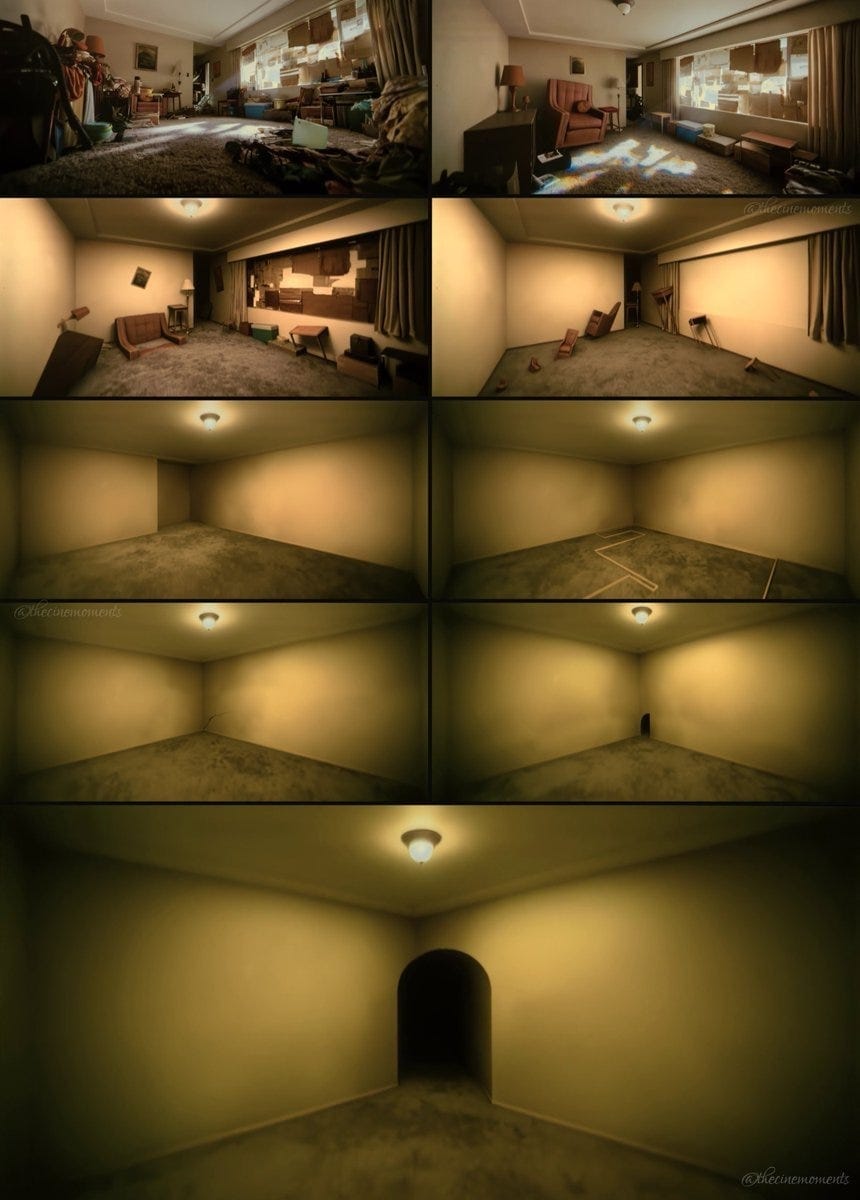
At one point, we see Mary as a child furtively attempting to crack open a papered-over window, only to have her mother rush at her in a maddened fury. Her home is a cacophony of debris littered hither and thither. The door is barricaded with a pile of furniture. Why, the mother asks, why would you do that Mary? We can’t go outside, it isn’t safe. Mary, not unlike Clark, is trapped. Even as an adult, her mind constantly is tugged backwards, stuck in the loop of her childhood trauma. Her book is aptly titled: Now You Can Open the Window Within.
Parsons is tapping into the existential dilemma that defines his generation. The stories of pre-modernity revolved around man at war with dragons, monsters, or gods. The stories of modernity wrestled with man at war with ideas, the state, the market. The stories of postmodernity spiral inward: man is at war with himself, at war with meaning–that is to say, at war with realizing that there is no meaning beyond the agony of self-discovery, self-expression, and therapeutic self-salvation.
Deconstruction
In the basement of Clark’s furniture store, he finds a mysterious portal to an alternate dimension that is somehow both infinite yet parasitically dependent on the real world. These sprawling labyrinths of rooms seem to be copied on snippets of our world, but done with an amateur’s hand, “Like you were describing a dog to someone who had never seen one,” Clark explains, “and then asked them to draw it.”
The rooms appear to be man made, feel familiar, but are “off” enough that one feels unsettled just staring at them. Doorways are too small, off-center, or in the floor. Angles run incongruously. Sloped floors lead inexplicably nowhere. Piles of furniture, or signs emerge halfway out of a wall. It is like someone digested our world and then puked a simulacrum of it back out. Or, perhaps more apropos for us (and what I think Parsons intends to evoke), it is like you asked AI to generate an infinite corridor of rooms similar to our own and it hallucinated a number of misshapen, inhuman elements.
The chaotic amalgamation of signs, rooms, doors, and other detritus push you into an uncanny valley. It is similar enough to reality that the dissimilarity and crookedness of it all feels unbearable. Who made these rooms? What is going on here? It evokes a similar but more disturbing sense of Alice stepping through the looking glass into a reality that seems to be upside down, void of meaning.
There is no particular reason why this hallway leads to that empty, windowless, beach-themed wallpaper room because in this world there is no reason for anything at all. Signs are gibberish, houses emerge halfway through walls, and stairways extend over vast chasms. In our world, for signs or houses or stairways to exist someone must build them. And therefore, must be built on purpose. But here? No one builds and therefore there is no purpose. It simply emerges and what emerges is meaningless.
A recurring scene in the film is Mary’s childhood home being deconstructed. The liminality of the backrooms has a similar deconstructionist motif. At one point, one character while fleeing for his life inexplicably finds an illuminated Christmas tree in one of the rooms. What is it doing here? A Christmas tree is a culturally rich symbol loaded with meaning: the story of Christmas, family, joy, festivity, traditions, etc. This is what French philosopher Jacques Derrida would call a cultural “text.”
But take that “text” out of the context it is normally set in, and what does it mean here in this bizarre, liminal space? Does this sign still bear its meaning? The character who finds the tree in the film does not see it and read “Christmas” from it. He is baffled and terrified: What is this doing here? What does this mean? The terrifying rejoinder that lurks just beneath the surface for the entirety of the film is: Nothing, none of this means anything, everything is facade. Derrida famously wrote: “There is nothing outside of the text.” That is, it may seem like there is a reality, meaning, that exists in of itself behind our cultural texts, the way the idea of “Christmas” exists apart from a Christmas tree. But Derrida argues that reality does not give us our texts, but it is the other way around.

And herein is the genius of Parson’s attempt at an existential horror movie. The greatest fear that lurks behind all fears for human beings living on the other side of modernity is not the presence of monsters or ghouls or serial killers. It is the fear that behind all the edifice and custom of our life, there is a great void of meaninglessness. I do not know if Parsons intended to evoke 20th century deconstructionism through his film, but the interaction with this symbolism demonstrates that this postmodern critique of reality is something that still has cache with the social imaginary of Westerners today.
But, Parsons doesn’t totally believe that “nothing matters.” Like a good postmodern, Parsons fixates on the “realest” thing he knows: our feelings.
Bad Therapy
Eventually, both Clark and Mary–who are psychologically attempting to stop the loop of trauma–are pulled into these “backrooms.” The rooms seem to generate based on poor copies of memories from who is there. Clark and Mary, both of which bear monstrous pain within, quickly find monstrous creatures lurking around the corner. Earlier in the film, Mary performs a method of role play therapy with Clark, having them act out the night that Clark’s wife left him. She is trying to delve deep into his repressed feelings with the hope that venting them will provide relief from Clark’s anger and resentment.
But down here, she has in some sense literally descended into Clark’s psyche and found that the expression of feelings doesn’t always bring health, but can summon something sinister. Earlier, Clark claims he wants to “escape the loop of trauma.” But down here, in the deepest recesses of Clark’s mind, we find something different. Mary has sincerely tried to help Clark, but in the backrooms she does not find a good but misunderstood man, but (at root) a deeply selfish, cruel, and sinful one. And here, Parsons seems to land a legitimate shot at the worst iterations of therapy culture today. We cannot blame all of our problems on the trauma inflicted upon us. Unless we are willing to take responsibility for ourselves and move beyond the past, we will be trapped in the loop.
The Monster Within
The question of Backrooms is “What does the great human drama of man finding himself look like in a meaningless world?” The kaleidoscope of debris and architecture-on-LSD is an uncomfortable assault on the familiar customs of purpose and meaning. But the real horror emanates from the one load-bearing beam that postmodernism has for meaning: what if the truest thing about you is not that you are misunderstood or traumatized; what if, deep down, you are responsible for the hurt and pain? In a world that has flushed metaphysics down the toilet, the only “real” thing we have is our experience, our feelings. And if we fail to find salvation within, if we “open the window” and find not light, but darkness, then nothing remains. Our only hope is snuffed out.
As a Christian, I find movies and stories that expose the price of postmodernism to be both deeply unsettling and when done well, (as Backrooms is) deeply satisfying. It is similar to reading Friedrich Nietzsche or early French existentialists. Here we have someone who is willing to pay the full fare of a materialist worldview with total honesty, even if the cost is agonizing to the mind. It is a bracing slap of reality against the cheery atheism of those who celebrate God’s death without realizing the price of unchaining the earth from the sun.
There is a kind of internal slingshot experience I have as I watched the film. I am pulled into the despair and meaningless of the story, only to be shot back into my own worldview suffused with a metaphysics that extends far beyond my inner world of feelings or cultural world of signs and texts. God exists, has ribboned this world with meaning, and has prepared a salvation for me that is thicker and more durable than any thin soup therapy-culture is eager for me to drink. My hope isn’t that the further down the rabbit hole of my psyche I descend, the more I am able to find inner peace. My hope is in a Savior who dies to redeem monsters and sinners, and transform them into beloved, forgiven saints. Perhaps the more honest people are about the cost of a life without God, the more eagerly they will seek after the Truth.
The Weekly Digest
Premier Thought Every Thursday.
All of our recent essays and podcasts, delivered to you. Free.
Free. Delivered Thursday mornings.