

I once had a conversation with a prominent evangelical figure during which I unexpectedly found myself being chided for where I was born. Being from Iowa, this person suggested, meant that he was somehow less susceptible to the realities of sin that clearly, to his mind, must have affected me being from California. Looking back, I think that I can safely say that his comment was intended to be tongue-in-cheek, but it still rubbed me the wrong way. It suggested, at the very least, a lack of humility. It might have even pointed to an underdeveloped doctrine of sin, as if sin doesn’t affect the lives of people in the Midwest, and an equally underdeveloped doctrine of grace, as if grace somehow stopped at the border of my home state.
Death has no time for such sarcasm.
The prospect and the reality of death quickly remove the notion that any person or community is free from the wages of sin (Rom. 3:23). This is, of course, a truth that all people learn at some point, some at a very early age, even if it tends to be placed on the back burner of our thoughts. In the past year, I have spent a significant amount of time reflecting on the reality of death – some of which I have willingly undertaken, and some of which has been thrust upon me.
With a Little Help from My Students, a Book, and a Film
Under the Core Book program at Wheaton College, where I have taught for nearly two decades, the entire college community is invited each year to read the same book (in addition to the Bible), to engage in communal reflection and learning, and to participate in on-campus events related to the book. For this most recent academic year, the Core Book was When Breath Becomes Air, a memoir by Paul Kalanithi that was a finalist for the Pulitzer Prize. It tells his story about being a rising neurosurgeon who receives a terrible diagnosis of incurable stage IV lung cancer at the age of 36. I had my first-year students read the book in class. I think it’s safe to say that it’s not exactly what they were expecting for their first semester in college.
Given the prominence of Wheaton College locally, the number of churches in the immediate community, and the presence of prominent Christian institutions in the area (for example, Christianity Today, multiple Christian publishers, and a variety of parachurch organizations), Wheaton is regularly regarded as among the most “Christian” of communities in the country (with all apologies to Nashville, Colorado Springs, Grand Rapids, Birmingham, and others). Having spent nearly twenty years here, I can confidently say that Wheaton undoubtedly benefits from the presence of such institutions. But I can also say with equal confidence that Wheaton is fallen and in need of redemption. Wheaton, too, is susceptible to the reality of death.
As a college community, we were reminded of that unwelcome truth recently with the sudden passing of our colleague, professor, and friend Daniel Treier. Like the author of our Core Book, Dan received a diagnosis of stage IV lung cancer. Others who knew Dan better than I have written eloquently about his particular contributions to evangelical theology through his teaching, writing, and mentoring of students (for example, see Kevin Vanhoozer’s tribute). I knew Dan both personally – our families attend the same church, our teenage daughters are friends, and we would occasionally chat about baseball or play golf together (he was much more consistent in his drives off the tee than I am) – and professionally – in my role as an academic editor, I worked with him on several projects, and I had recently contracted him for a book on Scripture. I wouldn’t be the first person to note that he conveyed both a seriousness about his work and a cheerfulness that would shine through at times. I still catch myself sometimes looking over at church, expecting to see him where he sat each week.
Of course, this wasn’t the first time that death had knocked on the door of Wheaton College. Like any other community, we grieve, we celebrate the lives of those we have lost, and we wrestle with questions. But it has occurred to me that we might be better equipped than some communities to respond to the questions that inevitably arise when death shows up uninvited. For my part, at least, I found comfort not only in the words of Scripture, but also – perhaps surprisingly – in the college’s Core Book and another unexpected source: a film by Terrence Malick, which we screened for students at the college last year.
An Invitation to Die
On the cusp of launching a successful career, Kalanithi writes in his memoir, “I had reached the mountaintop, I could see the Promised Land, from Gilead to Jericho to the Mediterranean Sea.” But as he examines his own CT scans, he knows that everything has changed. Even as he grew steadily weaker, Kalanithi was determined to record his life and his final days. Through his words, he invites us to consider how we would respond when confronted with this reality.
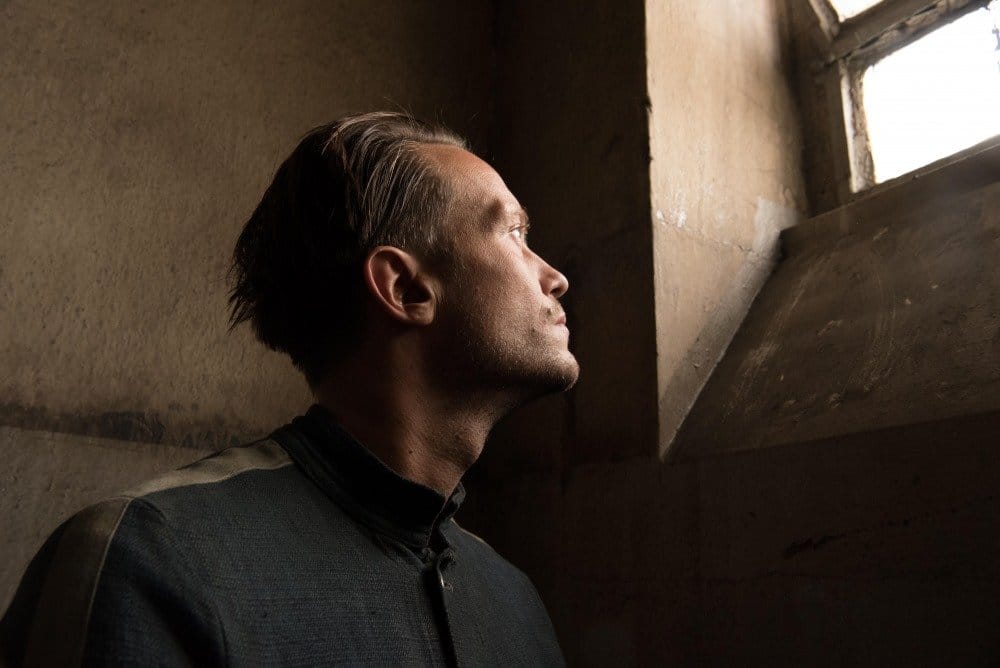
A Hidden Life, a 2019 film by Terrence Malick, offers a similar invitation. Malick presents the story of Franz Jägerstätter, an Austrian farmer and devout Catholic who, when called to serve in the Nazi war effort, refuses to take the oath to Hitler. For this refusal, Franz and his family, including his wife, Fani, are increasingly ostracized in their small village of St. Radegund. Later, Franz is arrested, imprisoned, and ultimately executed.
As is so often the case in Malick’s films, especially those that he has made in the past twenty years, running beneath the stunning imagery and the rich texture of music is a pressing question. In this case, the question is not only “What would you do?” if you were confronted by this situation, which might seem rather distant to most of us. No, Malick won’t let us off that easily. His film also asks, in a way that is applicable to each one of us, “What will you do? What will you do when confronted with the reality of death? And what kind of life do you want to live until then?”
Taking a cue from Brett McCracken, who, in his review of the film, calls A Hidden Life “a psalm crying out to the God of refuge and deliverance,” I turn to three psalms.
Pleasant Places: Psalm 16:5-6
The Lord is my chosen portion and my cup;
you hold my lot.
The boundary lines have fallen for me in pleasant places;
I have a goodly heritage.
If you are acquainted with Malick’s films, then the beginning of A Hidden Life will likely seem both familiar and yet distinct. Several of the features that have characterized his more recent films are immediately evident: the use of voiceover, extended images of nature (often featuring water, wind, light, and, here, mountains), long takes juxtaposed with a series of quick images, a mise-en-scène that is rarely still (either because the camera is moving, or the actors on the screen are moving, or both), and the use of music, especially non-diegetic music (that is, music that is not part of the world on the screen – in this case, the score from James Newton Howard and several pieces of classical music, including works by Bach, Handel, and others). These and other elements make watching a film by Malick a different kind of experience for viewers: for some, it can be disruptively different; for others, pleasantly so. His films, I have found, often give viewers time and space to reflect on their themes. Malick, you might say, likes to make space for the Holy Spirit to work.
In this respect, A Hidden Life (2019) will seem familiar to the acquainted viewer. Early on, we encounter idyllic images: the Austrian mountains; blooming fields; Franz and Fani at work side by side on their farm; memories of their first meeting. These images are accompanied by equally beautiful, and now diegetic sounds (that is, sounds that are part of the world on the screen): the noises of a farm; flowing rivers; the tolling of church bells; friendly neighbors; three children at play. Fani reflects, “It seemed no trouble could reach our valley. We lived above the clouds.”
In When Breath Becomes Air, Kalanithi describes his own version of a quiet valley. He tells us that he had not only developed a passion for medicine and, more particularly, neurosurgery. We also learn that he had an interest in literature, developing what he called “a deep love of, and care for, language.” There’s an MA in Literature sprinkled in among his medical degrees. So, it is perhaps not as surprising as it might have been for a surgeon who also loved works by Joyce, Solzhenitsyn, Tolstoy, and Hemingway among others to quote Walt Whitman’s 1892 poem, “Song of Myself,” when assessing his early life: “I, now thirty-seven years old in perfect health begin.”
An idyllic farm in the mountains. A bustling family. Perfect health. Are these not, to use the words of the Psalmist, “boundary lines [that] have fallen… in pleasant places”?
But already, as both readers and viewers, we have been warned. No matter how many times Paul looks at his own CT scans, he cannot avoid the diagnosis: “The future I had imagined, the one just about to be realized, the culmination of decades of striving, evaporated.” Similarly, in the film, the opening voiceover from Franz points to a hope, but one that is unrealized: “I thought that we could build our nest high up in the trees. Fly away, like birds, to the mountains.” What follows are images from Leni Riefenstahl’s notorious Nazi propaganda film, Triumph of the Will (1935), depicting Hitler descending through the clouds to arrive at a rally in Nuremburg. If we are paying attention, we also hear Bach’s St. Matthew’s Passion. Radegund may seem like an Edenic locale, but Malick has already suggested that it will not last. Fani hears plane engines roar in the distance. As viewers, we know that Austrian soldiers who are called to military service need to swear an oath to Hitler. To refuse would result in death, leaving Franz’s family abandoned. His parish priest tells him that his sacrifice would benefit no one. Even the bishop tells him, “You have a duty to the Fatherland. The church tells you so.”
The theological truth in both the book and the film is that sin and its effects are radical – that is, it affects and infects everything; it is everywhere. Nowhere and no one is hidden from it. Not California. Not Iowa. Not Radegund. Even in the Garden of Eden, sin enters in.
Passing Shadows: Psalm 144:3-4
O Lord, what are humans that you regard them,
or mortals that you think of them?
They are like a breath;
their days are like a passing shadow.
In one scene, Malick seems to intentionally echo Ingmar Bergman’s 1957 film, The Seventh Seal. In that classic work, a knight (played by Max von Sydow) and his squire return from the Crusades only to be confronted by the ravages of the Black Plague and the personification of Death. Later, they enter a small church, where they find an artist at work, painting a fresco of the Dance of Death. The squire asks the artist, “Why all this daubing?” “To remind people of death,” responds the artist. “That won't make them any happier,” says the squire. “I paint life as it is,” replies the artist. “Then folk can do as they like.”
Malick’s version of the scene presents Franz and an artist discussing his depictions of Jesus. “I paint their comfortable Christ with a halo over his head,” says the artist to Franz. “Someday I might have the courage to venture. Not yet. Someday I’ll paint the true Christ.” This artist-in-residence serves as a kind of stand-in for Malick, who might well be speaking to himself. His next film, tentatively entitled The Way of the Wind, is about the life of Jesus.
In the meantime, Malick has given us another passion. At one point, Franz is walking past a crucifix statue. He pauses to look at it, as if he knows where this is all going. According to Luke 9, shortly after the Transfiguration and after repeatedly foretelling his own death, Jesus begins to make his way toward the cross that awaits him. Verse 51 reads: “When the days drew near for him to be taken up, he set his face to go to Jerusalem.”
It is difficult not to notice some of the Christological comparisons in the film. The people from Franz’s hometown can’t believe what he is doing – for example, he refuses to donate to the German war effort – and the village begins to turn against the Jägerstätter family. “It’s an act of madness,” says one woman to Fani. “A sin. A sin against his family, against his village.” The mayor tries to convince him to change his mind: “You’re worse than them. Because they are enemies, but you are a traitor.” The peaceful, friendly village of Radegund has now become a stand-in for a disbelieving Nazareth. But Franz is resolute in his conviction. He explicitly quotes Psalm 144: “We are like a breath. Like a shadow that passes away.” You might say that he has set his face to go to Berlin.
As expected, Franz is eventually called up to serve in the military. In early March 1943, when he refuses to take the oath to Hitler, he is arrested and imprisoned. By May 4, he is taken to Tegel Prison outside Berlin. There, his Christ-like suffering continues: the soldiers mock him, beat him, abuse him. Like Christ in the garden, he prays to God. The authorities question him. Even some of his fellow prisoners mock him, like the thief on the cross. He is brought before the court. The Pilate-like judge (played by Bruno Ganz) asks him, “Do you judge me?” After a sham trial, he is condemned to death. Even a final visit from Fani and his parish priest will not change Franz’s mind or stay the execution.
Tegel Prison also happens to be the place where another anti-Nazi, Christian dissenter was held. Shortly after Jägerstätter was arrested, German theologian and pastor Dietrich Bonhoeffer was also arrested, but Bonhoeffer arrived at Tegel before Jägerstätter. Just more than a week before Franz’s arrival, Bonhoeffer wrote a letter to his parents, Karl and Paula Bonhoeffer on April 25, Easter Sunday:
What is so liberating about Good Friday and Easter is the fact that our thoughts are pulled far beyond our personal circumstances to the ultimate meaning of all life, suffering, and indeed everything that happens, and this gives us great hope.
Bonhoeffer outlived Jägerstätter by nearly two years, but he, too, was eventually executed by the Nazi state. In one of his earlier works, The Cost of Discipleship, he had revealed that he already knew the truth of the invitation to follow Jesus: “When Christ calls a man, he bids him come and die.”
Let us not forget that Franz’s passion also entailed the suffering of others, including his mother, his children, his sister-in-law, and especially his wife, Fani. She struggles to keep up with the work on the farm. She is ostracized by the villagers. From prison, Franz imagines his children taking part in the Corpus Christi celebrations, but Fani knows the truth: they have been excluded from these communal events. In his analysis of A Hidden Life, film critic Robert Kohen helpfully reminds us that when “Fani writes to an imprisoned Franz about his ‘three little women,’” she places the film alongside Louisa May Alcott’s novel, Little Women, “another work about the trials wives and children must endure when men are absent during wartime.” Like Mrs. O’Brien in a different Malick film, The Tree of Life, who prays to God after the death of her son, Fani prays: “Lord, you do nothing. Where are you? Why did you create us?”
In When Breath Becomes Air, Paul’s wife, Lucy, suffers alongside him. As he grapples with his diagnosis, Paul reminds his readers of the next line in that same Whitman poem:
I, now thirty-seven years old in perfect health begin,
Hoping to cease not till death.
Prior to Paul’s own death, a friend and fellow medical student, Jeff, died. Reflecting on this loss, Paul writes, “Death comes for all of us. For us, for our patients: it is our fate as living, breathing, metabolizing organisms… Jeff and I had trained for years to actively engage with death, to grapple with it, like Jacob with the angel, and, in so doing, to confront the meaning of a life… Our patients’ lives and identities may be in our hands, yet death always wins.” It is true that death is part of creaturely life. But it is still an enemy, an unwelcomed guest, an unintended consequence (Gen. 3:19), part of what theologian Karl Barth called the “shadowside” of creation – those limitations of our creaturely finitude and mortality.
Franz Jägerstätter was executed on August 9, 1943 at 36 years old. Malick depicts the church bell tolling in Radegund.
Hidden in Christ: Psalm 121:1-8
I lift up my eyes to the hills— where will my help come from?My help comes from the Lord, who made heaven and earth.
He will not let your foot be moved; he who keeps you will not slumber… The Lord is your keeper; the Lord is your shade at your right hand… the Lord will keep your going out and your coming in from this time on and forevermore.
As with Malick’s other films, it is worth pausing to consider the meaning of the title: A Hidden Life. How, exactly, is this life hidden?
There might be some irony at work here in that the small village of St. Radegund, though high up in the hills, was not hidden and could not be hidden from Hitler’s designs. Even this valley was not hidden from the reality of sin. In another sense, Franz’s life remained largely unknown and thus hidden from the public eye for a long time. In 1964, more than twenty years after Franz’s death, Gordon Zahn published the first biography about him, In Solitary Witness: The Life and Death of Franz Jägerstätter, bringing his story to light.
But we are given another interpretive clue at the end of the film. The closing title card offers a quote from Middlemarch by George Eliot:
… for the growing good of the world is partly dependent on unhistoric acts; and that things are not so ill with you and me as they might have been, is half owing to the number who lived faithfully a hidden life, and rest in unvisited tombs.
Eliot helpfully reminds us that it is not a life that seeks attention that brings lasting change. Rather, it is a faithful, quiet – yes, even hidden – life that leads to sustained flourishing. A life that sows seeds, like Franz and Fani on their farm, that will only grow in time.
I would echo Eliot’s advice. But I have to confess that this reading of the film leaves me somewhat unsatisfied. For it hardly recognizes the faith that guided Franz’s life, the faith that informed his difficult – almost impossible – decisions in the midst of great trials, the faith that remained with him until death. Might there be something else at work here?
In Colossians 3:1-4, we read:
So if you have been raised with Christ, seek the things that are above, where Christ is, seated at the right hand of God. Set your minds on the things that are above, not on the things that are on earth, for you have died, and your life is hidden with Christ in God. When Christ who is your life is revealed, then you also will be revealed with him in glory.
“Death always wins.” That is what Kalanithi suggested in his memoir. In a sense, of course, he was right. Confronted with his own mortality, he states, “Death, so familiar to me in my work, was now paying a personal visit.” No one will remain hidden from death’s personal visit. Not Paul. Not Franz. Not Malick. Not Dan. Not you. Not me.
But the promise that we have as followers of Christ is that he has conquered death, and if we have been buried with him into death, if we have hidden our lives in Christ, then we will be raised again to new life (Rom. 6:4). A hidden life, then, is not only a meaningful life lived in obscurity. Much more than that, a hidden life is one that finds its true meaning and fulfillment in Christ.
In my pastoral role, I have found myself reading the words of Psalm 121 nearly countless times in parishioners’ homes, at the bedside in the hospital, or with grieving families. Perhaps one of the reasons that page of my Bible is so worn is that the pressing question that the Psalmist asks gets an immediate reply: “Where will my help come from? / My help comes from the Lord.” The Lord, the one who made heaven and earth, is the one who sends help by sending the Son into the world to redeem humanity and remake the world.
In Lord Jesus Christ, the last book that he published before his own death, Dan wrote the following about the promises found in Christ:
As the Son of Man, Jesus sinlessly identified with humanity’s current condition and thereby fulfilled our triumphant destiny. For, in union with him and his suffering, we enjoy the glory God made for us to share as royal priests of creation.
In his commentary on Malick’s film, Alan Jacobs reminds us that the word “martyr” means “witness”: “[T]he martyr is one who bears witness to the sacrificial death of Jesus Christ, most typically by undergoing his or her own Passion.” On June 1, 2007, the Roman Catholic Church officially declared that Jägerstätter was a martyr for the faith. Later that same year, on October 26, he was beatified by Pope Benedict XVI. Many members of the Jägerstätter family were present at the event, including his wife, their children, and grandchildren.
An Invitation to Live
Last fall, as part of the Core Book program, I found myself on a panel with other Wheaton College faculty members, discussing Kalanithi’s book and the reality of suffering. Little did any of us who were gathered that evening know that in less than two months, Dan would be gone. At Dan’s memorial service, where we celebrated his life and his faith, Phil Ryken, president of Wheaton College, challenged the congregation with two questions: “What are you living for?” and “Are you ready to die?”
It turns out that the college’s Core Book and Malick’s film are not so much invitations to reflect upon death, though they are that. But even more so, they are invitations to reflect upon life. What kind of life do you want to live? In whose hands will you place your life? Not just at the moment of death, but now?
On July 8, 1943, two days after the tribunal condemned Franz to death, he wrote a letter to Fani:
It is a joy to be able to suffer for Jesus and our faith. We have the joyful hope that the few days in this life when we have been separated will be replaced by thousands of days in eternity, where we shall rejoice with God.
Near the close of the film, Fani, who had earlier prayed to God with a questioning faith, prays again, this time with greater assurance as she prays to God on behalf of Franz: “You love him more than I do. Give him courage, wisdom, strength.” In the end, Malick offers us, through her words, a vision of new creation:
A time will come when we will know what all this is for. And there will be no mysteries. We will know why we live. We’ll come together. We’ll plan orchards. Fields. We’ll build the land back up. Franz, I’ll meet you there. In the mountains.
Franz, Paul, Dan – their lives were not hidden from the realities of sin and suffering. But neither were their lives hidden from God. Indeed, being hidden in Christ allows us to see death for what it really is: an enemy defeated. And it allows us to see who we really are: conquerors through Christ.
The Weekly Digest
Premier Thought Every Thursday.
All of our recent essays and podcasts, delivered to you. Free.
Free. Delivered Thursday mornings.