
I first met Elizabeth at a mutual friend’s classy art party. After covering the usual niceties, we realized we both loved to write. With that awkward combination of shyness and eagerness that seems to plague most writers when they try to talk shop, we found our way through our first conversation.
It wasn’t until I nearly bumped into her (literally) in our church basement several months later that I really felt like I saw her. She was schlepping baby formula, and I was sweatily hauling boxes of diapers to get to our neighbors holed up by ICE operations in Minneapolis. She was laser focused on getting these moms the things they needed.
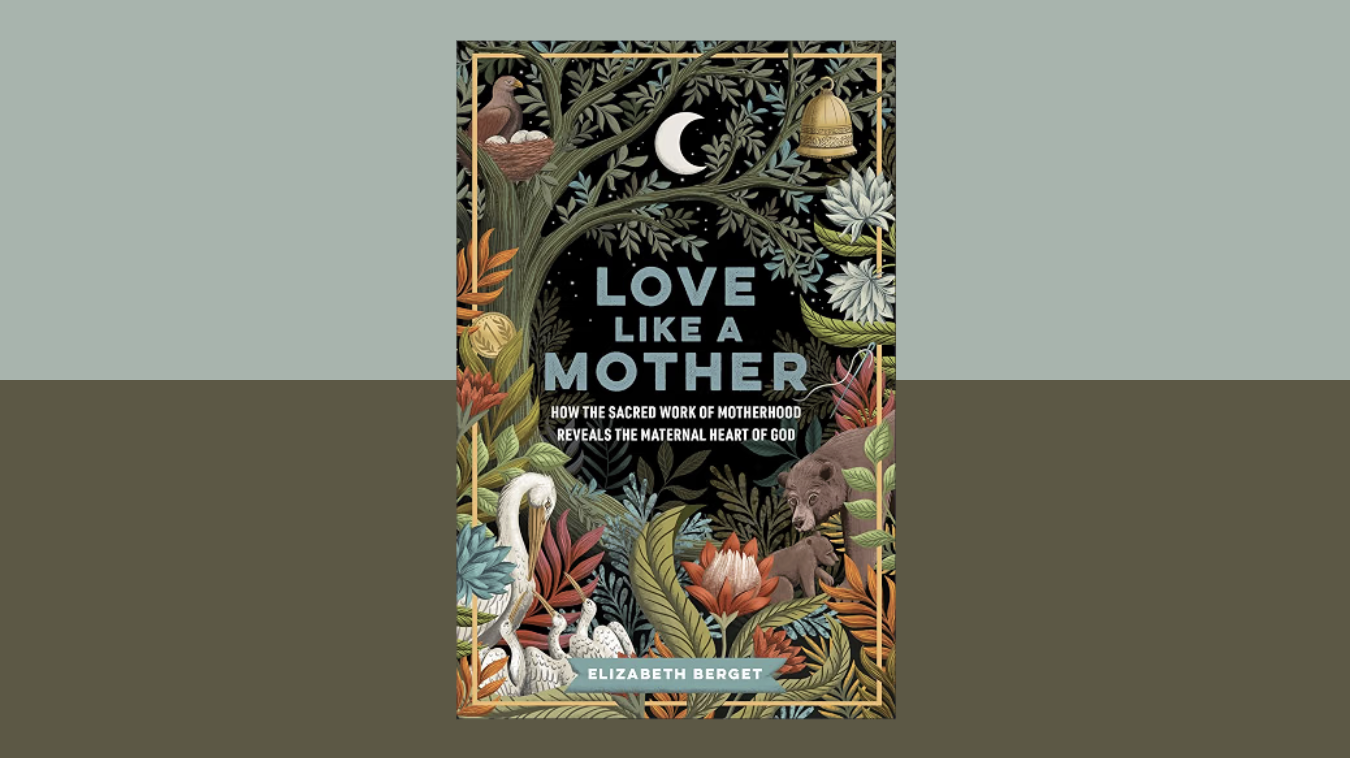
When she graciously allowed me to preview her new book Love Like a Mother: How the Sacred Work of Motherhood Reveals the Maternal Heart of God, I felt as if she were doing the exact same thing: getting mamas the things they need. Recently I had the joy of sitting down with her and talking about her book. I invite you to listen in on our conversation and consider reading Love Like a Mother.
___
Abbey: So Elizabeth, I just finished your book a few days ago and after I was done wiping my eyes from laughing and crying by turns, I sat back and just marveled. You really managed to locate the work and love of God directly at the heart of a mother’s experience. Before we get into it, I just wanted to thank you for this gift of a book.
So, you describe the seed of this book suddenly coming to you as you sat nursing one of your babies at night and wondering that if God made mankind in his image, male and female, what does it mean for a woman (and a mother) to bear God’s image? What is it specifically about that role that illuminates God’s way with us? I guess what I’m wondering is: though the idea seemed to come like a flash in that moment, what do you think led you to that point?
Elizabeth: This is such a good question because when the question, “Does God love us like a mother?” came to me, I really hadn’t been thinking or reading about these ideas in any way, shape, or form. I had just had my third kid in four years, so I really wasn’t doing any heavy reading or thinking of any kind in that season! But what I had been doing was the relentless, intimate care of mothering my young kids. I had begun to recognize that my whole perspective on life had shifted within motherhood; I hadn’t realized it was also quietly giving me a new lens on my faith at the same time.
So much of motherhood is locked up in the minutiae, and so much of those years of mothering babies was so undeniably embodied. I think that in that moment, I was trying to make sense of days that were full of wiping applesauce off chubby fists and changing diapers and nursing and trimming tiny fingernails. When I thought about what it meant for me, in the physicality of that season, to bear God’s image, I began to wonder what it reflected about God that women and mothers bear God’s image within pregnancy, labor, birth, and the ceaselessness of caring for young kids.
As I tell it more fully in the book, I think a lifetime of following Jesus and studying the Bible were suddenly cast into a startlingly new light within the intensities of that season of motherhood — it almost felt like turning over an old coin to see its other side for the first time, or turning over a diamond and watching the light reflect off a previously unseen facet. It wasn’t exactly a new truth, just one I hadn’t had eyes to see before.
Abbey: Embodied, indeed! I do think we need a better theological understanding of that glorious and frustrating messiness of motherhood and its relation to the incarnation. That’s probably why I was so attracted to your observations on the physicality of the mothers’s body and its relatedness to God. I had thought before about the changes in my own body in previous pregnancies and the phrase “this is my body broken for you” came to mind repeatedly. At the time, I wondered if it was a bit of a stretch or even blasphemous, but your writing made it feel like the most natural thing in the world. Can you say more about that?
Elizabeth: In the book, I write that the suffering experienced in labor and birth provides a layer of meaning on these familiar words from Jesus, that turning a maternal lens on these Eucharistic words helps us wrap our heads around the immensity of Divine sacrifice on the cross.
We get understandably skittish about assigning maternal qualities to Jesus and his work on the cross because gender is such a loaded issue. In the book, while I affirm that Jesus was decidedly a man, I also explore how the Church in ages past used images and icons to explore the crucifixion and resurrection that were decidedly maternal. In other words, turning a maternal lens on Christ’s work on the cross is not a new idea or practice.
I also look at the way Jesus was so generous in his teaching during his time on earth. Like any good instructor, he offered his students parable after parable ranging from economic to agricultural to relational. He wanted them to understand the kingdom of God in any way they could. So I do not believe it’s heretical to try to more fully understand truths like, “this is my body broken for you” from a variety of perspectives. Can we look at Christ’s sacrifice like that of a soldier killed in battle while defending the vulnerable, giving of his own body sacrificially and nobly? Absolutely. Can we understand this truth through the mother rabbit who darts away from her nest, hoping a predator chases her and leaves her babies alone? Yes. Can we get a visceral picture of the all-consuming nature of Jesus’ love for us through the experiences of mothers in the searing pain of labor and birth? In the act of nursing? I am confident we can.
Abbey: That makes so much sense. Say, speaking of different metaphors for Jesus’ love for us, I’d like to ask you about those for whom the biological experience of motherhood has been elusive and what that means for this rich maternal understanding of the love of God. There seems to be a subtle, insidious message sometimes with miscarriage, infertility and even foster or adoption situations that they’re kind of second-rate or a failure of motherhood, but I found your approach to these situations very healing. Can you expand on how these particular expressions of mothering also end up becoming such rich wells of understanding God’s love for us?
Elizabeth: While most of the book includes stories from my own experiences, it was so important to me to include stories from women who have fostered and adopted, experienced infertility, and grieved losses different than my own. I have had the distinct privilege of walking alongside women who have walked these roads, and I have learned so much from them about what it means to mother, about what it means to love.
The Bible is threaded with the theme that we are adopted children of God. While fathers in adoptive and foster scenarios are incredibly important, statistically and anecdotally, mothers are doing so much of the everyday work and sacrifice of welcoming kids into their homes. From choosing sacrifice to letting go, in helping kids learn to trust and receive care, in the welcoming of strangers, adoptive and fostering mothers give us such a vivid picture of the work of God within our own spiritual adoption.
As for loss and infertility, it’s really hard for us to picture God mourning or yearning. Yet, these painful experiences of motherhood are so tragically common; I got curious about what these difficulties revealed about God as the women walking through them bear God’s image in their grief and longing. The common threads I pulled from the stories shared in the book of infertility and loss were of intense longing and love that reflected God’s yearning for his children to return through the prophets’ words, Jesus weeping at his friends’ death and at his own suffering on the cross, a God that hates death as much as we do, threaded through Old Testament and New.
While fostering and adoption are different journeys from infertility and loss, I think what these stories all highlight are the great lengths that God goes through to make us his own. And I think these mothers in particular give us a tangible, accessible picture of that kind of love.
Abbey: Also, is this a book for fathers as well as mothers? How about people who are not parents? Have you had any men who have connected with the new language you’re providing us, regardless of their current family situations?
Elizabeth: I’ve actually been surprised at how many men have reached out to say they really loved the book. While it is definitely written with women and mothers in mind, all of us are born with a need to be mothered, and that need, like all others, is best met in God alone. And while this is a book about motherhood, at its deepest core, it is a book about God. So it’s been fun to see Love Like a Mother resonating with women and men, parents and non-parents, alike.
One unexpected delight has been that I’ve had a handful of male pastors from more complementarian churches tell me that they were so thankful for this book, that it is helping them think more about their female congregants’ experience of teaching within the churches that don’t hand women a microphone and how they can better incorporate feminine stories and metaphors and perspectives. It also seems to be resonating with those who have deconstructed/reconstructed their faith, who are not interested in walking away from Christianity, but are looking for a different view of God, whether they’ve suffered spiritual abuse or have a troubled relationship with their own mother or father. Exploring the breadth of expansive language for God that exists within Scripture, rather than always sticking to the same script, is really resonating with people who fall into these camps and inviting them into a fuller relationship with God.
Abbey: One of my favorite aspects of this book was the amount of grace you extend to the weary parent. You offer devotional practices but they’re things like breath prayers and imaginative prayer exercises. Can you say more about why it seemed right to you to take this direction with the “application” part that people seem to hunger for?
Elizabeth: Part of this book was born out of my own experience as a young mother. I so often felt spiritually “behind” when my kids were little. The spiritual practices that had long helped me - prayer, meditation, a morning “quiet time,” Bible study - just were not as accessible to me when no one was sleeping through the night and I was needed from the moment I got up until the moment I went to sleep. I often felt so guilty for the dust accumulating on my Bible, even though the deepest parts of me longed for God in that season.
So many of the spiritual resources I turned to in that time only made me feel worse for “not putting God first.” But my to-do list was overflowing, and everything took so long to do with three little kids in tow. I needed the how.
While Love like a Mother is not a devotional or a ten-steps-to-becoming-a-better-Christian-mom book by any stretch of the imagination, I wanted to include a few practices at the end of each chapter for that weary mom who longs for God but feels distant, who feels guilty that she isn’t in her Bible as much or doesn’t make it to church for weeks because everyone in the family keeps passing around pink eye.
One of the foundational pillars of the book is that God is gentle to those with young (Isaiah 40:11). I want readers to know that God meets them in the chaos and knows how hard they’re working, how tired they are. But for those who are eager for a new way to connect with God in motherhood, I offer these practices as ways to commune with God while sterilizing bottles, rocking a baby to sleep, or pushing a swing at the playground. In other words, these practices are not one more thing for you to do. They offer a way to be, a lens to see God’s love for them reflected in their care and love for their own kids.
Abbey: That’s beautiful. Finally, I’d like to know why you think we as a culture need to hear this now? What message do you have for mothers and the people that surround them?
Elizabeth: Exploring feminine and maternal language for God in Scripture is so important for all of us in order to form a more comprehensive appreciation of who God is and to recognize women as full image bearers of God. I think our churches are missing out on the life-giving perspective that women and mothers can bring, the fuller understanding of God’s love that they are living out every single day.
For mothers, I hope if you take one thing from Love Like a Mother it’s that you know your own belovedness. For as much as you love your kids and would do literally anything for them, know that God loves you with the same intimacy and intensity. Know that God is so gentle to you in this season, that there is so much grace for you as you raise your kids. Let your striving cease.
The Weekly Digest
Premier Thought Every Thursday.
All of our recent essays and podcasts, delivered to you. Free.
Free. Delivered Thursday mornings.