
Although the word “apocalypse” in contemporary popular imagination connotes “the end of the world,” the word in biblical and theological literature means an “unveiling” or a “revelation.” In apocalyptic literature, the truth about reality is not always what it seems. In the Apocalypse of Jesus Christ that concludes Holy Scripture, readers are given a heaven’s-eye-view of the ultimate conflict unfolding across cosmic history. What appears wise, powerful, prestigious, noble, or successful can be exposed as not only weak and foolish or lacking integrity, but ultimately destined to collapse. This vision exhorts listeners to lives of faithful witness in the present amidst great suffering and on the basis of an indestructible hope, namely, the secured but presently hidden victory of the lamb who was slain and conquered death, who is coming again in glory.
But more often than not, those who worry about “apocalypse,” declining societies, and looming crises are dismissed as sensational or pessimistic, especially if the crisis in question is not immediately apparent. That is all the more reason why it is supremely important to sound alarms of decline accurately and only when appropriate, because sometimes the boy crying wolf has actually seen one.
Ross Douthat’s forthcoming The Decadent Society contributes a helpful account of several converging factors contributing to the malaise of our late modern age. Douthat’s accessible book divides into three portions. Part one draws upon data about our economy, the future ramifications of declining birth rates, and the political gridlock of our democracy that provide a compelling portrait of an economy, civilization, and democracy that are demonstrably in decline, but might have the illusion of technologically progressing faster than ever.
A chapter on the repetitive nature of much of our culture’s art work and art forms is acknowledged by Douthat as a less objective line of inquiry, but his examples suffice to raise serious questions about the viability and possibilities of innovation and artistic imagination today amidst endless reboot projects. Sure, there might be a new version of the iPhone every few years, but that is just it: we have a newer version of the same iPhone every few years. The 1985 film Back to the Future is entirely premised on the stark cultural and technological changes that made the world foreign from only thirty years prior in 1955. Back to the Future II envisioned the year 2015 as continuing along the same stark cultural and technological advances that would bring hoverboards and flying cars.
But instead, apart from the advent of smartphones, fashion changes, and wars against global terrorism, there are far fewer changes between life in the 1980s to the contemporary world than those of the 1980s compared with the 1950s.
Part two provides a haunting account of the opioid crisis and our society’s quiet turn away from “upper” drugs that help us experience highs more intensely to “downers” that numb us from feeling anything at all until we eventually disintegrate. The panopticons we subject ourselves to on social media are brought into critical dialogue with the mass surveillance state and human rights violations against minorities in China.
Finally, Douthat brings this largely American discussion into dialogue with similar demographic and economic trends in Europe, internationally growing and illiberal populist movements towards left socialism and far-right ethnonationalism, a global ecological crisis, and illiberal political pressures in Russia and predominately Islamic nations such as Turkey.
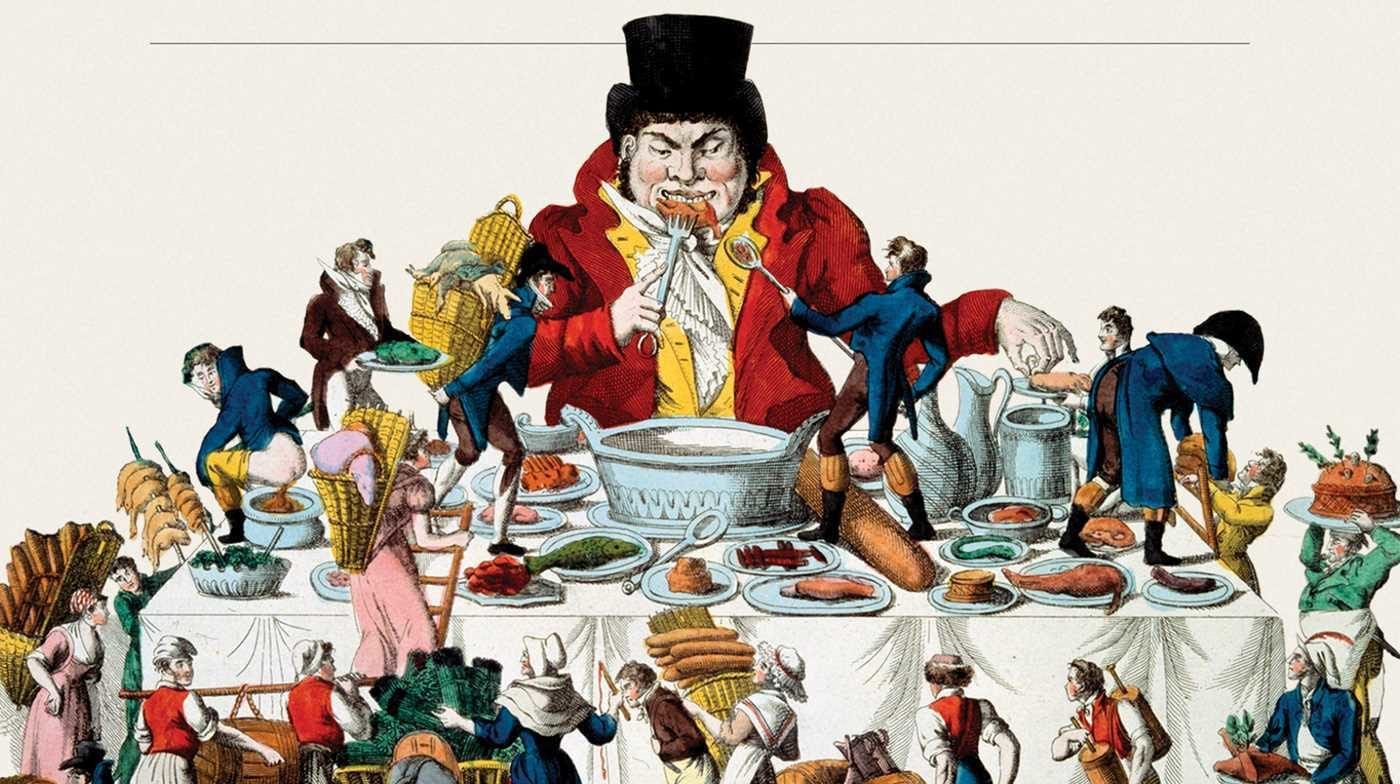
Part three responds to a few objections and prescribes a few potential remedies. Where Steven Pinker celebrates everything about modernity as constantly getting better and better, Douthat helpfully demonstrates the illusory nature of the way our society fancies ourselves as constantly technologically advancing, when contrasted with the rates of innovation during the Cold War that led us to put a man on the moon. Moreover, in response to those who want to distinguish our current societal dysfunction as incomparable to the lavish orgies of the Romans while the barbarians were bearing down on their doorstep, Douthat raises the disturbing and I think correct prospect that we have entered into a kind of decadence that is sustainable. With sufficient opportunities for amusement, self-medication, currency manipulation, and rule by executive order and the judiciary, we might not be on the brink of getting overtaken by barbarians, but we might well be locked into a slow death spiral that never has one cataclysmic event of catastrophe.
In the concluding chapters of the book, Douthat indicates that Islam might offer some disaffected in a decadent society the prospect of a stable vision of family, purpose, and discipline. His concluding chapter on Providence explicitly draws on his own Catholic faith to suggest transcendent reasons to have hope and act virtuously in the present, developing some insights from G.K. Chesterton’s reading of history, and even proposing religiously motivated reasons to further space exploration.
Not every reader will agree with Douthat’s suggestions for why certain problems are occurring in our society, or with Douthat’s suggestions for how to redress them, but few can contest the hard evidence Douthat presents throughout the book demonstrating that our society is decadent in many ways.Nonetheless, I want to raise two critical questions about Douthat’s argument, and suggest what I believe to be a key implication of his book for the church.
What societies are obviously not decadent?
First, Douthat’s argument could be strengthened by providing further, contrasting examples of decadence in different epochs of human history, or providing more historical examples of non-decadent societies. By definition, describing a society as “decadent” or stagnant is to make a necessarily historical judgment.
Douthat makes numerous references throughout the book contrasting, for example, the effective legislature that pushed out FDR’s New Deal programs in contrast to our contemporary democracy’s turn to being ruled by presidents making executive orders and appointing judges. Without a functional legislature creating stable laws by congressional representations, society-altering institutions such as marriage or DACA are decided by judicial decisions or executive actions that are easily and immediately reversible after the next swing election in a few years – leading to further division and unrest.
However, as Douthat himself notes in the book, not everyone was represented in America’s 1930s legislature at a time when lynchings were not uncommon in the South. It is difficult to avoid the conclusion that that time was also a somewhat decadent era; even post-Depression, post-Dust Bowl innovation and economic growth tied to mobilizing for World War II drew upon the nation’s wealth accrued from trade and manufacturing across centuries of slavery, combining to buoy America’s economy into the early 20th century. Is efficiency or technique the primary criteria for determining whether or not a society is decadent?
I think Douthat’s answer would be no – but I think his argument would be strengthened by documenting further examples of past societies that are both positive and negative examples, and with a clearer statement of criteria for decadence. Perhaps identifying a taxonomy for varying kinds of decadence might serve his argument in the future.
Is innovation good?
Second, amidst Douthat’s discussion of declines in our rates of innovation, there is not a clearly defined telos for innovation. While modern medicine and convenient appliances are appreciable, is there something intrinsically good about, for example, American domestic life in the 1970’s being drastically different from the 1930’s, such that it is a problem domestic life today is very similar to how things were thirty years ago?
My question here is a consequence of the preceding concern about decadence in historical perspective. I think it is relatively uncommon in the grand scope of human history to expect domestic life to change drastically every few decades; I am not sure anyone in 970 was alarmed that domestic life remained comparable to that of 930. The reason this point is significant is that Douthat’s concluding discussion of “providence” and Christian hope for remedying decadence depend to some extent upon connections with the past. Is a society that drastically alters its form of life every few decades a sustainable or healthy incubator for human beings, given almost the entire prior history of humanity for whom that was not the case?
After reading The Decadent Society I am not altogether clear as to why innovation in itself is good; doubtless, if asked, Douthat would say that innovation serves higher goods, such as the space race paving the way for personal computers. But are perpetually exponential rates of innovation and growth not only possible, but in themselves desirable? Obviously, if a nation’s GDP is not growing, that has massive ramifications for everything from the food supply to medical care. Douthat briefly notes that there is a difference between an endless lust for consumption or dominance and a healthier form of innovation.
But he could develop further an account of innovation and growth that values contentment, or the moral obligations of innovation in a nation that continues to not solve presently-solvable problems (for example, universal access to clean water in the United States of America). Apart from a Soviet nuclear rival, how seriously motivated can a people become to desire, let alone execute, a mission to Mars while our society continues to perpetuate and exacerbate the racial wealth gap and de facto racial segregation at rates still comparable to the 1960s?
I am not advocating that we should all move into agrarian communes, but I think an approach to innovation and growth attuned to Christian habits of regard for neighbor might raise greater caution about ever-expanding growth as an end in itself, or that it will be a panacea for the problems that our society continually chooses not to resolve. We do not have to become Luddites to recognize that while sometimes innovation brings medical breakthroughs, it occasionally births nuclear weapons that none are morally competent to bear.
Finally, I want to develop an insight from Douthat’s book that I think is latent but not developed in this book: the problem of decadence in the church. Douthat has written to this effect before, and readers should consult his 2018 To Change the Church for Douthat’s own evaluation of current problems facing the Roman Catholic Church.
There are few more obvious pictures of decadence today than contemporary American Protestantism. Having begun this review by noting that apocalyptic warnings are quickly dismissible in our affluent society that appears strong, the preceding sentence might have already been dismissed by some readers. But that is actually the point – we have a real crisis of integrity on our hands, and many are incapable or unwilling to recognize this and act upon it. Of much that could be discussed here, three examples suffice.
The Decadent Evangelicals
First, the last few decades have exposed tremendous weaknesses in the theological part of evangelical theology. As Carl Trueman wrote on Reformation Day this year:
Of course, Protestantism has its own problems. The myriad magisteria of multitudes of parachurch ministries offer tin-pot spheres of influence for a plethora of popelets. And doctrinal orthodoxy is at a premium: A narrow focus on scriptural authority has led to a neglect of the catholic creedal dimensions of the faith. Classical theism and Trinitarianism are fighting a rearguard action even within some confessional institutions and churches. A dominant biblicism and a guild of theologians unschooled in historical theology has left us vulnerable to a soft Socinianism, which flourishes in the soil of sloppy thinking characterizing much of contemporary Christianity. And the economic realities of competition for a shrinking pool of consumers means that Protestant institutions—seminaries and even churches—are constantly tempted to market their marginal denominational differences as if they are of the essence of the faith.
Among the laity and not a small portion of overworked clergy, such problems might not even be detectable; in many cases, things are merely carrying on the way they always have for decades, unaware that what seems conventional today could be a stark break with historically deep and ecumenically catholic theological traditions. It is not the case that everything in the past was correct, nor that we should never make innovations. Change is necessary.
But to change without even realizing it because we never bothered to learn the past in the first place is to pull bricks out of the Jenga tower without realizing the implications of such moves. No one can be expected to know everything all the time, and this is not a criticism of newcomers. But where established theologians or church leaders boast of being more faithful than their rivals, while departing either unaware or in cavalier disregard from their own traditions, their backbone might appear strong to constituents despite being on the verge of collapse.
Numerically, it is demonstrably the case that “…there’s mounting evidence that today’s younger generations may be leaving religion for good.” While trends in secularization doubtless effect growth and conversion rates, our inability to retain our own should be warning sirens of decline for proponents of our status quo. If our churches primarily market less-impressive forms of things that people can find in better forms elsewhere (community, volunteerism, entertainment, counseling, music, inspirational TED talk-sermonettes, etc.), most churches will not be able to compete in that market, and those who can will become Joel Osteen.
We might not create megachurches by leaning heavily into distinctively Christian forms of Christianity that prioritize catechesis or how the gospel uniquely testifies both against and for our world. But we might create stronger local Christian communities who understand why and how we exist, and who can hopefully prepare children and new converts to become adult Christians in what Charles Taylor calls our “secular age.”
Churches and Institutional Integrity
Second, I am concerned that contemporary Christian churches of almost every variety lack the institutional integrity to enforce or adhere with their own values. The last few years of public journalism about the church has felt at times like an endless descent into an ever-worsening inferno of sexual abuse. Following the reporting on sexual abuse in The Houston Chronicle, the completely autonomous Southern Baptist churches have thus far been unable to implement a concrete system for reporting that churches must comply with that would prevent the same patterns of abuse. By contrast, the super hierarchy of the Roman Catholic Church’s episcopacy has been revealed in the reporting of Ruth Graham at Slate and others as less a matter of a strong central institution protecting its own, than a weak institution unable to carry out its own censures against Theodore McCarrick, among other similar instances.
Shifting away from the question of abuse, there are additionally widespread instances in American Protestantism of churches whose beliefs and practices are at odds with official statements or acceptable views of their denomination, with all sides involved incapable of either changing the stated views or holding member churches accountable. Almost regardless of the specific issues in question, this raises the question about the purpose of having official denominational statements at all if church bodies lack the ability, or will, to hold its members accountable to them.
I think few could dispute that these first two trends are cautionary signs of decadence, but there is one further, urgent matter that I think will prove more contentious, but is perhaps all the more the most decadent thing of all. If decadent societies are stagnantly incapable of reproducing, innovating, or defending themselves, I think these descriptors might hit closer to home than even denouncers of decadence might realize. Douthat’s The Decadent Society at numerous points helpfully, and in places, devastatingly, criticizes the decadence of Trump and conservative Trumpism. Since 2015 there has been an ocean of ink spilled as to why white evangelicals support Donald Trump; just this month there have been several pieces to this effect, and some more helpful than others.
Amidst all of these discussions, the debate between David French and Sohrab Ahmari has exposed a rift within conservativism. While I am not as confident as David French that classical liberalism is good, I cannot help but ask whether Ahmari’s call for a militant-approach to ordering our society’s politics towards Christian ends, even if secured by minority rule, is not a show of strength but rather a strange kind of weakness. I do not advocate quietist retreats or withdrawal from Christian political engagement. But at some point, attempts to secure power “by any means necessary” undermines the ostensibly good ends we have convinced ourselves that we are pursuing. Is faithfulness to the point of death a last resort only for Christians who attempted to use strongman politics, but failed? Or is martyrdom a real possibility in our political imagination?
I am as critical as anyone of the “persecution complex” sometimes used opportunistically in American Christian politics. Also, I am not suggesting there is one inherently “good” option in American public life today. But the calculus used to rightly criticize the left’s opposition to the sanctity of human life, while shrugging and whistling while the current administration enacts dehumanizing policies and brazenly racist rhetoric, poses a serious problem. Christians might ultimately support different parties or candidates because they find something utterly disqualifying in one party or candidate than another or both.
But to support or even celebrate strongman politics without an openness to martyrdom as a commendable vocation, and without substantively and regularly testifying against those who harm the vulnerable and marginalized, however costly or inconvenient such testimony is, is a profound instance of almost imperceptible decadence.
I am thankful Ross Douthat wrote The Decadent Society. I hope its readers will “lift your drooping hands and strengthen your weak knees” (Hebrews 12:12). The apocalyptic warning our society – and, as I have argued here, our churches – need to hear today might be something far worse than than whatever supposed crisis the fearmongers are currently selling on cable news.
We might be locked into a stagnant decline without a pending cataclysm, and we might actually love this trajectory and even convince ourselves it is good. In any regard, the parables of Jesus should disturb us and alert us to a watchful mode of political and personal life: the kingdom of God is like a seed that grows imperceptibly while the farmer sleeps; like a pearl hidden in a field; like leaven mixed into dough; like a tiny seed buried in the earth before birds rest in the shade of its branches; like an enemy who sowed tares amidst the wheat that the master leaves mingled together until the harvest.
Enjoy the article? Pay the writer.
$ Donation Amount:Donate NowSelect Payment Method
- PayPal
Personal Info
First Name *
Last Name
Email Address *
Donation Total: $0
The Weekly Digest
Premier Thought Every Thursday.
All of our recent essays and podcasts, delivered to you. Free.
Free. Delivered Thursday mornings.