

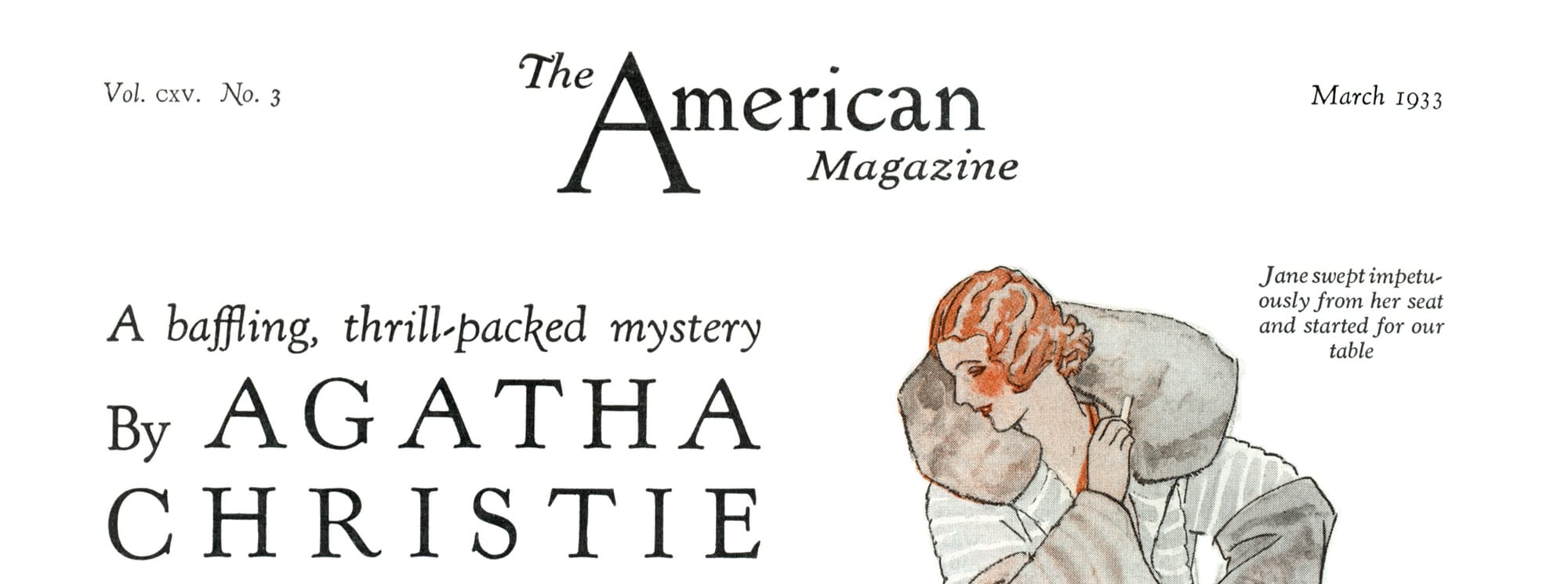
Theodore Dalrymple. Agatha Christie and the Metaphysics of Murder. $19.99. 168 pp.
When I was in high school, I read Agatha Christie’s And Then There Were None at breakneck speed to figure out the identity of the murderer. The shocking ending left me desiring more and was the beginning of my enjoyment of Christie. I am not alone, it seems. Whodunits remain popular, as readers delight at the prospect of an evening armed with their favorite blanket, beverage, and (paradoxically) a cozy murder. At the center of this genre is Christie, “the Queen of Mystery,” the best-selling novelist of all-time for her brilliant Miss Marple and Hercule Poirot series, as well as numerous standalone mysteries. Her writing established the genre as we know it. Today’s mystery writers still rely on her techniques and tropes.
Retired physician, prison psychiatrist, and conservative social critic, Theodore Dalrymple, combines his professional experience and knowledge with his enjoyment of Agatha Christie in this short volume, Agatha Christie and the Metaphysics of Murder. The title is appealing; however, the book does not offer a retired prison psychiatrist’s look at the metaphysical nature of murder. Instead, Dalrymple’s main aim is to justify the merits of reading Christie and her ilk. He does so by answering literary critic Edmund Wilson’s rebuke of Christie as “mawkishness and banality which seems to me literally impossible to read.”
Dalrymple brushes away part of Wilson’s ridiculous claim as pure “intellectual snobbery” rather than a real technical issue with Christie’s writing. After all, she has gained global appeal since the appearance of her first novel over a century ago; her novels have sold in the hundreds of millions across dozens of languages. Therefore, it must be that Wilson’s critique really means that Christie is not a writer worthy of “close attention” by the serious literary world. Dalrymple notes that in no way was Christie disillusioned with her merits and literary standing. She called herself middlebrow. In the introduction, Dalrymple argues that Christie’s shrewdness and observations of human nature are remarkable. As a result, her novels are full of insights of notable social, psychological, and philosophical substance.
The introduction offers a glimpse of what the volume could have been as Dalrymple provides a brief example of Christie’s talents in her breakout novel, The Murder of Roger Ackroyd. Then instead of a psychological look at the top-tier books among Christe’s canon, he decided to pick a novel at random and evaluate it. The novel of choice is a Miss Marple mystery, They Do It with Mirrors, a middle-of-the-road volume that holds neither universal praise nor scorn. Dalrymple selected this novel based solely on the fact that he owned a copy but had no familiarity with it. While his efforts to remain unbiased and to tackle Wilson’s critiques are commendable, it is interesting to entertain what Dalrymple could have produced in evaluating the psychological depths of some of Christie’s greatest contributions and those of the whodunit genre more generally. Dalrymple’s method is to walk the reader through the novel, discussing along the way anything he considers worthy of note—socially, psychologically, and philosophically.
While Dalrymple rarely deals with the metaphysical nature of murder, he attempts to make up for that with great social commentary and insight. At times he focuses on larger topics and ideals while on other occasions zooming in on a few words or simple phrases from They Do It with Mirrors, such as the description of Miss Marple as “every inch a lady.” Dalrymple examines the “social, educational, cultural, and behavioral background” contained within this short simple phrase. His analysis leads him on the path to explain and picture the bygone social caste in England of gentry.
In these few words, Christie gives the reader a great deal of insight into Miss Marple as someone born into a higher class than the one she currently occupies. The impoverished genteel class was displaced by circumstances, but the manners and beliefs of their previous station never left them. Dalrymple seeks to turn his readers’ attention to this brief but witty insight offered by Christie as she attempts to weave an elusive murder mystery along. Even in her less critically acclaimed books, there are nuggets that serve as rebuke to Wilson’s low opinion of Christie.
Dalrymple does argue that his experience regarding murder has revealed it to be a far cry from the extravagant and sometimes farfetched world of Christie. More often than not, it is “merely sordid, unmysterious, stupid, and not infrequently drunken, or alternatively engendered by passions of a crude culture.” Such criticism of Christie’s world as outlandish and unrealistic is accurate, yet we cannot forget that her novels are fictional works of entertainment. Dalrymple argues that the whole point of murder for Christie is to be committed in a “milieu where they are least expected.” This is perhaps our most poignant look at the metaphysics of murder in the book. Christie wants to give better than what reality offers.
Many of Christie’s novels take place in small environments, rarely entering anything larger than a small village. While such settings produce a cozy quality to British whodunits, it is purposeful. Dalrymple points to Miss Marple’s quote, “Human nature, dear, is very much the same everywhere. It is more difficult to observe it clearly in a city, that is all.” Dalrymple’s randomized pick of They Do It with Mirrors happens to work perfectly. The novel revolves around a juvenile delinquent center, just the sort of environment that Dalrymple knows well through his experience as a psychiatrist working with the small populations of prisoners. And so, Dalrymple devotes considerable space in his book to the delinquent center, particularly the staff in charge of it and the methodology of the staff regarding crime and rehabilitation.
Dalrymple is particularly interested in the character of Lewis Serrocold and Christie’s description of his sparkling eyes and enthusiasm for his charges at the delinquency center. In his estimation of Serrocold, Dalrymple notes: “He has Christian charity untethered to an awareness of original sin that might make his charity more realistic.” The enthusiastic head of the delinquent ward is one that believes in and lives out a strong charity but does not believe in good and evil. For Dalrymple, Serrocold is a highly realistic character from Christie.
Chesterton described someone like him as the humanitarian that cares only for pity, therefore making his own pity untruthful. Serrocold displays this pitiful pity during his interview with Miss Marple. When she inquires whether one of his charges might be dangerous, Serrocold responds that the young man had never shown a proclivity toward suicide. So much for charity. Serrocold lacks the awareness to consider that Miss Marple might have had people other than the lone delinquent in mind. The virtue of charity removed and isolated from other virtues only ruins the one virtue on display. By his excessive charity for one case, Serrocold fails to provide charity at all.
Dalrymple’s treatment of Serrocold’s beliefs about the motives of his charges at the center is wonderful. Serrocold believes that the crimes of these juveniles are from “exhibitionism” and “thwarted unhappy home life,” and these outbursts and crimes make them feel heroic. Dalrymple argues that this is highly common in his experience and in the culture at large, as some criminals appear to the general public in admirable and romantic ways. Such is the cult of personality, even for criminals. Human nature desires to be known—"to be is to be perceived; not to be perceived is not to be.” The greater evil for some is to not be perceived. The crime it takes to be perceived seems a lesser evil, by contrast.
Considering the random selection of a Christie book to refute Edmund Wilson’s attack on the master of crime, Dalrymple’s book is a resounding success. And while he didn’t treat the metaphysics of murder much in this book after all, perhaps he will take it up another time. Despite the misleading title, Dalrymple offers a unique and short evaluation and defense of Agatha Christie. Christie wrote intelligent and insightful novels that, as she knew it, are middlebrow. While not all Christie books are of the same quality, her famous novels rightfully earned their place as classics of the genre, and she is worth a closer reading. She is the “Queen of Mystery” or as Dalrymple remarks, “books about murder are legion, but there is only one Agatha Christie.”
The Weekly Digest
Premier Thought Every Thursday.
All of our recent essays and podcasts, delivered to you. Free.
Free. Delivered Thursday mornings.