

The sycomore is a kind of fig, deriving its spelling from the fruit syconium and the Greek word sykomoraia. It is not to be confused with the American sycamore, Plantanus occidentalis L., or the British sycamore tree, an actual maple, Acer pseudoplatanus L. The following excerpt from The Sycomore Fig Tree: Biblical Botany and Scriptural Truth: Seeking God in Life’s Transitions is published with permission from Stone Tower Press.
***
Trees of every kind naturally lose branches to insect damage, disease, or storm. If the damage is severe, any tree grows more susceptible, often succumbing to a slow death. If we feel damaged by the natural work of the forest and the world around us, I wonder if we, too, can become weaker and more vulnerable to further damage.
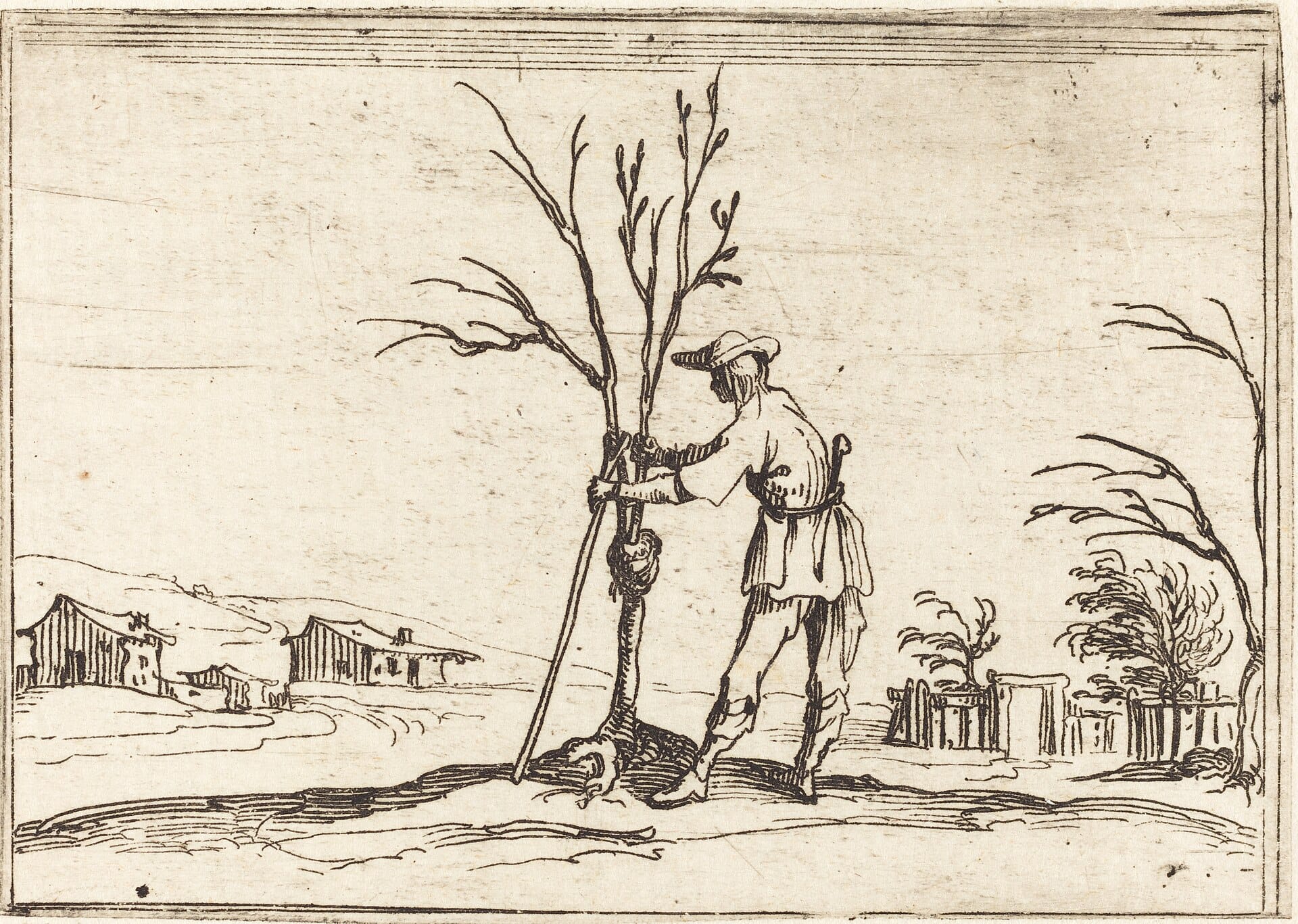
The sycomore fig tree, however, defies the normal damage cycle. When we consider its unique ability to adapt with root and branch, I think it’s likely that the sycomore fig tree prunes itself at times. Would that metaphor extend to me? Could I prune myself by making a choice to let things go?
Some translations, like the American Standard Version, English Standard Version, and Common English Bible, say Amos was also called a dresser or trimmer of sycomore fig trees. In Hebrew, the word “dresser” is boles from the primitive root balas, meaning to swallow or engulf. The story of how the primitive definition came to mean gatherer or pincher of sycomore figs is now lost because the word only appears once in the Hebrew Bible, in the central verse of Amos 7:14.
A similar word appears in Genesis 2:15 where “the LORD God took the man, and put him into the garden of Eden to dress it [‘abad] and to keep it.” In Hebrew, Adam is caring for the garden, cultivating, tending, working. Here it is a positive reference in conjunction with the keeping of the garden, a word which includes watching and preserving. Adam may not have had to prune a thing before sin entered the world, but he did tend and care for what God had designed. It is a type of work. And I like to think that God himself showed Adam not only what to do, but how to rest in the wonder of what He had created.
Deadheading
We can prune for shape or beauty, of course, but more than anything, we prune for health. It increases sunlight and air flow. It can help the sap concentrate so that a tree or plant can bring sweeter, more plentiful fruit. As I tend my own garden, I do prune what is commonly called dead growth. It’s a unique oxymoron because something has to grow and then die. But if I prune off “the death” or “deadhead,” I make way for the new. When I cut off a spent bloom from a coneflower or a black-eyed Susan, a new shoot or leaf emerges there. The plant can push its energy into birthing the new if the dead has been removed. Often within a few weeks a new blossom appears in the same cut place.
In my vegetable garden, I cut away anything that has died off, whether it’s part of my sage patch or a squash vine. I also remove disease. Tainted leaf mulch or weeks of rain in the heat of summer can allow fungus or mildew to grow, and every gardener knows that those spores spread quickly to other plants unless the disease is treated or removed.
Removing diseased plants or deadheading perennials occurs throughout the summer growing season, but pruning most trees and shrubs takes place after harvest in the fall or before the spring surge of growth at the end of winter.
Being Pruned
During winter, the branch is most poised for fruitfulness, ready, waiting. The sap is beginning to flow. We wait for the possibility of something new and fresh, only for our new growth to be trimmed. It feels cruel. Yet pruning extends the life of anything that grows. Whether tree or vine, it must be done. As Beth Moore describes in Chasing Vines: Finding Your Way to an Immensely Fruitful Life, it’s irresponsible not to.
We can ‘abad as Adam did, cultivating and tending the gardens of our own hearts, pruning ourselves by making a choice to let things go. With so many changes in the last four years, I let go of expectations and judgments. I had to for my own well-being. I offered both repentance and forgiveness, and I still do when things come to mind.
Some parts of our lives will die a natural death, and we need to let them fall away. But how much more will God tend us with the needed pruning? Perhaps I need more air flow. Maybe it’s space to breathe so that he can add to me. Maybe I’m not ready for full bloom or fruit in this season yet. Beyond gardening, C. S. Lewis goes further with a different metaphor in A Grief Observed, that of a caring surgeon:
But suppose that what you are up against is a surgeon whose intentions are wholly good. The kinder and more conscientious he is, the more inexorably he will go on cutting. If he yielded to your entreaties, if he stopped before the operation was complete, all the pain up to that point would have been useless.
If God does not prune, I will die. Miraculously, the pruning is a sign that we are fruitful, especially since pruning in nature ensures multiple harvests. He prunes because He must to increase our fruitfulness. Jesus says, “Every branch which is part of me but fails to bear fruit, he cuts off; and every branch that does bear fruit, he prunes, so that it may bear more fruit” (John 15:2).
It is the same tending described in Leviticus and in Luke 13. It was not that the fruit trees mentioned were not growing or producing. They were growing in strength but were not ready for their first viable harvest. They needed time and care. Young fruiting trees would still be fertilized, watered, and pruned. Like the sycomore fig tree, the trees likely endure both piercing and pruning. Like Amos, one who gathers and harvests must also pierce the fruit and prune away the dead branches. It is a regular practice.
My struggles to root and grow, to see my story in one state added to the story in another, to find and develop friendships were and are situations the Lord is leading me through. In Luke 13:6–9, Jesus describes such care:
A man had a fig tree planted in his vineyard, and he came looking for fruit but didn’t find any. So he said to the man who took care of the vineyard, “Here, I’ve come looking for fruit on this fig tree for three years now without finding any. Cut it down—why let it go on using up the soil?” But he answered, “Sir, leave it alone one more year. I’ll dig around it and put manure on it. If it bears fruit next year, well and good; if not, you will have it cut down then.”
Luke’s account is the only gospel to mention this parable, and this fig tree clearly needed more tending, past three years. Even more hopeful is that Jesus tells us this story. What if we need more tending? The soil of our hearts may have gotten compacted from too much drought or too much pounding rain. Our hearts may even need a generous layer of manure. The best news is that we are not cut off but that we are given time and care.
The Weekly Digest
Premier Thought Every Thursday.
All of our recent essays and podcasts, delivered to you. Free.
Free. Delivered Thursday mornings.