

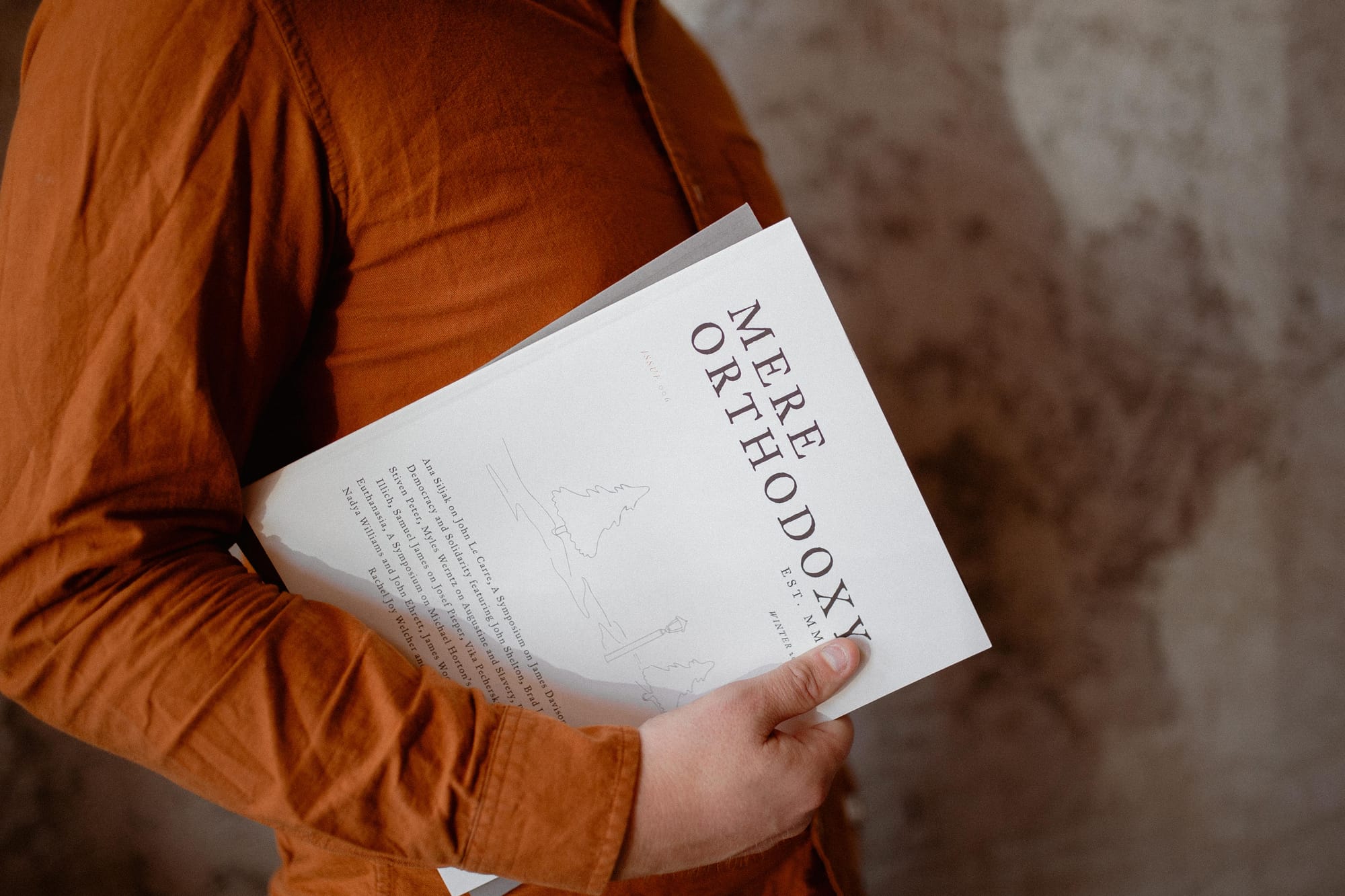
As we wrap up every year, we have long had a habit of reviewing the past year's work here at Mere O and sharing some of our favorite pieces in an end-of-year recap. This collection is not necessarily indicative of traffic, but simply is our own attempt to highlight some of the year's best work.
It has been a full year for us. We have grown our team to three full-time employees, our email list, which was at 800 in the spring of 2024, has exploded to over 22,000 as we close out the year. Our paid membership has likewise nearly tripled from where it was in early 2024 to where it is now.
Additionally, we are now posting ten original essays and reviews per week rather than five, which means we have doubled the amount of work we are already giving away for free on our website every day. If you've been encouraged, helped, or otherwise blessed by the work, the simplest way for you to help us continue doing it is to become a Mere Orthodoxy member today.
Often in these posts I will also consider some broader media trends in the past year and how those have influenced our work.
What I shared above largely covers that, however: Social media is dying or perhaps dead as a traffic generation tool for online media. Relatedly, "selling ads based on high traffic" is also dead and has been for some time. These days Facebook, Twitter, and other similar platforms want to treat their platforms more as walled gardens then as a portal to the open web. When I first took over Mere O in 2015, our leading traffic source was direct traffic, with Facebook and organic search next in line. Twitter was also significant. By the late 2010s and early 2020s, Facebook traffic had dropped off substantially, but Twitter was still a good traffic source.
In 2025, however, 75% of our traffic is coming from direct site visitors, email, and website referrals. Search and social combine for only 25% of our traffic. This implies a broader change in how online media works today. In the past, the goal was traffic, social media made it relatively easy to get large amounts of traffic, and then publishers tried to monetize their site via their traffic, usually via partnerships with advertisers of one kind or another.
Though it is sometimes remembered as a golden age of blogging, this wasn't a great model, actually. It incentivized poor behavior on the part of media producers, it caused media producers to build their publications on top of audiences they did not own or have direct access to but only could access through a mediator, such as Facebook or Twitter, and due to the low payments offered by advertisers it forced media companies to chase unsustainably large audiences just to pay their bills.
The model we have now is generally better, but also a bit harder to break into. The default funding model these days is a blending of reader support in the form of memberships and sponsorship ads for podcasts and email, which both work far better as advertising platforms than websites, and donations.
The reason this model is harder to break into is because it is much harder now to build an audience as an individual writer or producer. That said, the media organizations that succeed with this model will be far better positioned for long-term success than the signature digital media outlets of the social media age, such as Buzzfeed, the Huffington Post, Vice, and so on, virtually all of whom exist today, if at all, only in a zombiefied form.
The current business model for supporting online media encourages publishers to know their audience, makes it far easier for them own their audience and access them directly, and can theoretically allow for the flourishing of small magazines of the sort that once thrived in America and might do so again. On that note, here are some of our favorite pieces from our own small magazine's work this year.
Politics and Culture
Why You Shouldn't Burn it All Down by Myles Werntz
How to Think About Using Government Funds for Christian Charity by Matthew Loftus
What Were the Real Origins of the Christian Right? by Daniel Williams
Iron Sky: Peter Thiel and the Rise of Gay Space Fascism by Jonathan Cioran
Common Arts That Matter by Thomas Fickley and Fr. Mark Perkins
The American: A Frank Capra Retrospective by Ryan Shinkel
Books
Surviving the Magic Universe by Maguire Boles
Dostoevsky and Euthanasia by Vika Pechersky
We're All George Smiley Now by Ana Siljak
A Future Worthy of Life: Houellebecq, Decadence, and Sacraments by Brad East
Augustine, Slavery, and Damaged Goods by Myles Werntz
A Sham Trial: Reviewing 'The Sin of Empathy' by Dani Treweek
Lamb of the Free: A Critical Review by Derek Rishmawy
Church and Theology
The Rise of the Right-Wing Exvangelical by Jake Meador
A Place Where I Found Courage and Peace by Anna Catherine McGraw
Lessons from Post-Soviet Russia for American Christians by Vika Pechersky
The Not At All Secret History of Nicaea by Susannah Black Roberts
How to Read the Bible with the Historic Church by Michael Niebauer
The Rule of St Augustine: Wisdom for Our Moment by Joey Sherrard
How John MacArthur Changed American Preaching by Daniel Williams
Learning from a Humble Theologian by Joshua Heavin
Doug Wilson Is Not a Prophet by Jeremy Sexton
Faithful Obedience Without Pragmatism: The Music of John Van Deusen by Paul Frank Spencer
The Plight of the Christian Scholar by John Ahern
The Deconstruction of Evangelical Missions by Ted Esler
Sex and Family
To Hate the Vulnerable: Roe at 52 by Nadya Williams
Did David Rape Bathsheba?: A Close Reading of the Relevant Texts by Alastair Roberts
The Babies Money Can Buy by Nadya Williams
Children of Men by James Locklear
Forsaking All Others by Kirsten Sanders
The Case Against In Vitro Fertilization by Stiven Peter
The Case Against Vasectomies by Haley Baumeister
Misunderstanding Porn by Matthew Loftus
The Weekly Digest
Premier Thought Every Thursday.
All of our recent essays and podcasts, delivered to you. Free.
Free. Delivered Thursday mornings.

