What do you think of when you hear the word “enchantment?” Perhaps magic, or a mystic gloss that covers reality with a transient veneer of the divine. Whatever that means. According to Max Weber, disenchantment (Entzauberung) means the “rationalization and intellectualization” of the world. So we could say the opposite is to enchant — to be non-rational, and not purely intellectual.
For C.S. Lewis, enchantment takes the form of Sehnsucht, or longing. It happens when we experience beauty that points beyond itself to something else. Robert Nisbet uses the term “the Sacred” — a binding force, something beyond the ordinary, that brings community together. Nisbet develops this by tracing how the Enlightenment eroded the sacred, a theme Durkheim had explored before him.
According to Charles Taylor, enchantment is the sense that our lives have a certain moral or spiritual shape — an experience that breaks through the mundane sense of the world. To quote Sugarland, “there’s gotta be something more.” Rod Dreher, in Living in Wonder, comments that enchantment is “simply living within the confident belief that there is deep meaning to life, meaning that exists in the world independent of ourselves.” He goes further, adding that enchantment is “learning how to live as if what we profess to believe is true.”
This is a lot to take in, but it is important for our discussion. Enchantment has taken many forms — and yet something is still missing. In a culture that prides itself on unmooring from clarity and truth, we need to be as precise as ever.
The Limits of “Enchantment”
I’ve written quite extensively on Gen Z, and one thing I’ve found — being a borderline Gen Z/Millennial myself — is that when people throw around the word “enchantment,” it’s usually to audiences who already know what it means.
I’m not particularly sold on it as a method to fix modern ailments. For starters, I’m not sure life is disenchanted to the degree that’s been claimed. Just look at the Occult Revival: Theosophy (Blavatsky, Annie Besant) and Anthroposophy (Rudolf Steiner) draw enormous followings. The séance — explored in modern horror films — is likewise a popular endeavor for those seeking transcendence outside of institutional Christianity.
There’s also the case of Wagner, who through his Romantic nationalist mythology fused folk myth with operatic epic. He drew from Norse and Germanic mythology because he believed it carried a primordial truth that pure drama could not. Wagner even constructed a quasi-religious temple to his endeavor — the Bayreuth Festspielhaus. The auditorium would darken to heighten the religious mood, and the orchestra pit was hidden so the music could permeate the atmosphere as if descending from heaven. Wagner’s enchantment was a horizontal enchantment. The German people — and Hitler especially — were drawn to it because it re-animated a people in despair.
We can also see glimpses of enchantment in Freud’s unconscious and Jung’s archetypes. Psychoanalysis was an attempt to find something beyond the mundane: the mind contained depths that explained the self beyond the pure materiality of the body.
While I’m not sure the desire for enchantment is new, I do think something particular is happening now. When I was in high school, during the heyday of the Twilight saga, I recall a pervasive obsession with horoscopes — young people in my Catholic school were seeking the transcendent through their birth month. This was the era of “I was born this way” and “I define my truth.” Within these claims was a reaching for the transcendent — but from within. Transcendence did not disappear; it merely became enveloped in narcissism.
Christopher Lasch highlighted this dynamic in The Culture of Narcissism (a must-read for anyone interested in the modern cultural milieu). The transcendent, he argued, has been overtaken by the narcissistic desires of the self — nowhere more evidently than in the glamour of celebrity. Lasch observed that the mass media, through their cult of celebrity, have made Americans a nation of fans, encouraging ordinary people to identify with stars, to resent the anonymous “herd,” and to find the banality of everyday existence increasingly unbearable. In other words, we have become worshippers at the altar of celebrity. Our cultural gods are no longer Zeus and Athena but Timothée Chalamet and Sydney Sweeney.
These enchanted dreams of fame and glory, coupled with the relentless promulgation of the self, have co-opted religious fervor and replaced it with influencer culture and the cult of celebrity. Along with this, the triumph of the therapeutic, or the cathartic prioritization of the self over all else has become the sacred order. And as Philip Rieff has noted, “culture and sacred order are inseparable...No culture has ever preserved itself where there is not a registration of sacred order.”
All of this to say, enchantment did not vanish. It mere adapted to a culture saturated with the self and celebrity. Christian responses must address this, and I’m not sure vague (though Dreher’s definition is far superior to most) claims of re-enchantment will cut it.
**
Last year, I made my yearly pilgrimage to Touchstone, an ecumenical conference on culture and theology (if you attend, let me know so we can meet up). One of the talks was on “the machine,” given by Paul Kingsnorth — an up-and-coming voice on technology and culture. I was eager to hear him. But as he spoke, I couldn’t help but feel a pang of disenchantment at his diagnosis. Not only was it grim, but it felt disconnected from the social pressures that pervade American life in particular. In other words, he talked about the issues of culture but seemed to deal with them in pure materialist rhetoric, while critiquing materialism. This is a common pitfall of neo-Marxist analysis, or to put it in another way, when we equate all aspects of “the machine” with capitalism. Without a clear-cut Christian vision and ethic, it can stumble after critique into some of the same negative pitfalls of “the machine” it so powerfully condemns.
It was during this time that I came to believe that enchantment, for all the highfalutin talk about its being the cure to society’s ills, was actually just another mystical veil that doesn’t give particular answers. Gen Z is a generation marked by a desire for authenticity, and the language of “enchantment” sounds stodgy to them — let alone when you try to define it. At this point, after reading dozens of books on the topic, my eyes glaze over when I see the word. Magic, myth, and fantasy certainly sell well in book form, but Gen Z is searching for moral order, not just new ways to tell narratives — though that matters too.
From Disenchantment to Desecration
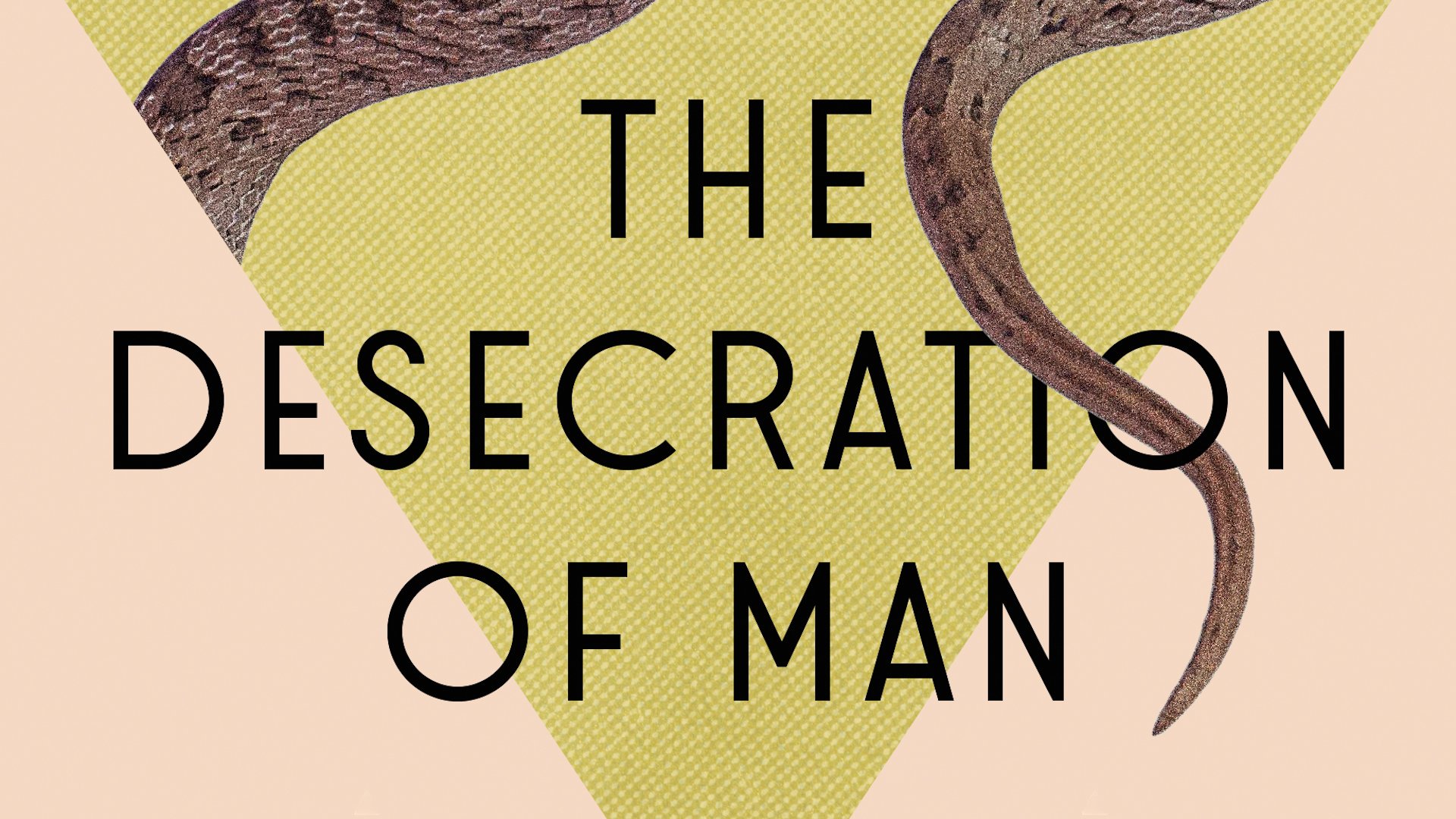
My friend Carl Trueman’s latest book, The Desecration of Man, addresses precisely this disconnection. According to Trueman, the problem we are facing is not a lack of enchantment but a destruction of meaning. To desecrate something is to treat what is sacred in a sacrilegious way — or, as Trueman puts it, to obliterate sacred boundaries and profane all that is holy. This is something enchantment cannot fully capture:
“This is why the notion of disenchantment does not go far enough in describing what has happened in modernity. Certainly, disenchantment speaks to that loss of a sense of the depth and mystery of the world that modernity brought in its wake. But there is something more going on in modern culture. The sheer delight taken by many in toppling the moral codes of the past cannot be explained simply by the loss of an enchanted world.”
There is a subtle irony in the act of desecration. Modern man seeks to transcend his boundaries, viewing them as limiting. But by transcending them, he desecrates God — and in doing so, desecrates himself. The issue of gender is one example: the feeling that we are something other than what we were born as leads to the belief that we can simply morph ourselves into something else, something that will make us “happy.” Enchantment struggles to address this adequately. Trueman helpfully reframes it: this is not merely a matter of disenchantment but a sacrilegious act of desecrating something God has made.
Modern desecration is not purely an act of disdain — it is an act of excitement. The one who desecrates enjoys it. He feels a sense of godlike power. Trueman observes that “smashing old standards of decency and kindness rooted in the Christian ethic is fun, even compulsory, in order to appear authentic.” The keyword is authentic. Our culture loves desecration — it worships it. Whether through pornography-on-demand, the lie of transgenderism, or the normalization of sexual anarchy, each of these acts seeks to desecrate the Christian ethic. I know — you’re thinking, “But those are political talking points.” So we’ve been led to believe. But no: these are Christian ethical issues.
Ideological transgression is rising on both left and right. The left seeks to deconstruct Christianity at every level of society — marriage, family, church, and more. The right, in reaction, sometimes desecrates in the opposite direction, trafficking in historical denial and the rehabilitation of figures history has rightly condemned. Desecration, it turns out, is not merely a vertical phenomenon — between man and God — but a horizontal one, between man and his neighbor.
The Insufficiency of Cultural Christianity
Cultural Christianity isn’t going to cut it — though I’m not sure it’s a net negative. There are benefits to cultural Christianity. But Trueman is onto something when he identifies its lack of staying power. Here is his critique. It is worth quoting at length:
“While the revival of interest in religion among cultural elites is welcome, I believe it will prove as ephemeral as that of the mid-twentieth century unless it grapples not simply with the perceived cultural benefits of Christianity but also with its truth claims. It may be a captivating aesthetic experience to attend a Latin Mass where the choir sings the words to the polyphonic compositions of Palestrina. The Book of Common Prayer might give a certain pleasure on a Sunday morning. The great architecture and art that Christianity inspired might enrich one’s life. But if one does not believe that the religious dogmas that are the basis of these things are true and not merely inspiring fictions, then that is not a faith that will prove durable as the wider culture exhausts itself. Indeed, it merely perpetuates one of the most distinctive and problematic aspects of modern culture: the confusion of taste for truth.”
That last line — “the confusion of taste for truth” — captures Trueman’s essential point. Enchantment without a clearly delineated ethical standard merely amounts to vibes and feelings — “I feel like there’s more to this life.” Certainly. But what is the “more”? This is where consecration comes in. Christianity is more than feeling; it is a comprehensive worldview which makes truth claims about the individual and society. “Nebulous re-enchantment,” as Trueman calls it, cannot directly confront the assault on the holy perpetuated by secular culture.
This is not to say the enchantment vibe is unhelpful — James Wood's recent First Things piece "In Defense of Cultural Christianity" makes the case that cultural Christianity has some benefits — but Trueman is right that it is not enough. Hear Wood’s conclusion here: “External conformity can restain evil, inculcate virtue, and render the gospel intelligible within a common moral world.” The greater danger than hypocrisy, notes James, is “a culture that no longer expects even public allegiance to the true, the good, and the beautiful.” I’m not sure Trueman would disagree — I certainly wouldn’t.
What Wood is writing about is clearly seen today with such figures as Richard Dawkins and Elon Musk who call themselves “cultural Christians.” They’ve rejected the Christian underlying foundation while enjoying its social benefits. Trueman warns against “the use of Christian ideas without a robust commitment to the truth of the Christian faith. If the problem of modern culture is man’s desecration, then the answer is his consecration.”
I agree. Part of my desire in my own writing is to speak to Gen Z’s hunger for meaningful and direct moral standards. They have been unmoored from the tethers of Christian ethics, and many are trying to clamber back. If we throw them vague “enchantment,” I’m not sure they will make it. Gen Z seeks authenticity and truth — part of their drive toward tradition is that the Christian faith has historically offered this. But I’m weary that if one goes to a church for feeling tradition, but rejects the ethical principles that the tradition teaches, it won’t last.
We need something more. Our culture needs it. Young people need it. Even the global body of Nicene believers needs it.
What Is Man?
We need to offer something more — beginning with the question of what it means to be human. Trueman captures something I’ve often pondered: man is the only being on earth who can ask, “What am I?” Monkeys, dogs, cats — no animal meditates on the meaning of its own existence. To answer this we must turn to the beginning of the biblical story: man as divine image bearer. God made man in his image, to bear that image before the creatures of Eden. It is fitting, perhaps, that the animals cannot self-reflect as we can.
Trueman draws on the Catholic Church’s Compendium of the Social Doctrine of the Church, which defines man as (1) an exceptional creature, (2) a person and not a thing, (3) one given God-granted abilities and responsibilities, and (4) an embodied being.
Desecration began in the garden when the serpent tempted Eve to be “like God” — the very God whose image she already bore. There is a painful irony there: tempted to become what she already was. The story after the Fall only deepens the pattern — Cain murders Abel in cold blood.
But the desecration of man is not limited to murder. It is most evident in sexual immorality and misbehavior. How a society views sex reveals its moral condition. Trueman’s notion of desecration carries with it the recognition that limits are not merely discarded but joyfully trampled. The erotic dominates modern culture, and yet it was meant to be sacred — two humans, male and female, coming together in a union that is unmatched in human intimacy. There is no greater way for two people to be known and to know than in this act, which is precisely why it is the act most prone to disgrace. Sitcoms mock it and trivialize it with jokes. But the danger of desecration is that the thing being desecrated does not lose its power. The power is instead twisted and distorted.
Abortion is another act of desecration. It destroys the human body in the womb. And there is a reason abortion proponents are proud — carrying signs touting liberation and choice. Desecration confers a counterfeit godlike status, one we were never meant to hold. Sadly, both political parties are now shifting on the issue: the left has done so for decades, and the right is increasingly abandoning its pro-life commitments. The desecration has taken hold across the spectrum.
Consecration as the Answer
If modernity has pushed desecration, then what we need is consecration — to hold as sacred the things that are. Intellectuals seeking religion are certainly moving in the right direction. But they need more than vibes.
This is where the Nicene Creed speaks to our cultural moment. Formulated in 381, it articulates objective truth about God and the destiny of humanity. We profess the ancient faith together across the world, and in doing so, we participate in an act of consecration. The Creed is, I’m convinced, the baseline necessity. From it we build out the Christian ethic — proclaiming Jesus as the God-man, we take his words, and the words of his followers, seriously. When Scripture speaks to questions of gender, marriage, and sexuality, we must listen. We cannot reason or contextualize away the reality that God is a God of order who calls us to follow him accordingly.
Trueman argues that it is the church as a worshipping community — gathered under the Creed, aligned in moral code — where consecration actually happens. This, I believe, is the key. The church is an ancient community spanning the globe, linked to an ancient faith. Its truths permeate time. We do not stand above them; they stand above us. Only then can we answer the question “What is man?” with the only sufficient answer: man is a consecrated being, made in the image of God.
Did you find this helpful?
Mere Orthodoxy publishes serious Christian intellectual thinking. Subscribe and get our best writing in your inbox every week.
I’m very grateful for the work of MO and have really appreciated the things I’ve learned and the companion that it has been for me on my spiritual journey.
Mere Orthodoxy reader
Thank you for offering thoughtful, reasonable and decent commentary. It is a boon to my sanity at this stage of my life in this cultural moment.
Mere Orthodoxy reader
Mere Orthodoxy is (for me) a counterpoint to social media, a place of depth and critical thought.
Mere Orthodoxy reader
You're in. Check your inbox.
Something went wrong. Try again.
Eddie LaRow is an acquisitions editor with Baker Books.
Topics: