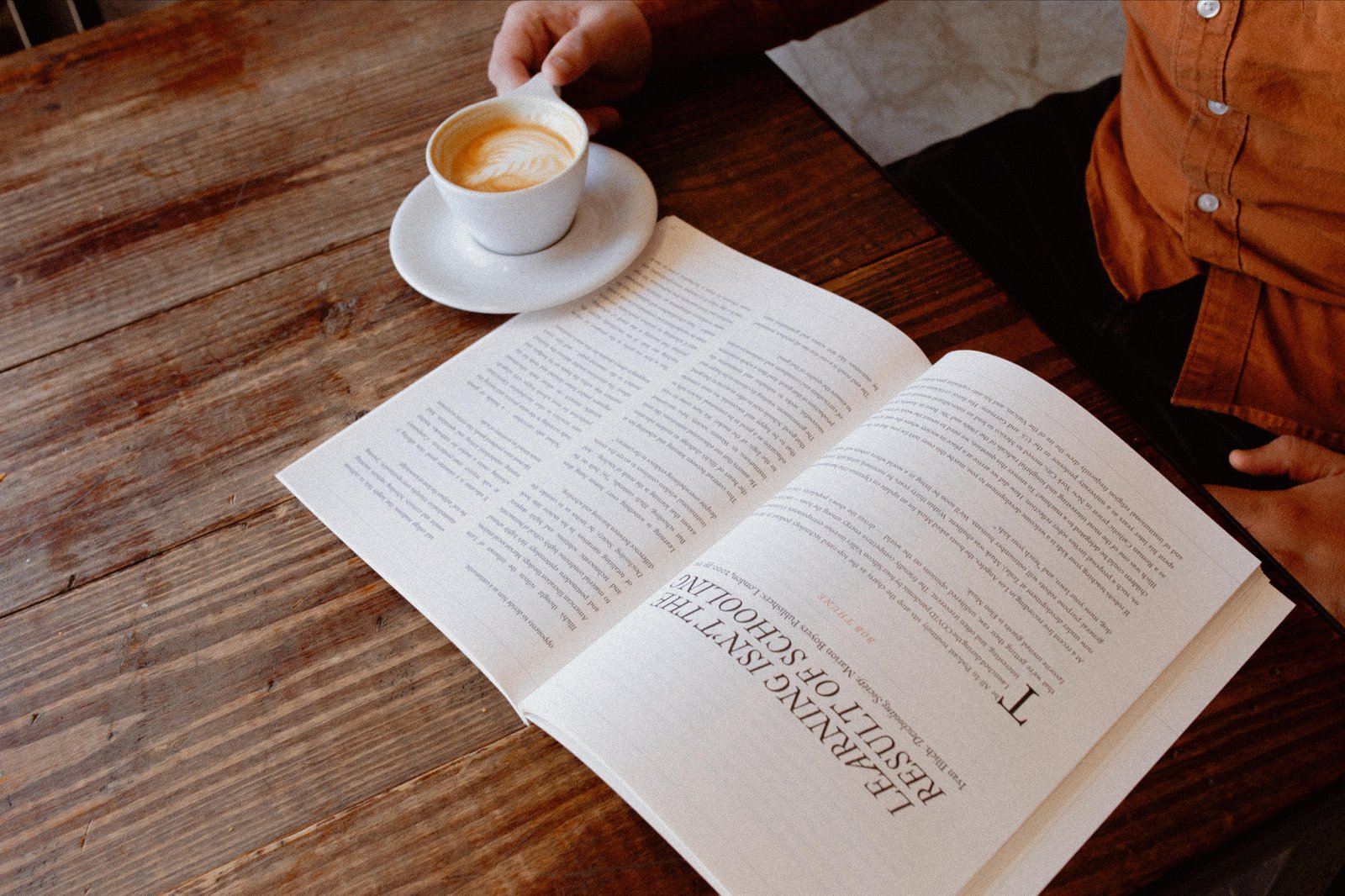


“It’s so boring.” This, apparently, is one of the main reasons Gen Z parents are not reading to their children. Only 41% of parents are reading to their children under five years old, down from 64% in 2012. While that’s the data we have and it’s specific to Gen Z, it isn’t a stretch to imagine that books on the whole have less of a place in young families than they did in the past.
Growing up with my grandparents, I can remember many nights of my grandfather reading me to sleep with a hefty children’s Bible, James Herriot’s All Creatures Great and Small memoirs, Hank the Cowdog, and many more tales. I still have the children’s Bible and James Herriot books, with the tattered copies of Herriot sitting across from me on my bookshelf as I write this. I remember my grandfather laughing out loud at Hank the Cowdog’s overzealous shenanigans on the ranch and crying during moments of joy and heartbreak from the farm stories in Harriot’s memoirs. We shared emotions together and, naturally, stories; stories that are the imagination of my childhood and stories that formed both my literal and symbolic vocabulary.
These are the stories that parents find too boring to give their children and are replacing with screens. And it reveals the deeper problem that if parents find reading simple children’s stories to their kids too boring then of course reading for themselves would seem to be too boring as well. Nevermind the positive effects of boredom for our lives and mental wellbeing, reading books is one of the primary ways we develop wisdom through submitting ourselves to time with sustained thoughts and stories and wrestling with them in our lives.
As good as podcasts and YouTube videos can be, the medium is passive. It doesn’t require us to lean into the world that books aim to construct for us the same way. Books are the best way for us to exit the dopamine-addiction economy and develop free-thinking minds that enable us to view the world through the lenses of generations of wisdom we have received as an inheritance. Instead of getting second-hand knowledge from passive mediums that require nothing from us but a click, we should pursue first-hand wisdom from the active engagement with ideas and stories. It should be remarkable to us that it costs less than $10 to read Plato.
The question for many parents who see this issue and want to correct it in their families—and I have dads in particular in mind here—might not be “Is reading good?” but more practical. “What should I read?” “What is my reading for?” “How can I actually make time to read?” These are the questions someone would ask who might not yet consider themselves a “Reader” but are looking to opt-out more and more from the algorithmic slop-world they find themselves sucked into and begin reclaiming their life and family. It’s for this reason that I believe fathers, and young fathers in particular, should think of themselves in a new light: as a father-scholar.
The Wisdom of The Father
I’m often struck by the fact that the book of Proverbs was written from a father to his son about his and the mother’s parental instruction. “Listen, my son, to your father’s instruction, and don’t reject your mother’s teaching, for they will be a garland of favor on your head and pendants around your neck” (Proverbs 1:8-9). The parent’s instruction is raising his children in the fear of the Lord which is “the beginning of wisdom” (1:7). The Lord who is, remember, Our Father. The father admonishes his son:
“Wisdom is supreme—so get wisdom.
And whatever else you get, get understanding.
Cherish her, and she will exalt you;
if you embrace her, she will honor you.
She will place a garland of favor on your head;
she will give you a crown of beauty.”
(Proverbs 4:7-9)
The father tells his son to do whatever it takes to get wisdom, and he will show his son how to do it through his instruction, which is guiding him in the fear of the Lord. Proverbs then goes on to cover nearly every aspect of life: work, marriage, parenting, relationships, authority, money, and more. This wisdom is not an academic exercise, but a wisdom that is in the details of life.
What I wonder to myself, sometimes, is how many fathers could write a book of Proverbs of their hard-earned wisdom to their children? Are the habits of learning, reflection, and articulation cultivated and honed in order to pass their wisdom down to their children, who will in turn pass it on to their children, and so on? I have to assume that if 41% of young parents find reading bedtime stories to their kids too boring, then cultivating the life of the mind for the good of the family and community must certainly not be a normal practice.
Teacher and Scholar In One
The South African preacher, Andrew Murray, has a devotion in his 1887 book The Children for Christ called Parental Self-Culture. In it, he reiterates one of his main points throughout the book that children learn far more from their parent’s example than their words. Which means that the most important part of parenting is not any single tactic or conversation, but the parent’s character.
In Parental Self-Culture, Murray stresses that whatever we desire to teach our children, be it a habit or a character trait or a practical skill or any other form of knowledge, we must first teach it to ourselves. We have to develop the habits, characteristics, skills, and knowledge that we want to pass on to our children.
You might say that one of the most important tasks of parenting is self-parenting, and that includes acquiring the knowledge for ourselves that we wish our children to have before they leave our home for adulthood. As Murray writes, “I can effectually teach my children only what I really teach myself, and that I can only expect the truth that influences my own life really to influence theirs.”
Our influence in our children’s lives begins with the influences in our own. So to this, Murray says, “The first and most needful thing for being successful teachers of our children: teaching ourselves. Yes, parents, teach yourselves. If we are to train our children wisely, we must go through a new course of training ourselves. We have to put ourselves to school again, and to be teachers and scholars in one.”
That last phrase stuck with me: teachers and scholars in one. In order to wisely train our children in the wisdom that begins in the fear of the Lord, we must be both teachers to our children and scholars ourselves. Which is why I believe one of the great needs of our time is for fathers to see themselves as father-scholars; fathers who make it a habit of their life to gain wisdom in both knowledge and skills and pass it on to their children.
What should we, as parents, be studying? Does every dad need a degree (or another one)? Far from it. Being a father-scholar has nothing to do with academia. It’s not about appearing smart or reading esoteric philosophical tomes (unless you would like to). It’s for every father. According to Murray we should, “Take time to study God’s word. Study man’s moral nature, with its wonderful capacities, as the sacred trust committed to your care. Teach yourself to cultivate that nature to its highest fitness for God’s service: it will be the best preparation for teaching your children aright.” All of our study begins with God’s word. We should recommit ourselves to the practice of daily scripture and prayer and have a plan for doing so. Wisdom, as we have said, begins with the fear of the Lord, therefore all wisdom begins with scripture itself and all other learning is done in light of God’s wisdom in scripture.
From there, we have man’s moral nature and the capacities God has given us to steward and cultivate. To make this practical, one of my favorite ways of thinking about our capacities is how Reagan Rose from Redeeming Productivity talks about the Seven Domains of Life.
Those seven domains are:
- Spiritual
- Mental
- Physical
- Relational
- Recreational
- Vocational
- Economical
These seven domains are the capacities God has given us to steward. And in each one, we have a moral nature for us to cultivate “to its highest fitness for God’s service.”
While I believe learning concrete skills with your hands is absolutely part of the father-scholar vision, I want to focus on the life of the mind. Setting aside the physical domain for now (only because it’s difficult, with some exceptions, to think of the physical domain in terms of reading, and it might be better here to commit to learning skills), someone could potentially read one well-chosen, quality book—preferably a classic when possible—in each of these six categories each year and be more well read than the vast majority of other people.
That’s only six books per year. One book every other month. Along with daily scripture reading, six books a year is an achievable goal, especially if you factor in audiobooks for those who find them helpful. Six books a year also makes room for bigger or more difficult books. It’s okay if a book takes two or three months to read; the time for that is baked in and could be offset by smaller books.
I believe the most important keystone habit to form in order to do this is to rise before your responsibilities. That means, whenever possible, being up before the kids, before work, before anything or anyone else needs you, and giving time to the Lord and your own development. There are situations where this isn’t possible, and so it might need to be the evening.
But for most people, the morning will be best, even if it’s difficult to set that habit at first. Like the French Dominican, A.G. Sertillanges, wrote in The Intellectual Life,
The morning hours thus bedewed with prayer, freshened and vivified by the breezes of the spirit, cannot fail to be fruitful; you will begin them with faith; you will go through them with courage; the whole day will be spent in the radiance of the early light; evening will fall before the brightness is exhausted, as the year ends leaving some seed in the barns for the year to come.
This may not work for everyone, of course, but the point is that developing a consistent routine is one of the best ways to train yourself for this commitment, so you’ll want to discover what that is for you.
Doing this surely involves some sort of asceticism, even if only minimally. It might look like severely limiting your consumption of short-form video, TV, and movies. It might look like adjusting your bedtime and your nights out. It might mean not doing other things you could be doing so that you can make time for reading. That doesn’t mean you can’t enjoy things other than reading or even that some of those things can’t involve screens. There’s time and place for entertainment and leisure, but it does mean that with many things competing for your attention, you must give some level of priority to reading, and that involves limiting (or even eliminating completely) other forms of media and entertainment.
The Father-Scholar, ideally, is surrounded by other father-scholars who are cultivating the same virtues in their life and family. The best work comes when fathers are able to gather together and discuss what they’re learning and how they’re being formed, and to workshop ways to practically integrate what they’re learning into their lives, as well as developing appropriate community action when necessary. One example of how this could work would be a quarterly get together where men come together to discuss a book they’ve committed to reading over the past quarter. Basically, a modified book club, but one specifically aimed at the cultivation of the intellectual life for the formation of the whole person.
I imagine there might be dads who are where I described above, wanting to cultivate this sort of life but feel intimidated by all of the books that they could read and simply don’t know where to start. I’d like to suggest a starting point by making some recommendations in each of the six domains of life.
Spiritual
The Spiritual category are books specifically for the benefit of your faith.
- Growing in Christ — J.I. Packer
- Confessions — Augustine
Mental
The Mental category are books that are for developing your thinking in a particular area. This can be a wide range of things. You can even pursue topical interests in this category.
- The Abolition of Man — C.S. Lewis
- The Nicomachean Ethics — Aristotle
Relational
The Relational category is to help you grow in the various relationships in your life: spouse, parent, friend, leader, etc.
- How To Know A Person — David Brooks
- The Gift of Being Yourself — David Benner
Vocational
The Vocational category is to help you in your work. Some books might be highly technical and specialized, whereas others are more broadly about your life’s work.
- Every Good Endeavor — Tim Keller
- The 7 Habits of Highly Effective People — Stephen Covey
Recreational
The Recreational category is designed for rest and delight. Put your novels, poetry, or narrative history here. You can (and maybe should!) prioritize classic novels, but you don’t have to.
- The Lord of the Rings — J. R. R. Tolkien
- Hannah Coulter — Wendell Berry
Economical
The Economical category is to help you be a good steward of your resources. Both personal finance and macroeconomics can fall in this category.
- The Psychology of Money — Morgan Housel
- Broken Money — Lynn Alden
Conclusion
This is meant to be an entry point. There’s no need to artificially limit yourself to six books per year. But it’s important to see just how doable this kind of life actually is. Six books a year in these areas would be a major success for the vast majority of people. There is much, much more that could be said about the father-scholar, but I believe it all starts with the same invitation St. Augustine heard in his garden, tolle, lege, take up and read.
None of this is so that we may be perceived as smart, but so that we can cultivate wisdom. Even wisdom is not an end to itself, but is in service of love. By reading both to our children and for our children, we plant seeds of love that have the potential to outlast us and produce fruit that goes beyond the infinite scroll of a shallow life. By making reading a cornerstone of our life, we aim to become loving fathers who raise loving children through our example.
As Murray exhorts us again, “In the daily life of the family the parents must seek to prove that love is the law of their life.” We want our homes to be homes of love for our family. It starts when we submit ourselves to God’s wisdom in every aspect of our life and allow that wisdom to be the tangible ways we love our families. We will fail and fall off our commitment to the life of the mind and have to start again over and over. We are creatures. But may it never be said of a father that he didn’t pursue a life of love and wisdom because he was too bored. We read for ourselves. And we raise readers by reading to our children. Because in reading there is wisdom and in wisdom there is love.
The Weekly Digest
Premier Thought Every Thursday.
All of our recent essays and podcasts, delivered to you. Free.
Free. Delivered Thursday mornings.