

Nearly everyone agrees that American Protestantism is in crisis. Once comprising a supermajority in the country that lasted for centuries, Protestants now count less than 40% of Americans as adherents. Many exiting Protestants are part of the nearly 30% of Americans—especially younger ones—who now identify with no religion (the “nones”). Explanations of declining American Protestant fortunes span a broad range in our contemporary moment, from a renewed version of the classic secularization thesis that religion goes private in scientific and pluralistic societies, to the increasing religious pluralism through immigration and the growth of non-Protestant religious communities, to a Charles Taylor-esque focus on the immanent frame and buffered selves, to sociologist Christian Smith’s most recent book on the obsolescence of religion starting essentially with the Millennial generation.
Of course, Protestants aren’t going anywhere in an absolute sense. Both “professional Protestants” (pastors and other religious workers who are Protestant) and Protestant culture remain fixtures of American society. Protestantism remains, at least in a historical sense, something unavoidable for understanding past and present American history. Molly Worthen recently described this inheritance as an “exaggerated, messy version of the Reformation” that has indelibly shaped American culture, comprising “a saga of supercharged individualism and meaning-making that is unique to the United States.” To the extent, in other words, that ideals like individualism and freedom of conscience are core “American values,” we need to understand their inspiration and persistence as in significant part due to the continuing influence of Protestantism. This inheritance isn’t disappearing. But it is changing its shape and influence amid shifts in demographics, denominations, and beliefs.
Yet the decline of Protestantism is real, and not just in the demographic trends. In key sectors of society—corporate culture, higher education, the arts—Protestant influence has waned. Handwringing about this trend has launched culture wars, filled hundreds of books, articles, and podcasts, and likely thousands of sermons. The fear has been a staple of American culture since at least the Civil War, but that does not diminish the real decline in recent decades. In this sense, the United States is a country with increasingly smaller numbers of Protestants demographically, and fewer Protestants shaping American society writ large, even as the nation itself remains quite culturally Protestant.
This state of affairs doesn’t comport to the traditional understanding of secularization (the absence or privatization of religion). It also doesn’t align with the common explanation that blames, alongside the philosophical and theological rationales, the longstanding culture war between liberal (or mainline) Protestants and evangelicals for self- or mutual destruction: one or both sides became too politicized, too polarized, too captive to their respective cultural camps. In this view, liberal churches became indistinguishable from social clubs; evangelical churches became indistinguishable from political rallies. American Protestantism, this version goes, destroyed itself through internecine warfare.
This explanation makes some sense and has been endorsed by a wide range of commentators, as the links above to quite popular books illustrate. But there is another angle to this same quandary: what if neither side destroyed itself in the culture wars, but, in the struggle, each side actually won a significant part (and only a part) of its agenda? In fact, what if each side won in such a way that the arguments they made about the essence of Christian belief were so successful that they took on a life of their own, becoming entirely unloosed from Christianity but woven into the fabric of contemporary American religion and culture?
Examining the last century of the struggle between liberal Protestants and evangelicals reveals that each achieved remarkable cultural victories in the 20th century. These victories were not just on the cultural attitudes about the rightness and legality, or wrongness and illegality of certain practices (abortion or same-sex marriage), but related to the “deep structures” of religious culture—what James Davison Hunter defines as “the tacit assumptions and latent frameworks of meaning embedded within the structures of social life.” These deep structures are not the things we tend to argue about, but rather the things we take for granted because they seem so commonsensical or, if rejected, immediately place someone into outsider status.
Liberal Protestants achieved their “deep culture” victory by promulgating, over the course of the twentieth century, their “liberal value set”—in the words of sociologist Jay Demerath: “individualism, freedom, pluralism, tolerance, democracy, and intellectual inquiry.” Derived from modernist theology, democratic ethics, and scientific reasoning, this set of values produced Christians who downgraded adherence to orthodoxy as a marker of Christian identity and instead extolled the ideals of pluralism and tolerance far beyond liberal Protestant circles, primarily through academia, government, and media that have been hospitable to liberal Protestantism and shape so much of the culture. The values became so ubiquitous that liberal Protestants were left with little to offer. And in a dark turn for their own cause, progressive promoters of this “liberal value set” had to contend with those same values being deployed against them in the name of expanding equality and diversity. Many non-liberal Protestants have attacked a policy like affirmative action or the liberal culture of modern university campuses using the very values that liberal Protestants and others relied on to promote them in the first place.
On the evangelical side, the resounding cultural victory was to make it virtually uncontested in American culture that a “personal relationship with God” and subjective spiritual experience were the dominant paradigms of American religiosity. As Smith writes, by the twenty-first century, evangelicals helped establish a much broader American assumption “that subjective individual experience is the litmus test of authentic faith” no matter what religion (or no religion) an American ascribed to. Yet this victory put evangelicals in a bind. It did not extend to the broader context within which evangelicals endorsed a personal relationship with God. Evangelicals never intended to convey that a personal relationship with God should be pursued apart from community and orthodox theology; however, by making that personal connection the center of spiritual life, they inadvertently did.
Like the “monkey’s paw” parable of being careful what you wish for, both sides of American Protestantism created zombified forms of what they wanted, to a damaging effect on each of their causes and the overall health of American Protestantism. Combined, their victories contributed to a unique American version of “cultural Christianity” whose religious identity persists even as fewer people personally practice the faith. Both Liberal Protestant and evangelical churches lost their distinctive message, or—in attempts to remain relevant—doubled down on ideas that further diluted their distinctiveness. The further irony is that the growth of the “nones” and the “spiritual but not religious” evidence millions of Americans who hold both the primacy of subjective individual experience and the values of inclusivity and diversity. Once a “personal relationship with God” became the measure of authentic faith, institutional belonging, doctrinal accountability, and communal practice became optional—even suspect—for swaths of American Christians. Similarly, once liberal Protestant values became synonymous with “American values,” the distinctive contributions of mainline churches faded to the point of marginalization. The current religious landscape is, then, the product of the dual victories of liberal Protestants and evangelicals and a story as much about pyrrhic victories and unintended triumphs as gradual decline and secularization.
Liberal Protestant Victory: The Liberal Value Set
The divide of American Protestantism into “two parties” is a recent development, historically speaking. It wasn’t always the case that one party advocated for the salvation of souls over against social engagement, and another party prioritized the improvement of the social order over souls. Through much of the nineteenth century, the two coexisted—never evenly or entirely, but also not clearly divided into opposing camps. The ties began to fray in light of the Civil War and Reconstruction, biblical higher criticism, Darwinism, industrialization, Jim Crow, and many other forces reshaping American society and religion. The two nascent groupings (not yet parties) of white Protestantism continued to work within the same denominations, mission fields, and seminaries. A great sorting occurred, albeit slowly, marked by moments of crisis. These included the death of the great unifying figure Dwight L. Moody in 1899; the creation, in the new Federal Council of Churches, of a Commission on Evangelism to balance its Commission on the Church and Social Service; the coining in 1920 of the label “fundamentalist” by Curtis Lee Laws to “do royal battle for the fundamentals” in the Northern Baptist denomination in 1920.
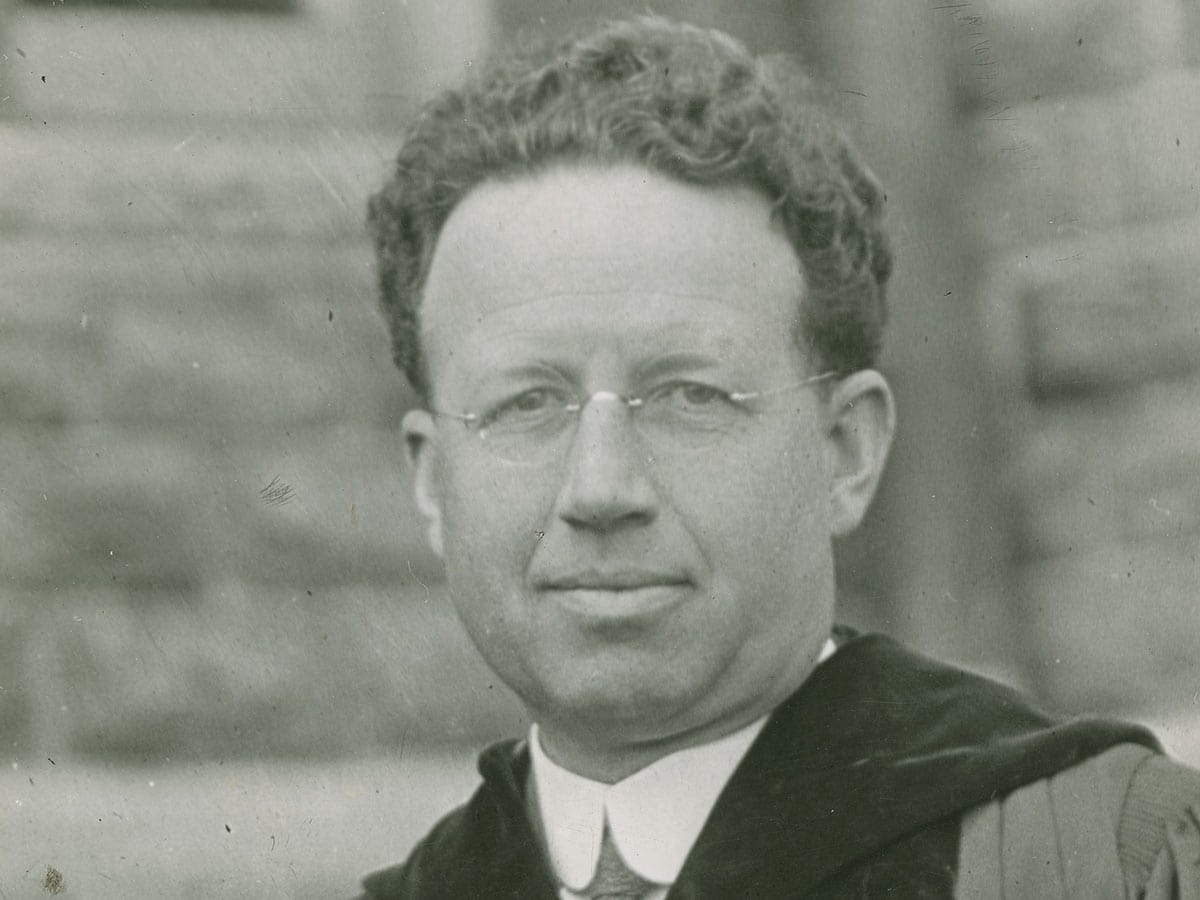
One tipping point that signaled a permanent break—and that charted the line between which liberal Protestants and evangelicals would mark their parties—happened in 1922. A war of sermons and pamphlets was initiated by the most well-known liberal Protestant minister in the country, Harry Emerson Fosdick, pastor of First Presbyterian Church in Manhattan's West Village. Fosdick, a Baptist preaching in a Presbyterian pulpit, was the embodiment of the ecumenical, liberal Protestant leadership in the country. His sermon on May 19, 1922, “Shall the Fundamentalists Win?” (quotes below taken from this text), has often been interpreted as an attack on fundamentalist beliefs—the virgin birth, inerrancy of scripture, and the premillennial second coming. It was an attack on these beliefs, but that wasn’t Fosdick’s primary grievance. He treated these doctrinal disputes as examples of the “sin” of intolerance, which had come to define fundamentalism in his eyes. Liberals, Fosdick explained, were genuinely trying to bridge Christian faith and modern society. “The Fundamentalists,” he concluded, could not brook this attempt and “are out on a campaign to shut against [liberals] the doors of the Christian fellowship. Shall they be allowed to succeed?”
Fosdick sought to refute the fundamentalist assertion that certain doctrinal beliefs were essential to Christian identity. “Has anybody a right to deny the Christian name to those who differ with him on such points and to shut against them the doors of the Christian fellowship?” he asked, reaffirming the metaphor of a “door” that was to remain open to everyone based on the ideal of Christ-like hospitality. He concluded that above all, “the Fundamentalist program is essentially illiberal and intolerant.” The charge of “intolerant” or “intolerance” appeared more than ten times in his sermon. Even if the fundamentalists were right on the doctrine, Fosdick concluded, “cantankerousness is worse than heterodoxy." The liberal value set was, for Fosdick, at the core of what it meant to be a Christian, and fundamentalists were failing the test.
The fundamentalists exhibited intolerant qualities that were loathsome on their own, but particularly so, in Fosdick’s estimation, because debating the finer points of theology to quench the intolerance of fundamentalists sapped churches of the real work of Christian compassion and humanitarianism. “It is almost unforgivable that men should tithe mint, anise, and cummin, and quarrel over them,” he complained, likening doctrinal questions to ultimately inconsequential luxuries, “when the world is perishing for the lack of the weightier matters of the law, justice, mercy, and faith.” Referencing the Armenian genocide then taking place in Asia Minor, Fosdick declared that “in the presence of colossal problems…the Fundamentalists propose to drive out from the Christian churches all the consecrated souls who do not agree with their theory of inspiration. What immeasurable folly!”
Fosdick ended by sacralizing what Demerath would term the liberal value set: “God keep us always so and ever-increasing areas of the Christian fellowship: intellectually hospitable, open-minded, liberty-loving, fair, tolerant.” His own platform in New York City was significant enough to propagate these beliefs far and wide. Still, the influence of liberal Protestant intolerance for illiberal and intolerant attitudes became the bedrock of much of American elite culture—fueling liberal Protestant clerical support for civil rights, feminism, and gay rights, and opposition to the Vietnam War and nuclear weapons. Later figures like Wilfred Cantwell Smith, professor at McGill University and Harvard Divinity School through the 1980s, captured the larger frame when he declared humanity was entering an “age of minorities” where Western white people in particular “seem almost incapable of adjusting themselves to a new world.” Liberal Protestants understood themselves as bridging the gap between the old and new, the white and non-white, with the building blocks of liberal values. They were joined, and in many cases inspired, by religious minorities—liberal Catholics, liberal Jews, Mormons, and others—to create a broad coalition promoting the “liberal value set” as the essence of American values.
Although often operating in elite circles, liberal Protestants undertook, with their allies, a long march through the institutions of American culture, ultimately shaping that culture in profound ways—from churches to faculty lounges to corporate boardrooms. The historian David Hollinger hails the Young Men’s Christian Association as the paradigm of success on this front: “an organization that began in the nineteenth century as fervently evangelical and then in the twentieth century became increasingly ecumenical and egalitarian has, in the twenty-first century, proclaimed itself to be virtually secular and in the name of diversity.” No promoters of the YMCA in the early 20th century did so with the anticipation that tolerance and pluralism would become so ubiquitous in American culture that organizations promoting those values on religious grounds would become redundant. Indeed, embracing the liberal value set was key to the YMCA's success, according to a 1963 study by sociologist Mayer N. Zald. The organization would have been cut "off from the mainstream of American life," Zald wrote, if it had stuck to its "narrowly evangelistic goals." Today, after the YMCA has rebranded to just “the Y,” it has not so much been cut off from American life as become inconspicuous in it.
Like the Y, the footprint of the seven “mainline” denominations has seen better days, even as their championing of inclusion and diversity is received positively by most Americans on a range of issues, from rejecting racial and gender discrimination to embracing ecumenism and interfaith cooperation (taking very different forms across the political spectrum) to the leftward drift on economics that a majority of Americans now hold. Even so, those denominations have shrunk so much in terms of membership that they barely outnumber the Southern Baptist Convention (which has itself declined and ceded momentum to non-denominational and charismatic forms of Christianity). If a church’s message is indistinguishable from NPR or the New York Times, what distinctive purpose does it serve?
Evangelical Victory: Personal Belief
Evangelicals can also trace their deep cultural victory to 1922. Of the many rejoinders to Fosdick’s broadside, the one that gained the most traction was written by Clarence E. Macartney, pastor of Philadelphia’s Arch Street Presbyterian Church. A graduate of the University of Wisconsin and Princeton Seminary, Macartney came from the same social stratum as Fosdick: white, educated, urban, Protestant. Macartney was friends with the same Protestant elite as Fosdick. This made the “sorrow and pain” of Fosdick’s words feel all the worse for Macartney.
Similar to Fosdick, Macartney’s point of contention was different than the square “fundamentals.” Though the bulk of “Shall Unbelief Win?” (quotes below taken from this text), published later in the same year as Fosdick’s missive, took up a defense of the Virgin Birth and divine inspiration of the Bible, Macartney concluded that his “chief complaint against the rationalist and modernist” was not over these creedal statements. Instead, it was over Fosdick’s abandonment of the doctrine of atonement: the “rejection of the one great truth of Christianity, that through His death we have remission of our sins and are justified with God.” The individual, personal stakes of the atonement in fundamentalist and evangelical circles are obscured in the collective language in Macartney’s quote. Yet Macartney’s favored Westminster Confession emphasizes it is the “true believer” and “each one by himself” who is the recipient of Christ’s atoning work, and whose responsibility it is to “walk in newness of life.”
Macartney was explicit that he did not want to be classified with the fundamentalists. “The name has come to be applied to a group,” he complained, “who indeed hold to conservative views, but whose chief emphasis is upon the premillennial reign of Christ on this earth.” This doctrine was a distraction to a traditional Calvinist like Macartney, who was not a premillennialist. Yet by the very act of responding to Fosdick, Macartney had sealed his fate. Not only would he be grouped with fundamentalists, but the many conservative denominational Christians that were like him would find themselves on the same side of the watershed as fundamentalists and evangelicals with premillennialists, revivalists, tongues-speakers, and faith healers over the coming decades.
One reason among many is that the fundamentalist camp was united by an emphasis on the classic Protestant doctrine of the atonement and its role in providing redemption for each individual, which could be accepted on an individual basis, relying on a personal relationship between each person and God. In the following decades, the centrality was hardly expressed so precisely as in Macartney’s exacting Calvinism. But it was the lifeblood of fundamentalism and one of the chief continuities between the interwar fundamentalism of the likes of Macartney and Carl McIntire, and the postwar evangelicalism of Carl F.H. Henry and Billy Graham.
It was a bridge between generations, between theologians and revivalists, between differing sects and traditions, and created a wide dispersion through its popularization and personalization. We can see it in the rapid growth of the “Sinner’s Prayer” as the near-universal mode of prompting conversions, or “decisions for Christ.” The term “Sinner’s Prayer” has a long history of alternative usage. From Shakespeare to the country musician Jimmie Davis, “sinner’s prayer” meant something like the ineffective petitions to God from sinners. However, under the influence of Dwight Moody, and later perfected by Billy Graham in the 1940s and beyond, the phrase came to mean something entirely different: the initiation of a personal relationship with Jesus. Graham’s widely circulated version of the prayer went: “Dear Lord Jesus, I know that I am sinful and I need Your forgiveness. I believe that You died to pay the penalty for my sin. I want to turn from my sin nature and follow You instead. I invite you to come into my heart and life. In Jesus’ Name, Amen.”
Witnessing conversions, historian Joel Carpenter explains, became “fundamentalists’ most powerful experiences of the holy.” The soul saved from hell and brought into the presence of God through grace did for fundamentalists what signs and wonders accomplished for Pentecostals and what the Eucharist performed for Catholics. The “altar call” became the location of the climactic moment not only of revival sermons but of fundamentalist church services. Words, sounds, rhythm, and mood worked together. “This ritual,” Carpenter concludes, “performed with the musicians softly playing, the congregation singing or praying, and the leader speaking in an almost liturgical cadence, had become the high and holy moment of the fundamentalist church service, the time when miracles happened.”
The Sinner’s Prayer and the altar call are perhaps the most ubiquitous examples of the evangelical priority of a “personal relationship with God,” but they aren’t the only ones. Another was an innovation of the mid-20th century by Bill Bright, founder of Campus Crusade for Christ (now Cru), who created the “Four Spiritual Laws.” The first—“God loves you and has a wonderful plan for your life”—has probably been presented to more college-age Americans than any other religious phrase in the last 80 years.
Yet it is only the first law. The Four Spiritual Laws as a whole are, in fact, a perfect microcosm of the partial yet significant victory by evangelicals. Severed from the other three, the first law can be the basis for a thousand definitions of “God,” “love,” and “wonderful plan.” Its refrain is agile enough that, on its own, it could be favorably compared or synthesized with Oprah (“I live inside God’s dream for me”) or the lyrics of Lady Gaga (“I'm beautiful in my way/'Cause God makes no mistakes”).
Yet combined with any of the other three laws, the evangelical specificity increases dramatically and the popular cultural utility decreases in equal measure: “2. Man is sinful and separated from God; 3. Jesus Christ is God’s only provision for sin; 4. We must individually receive Jesus Christ as Savior and Lord.” While reaffirming the centrality of a personal relationship with God as the basis for salvation and spiritual living, the laws, taken as a whole, direct the first spiritual law in a direction that, upon later examination, is far from the tastes of Oprah and pop music. Yet for every time an evangelical’s “full presentation of the gospel” reinforced the need for a personal relationship with God, how many more times was the message shortened or muddled (from the perspective of the “full presentation”) to be about subjective religious experience and personal authenticity as the basis for true communion with the divine (however that might be conceived)?
Conclusion
Protestants were not the only active agents promoting tolerance and a personal relationship with God in the 20th century. Still, they were the most influential and well-positioned to extend these themes across American society. Before the breakup as a result of the fundamentalist-modernist controversy, America was de facto run, in the memorable phrase of historian Martin E. Marty, by a Protestant “righteous empire.” Yet with its crack-up, Protestants on both sides pled their case with extra fervency, perceiving each other as competition for assuming the mantle of the American conscience and the soul of the American church and nation.
Ironically, both sides understood some of the negative tendencies of the other. Writing of the modernist camp that Fosdick claimed to speak for in 1922, Macartney predicted that “the movement is slowly secularizing the Church, and if permitted to go unchecked and unchallenged, will ere long produce in our churches a new kind of Christianity, a Christianity of opinions and principles and good purposes, but a Christianity without worship, without God, and without Jesus Christ.” Hollinger’s conclusion nearly a century later is a kinder way of stating the same insight, that liberal Protestantism created “a cascade of liberalizing consequences extending well beyond the diminishing domain of the mainstream churches, running through the lives and careers of countless post-Protestant Americans distributed across a wide expanse of secular space.”
Fosdick, for his part, admitted that there were some doctrinal grey areas that fundamentalists had a right to probe within the bounds of liberal values, but predicted in 1922 that in the long run their zeal for boundary policing would become all-consuming. “There is one thing I am sure of: courtesy and kindliness and tolerance and humility and fairness are right. Opinions may be mistaken; love never is.” As the recent survey data of Christian Smith reveals, Millennial and Gen Z Americans overwhelmingly are “turned off to religion” by their perception of the Christian right and have attributed to evangelicals labels like “fanatical” and, indeed, “fundamentalist.” Whether or not it comports with reality, Fosdick’s characterization has led many Americans to reject evangelicalism, even while internalizing the need for a personal commitment to God.
The pyrrhic victories of the two parties are, of course, an oversimplification of what has happened in the last century. Religious pluralization—by immigration, the growth of non-Protestant religious communities, and the influences of technology, political polarization, and secularization—also deserve mention. But contemplating the religious-turned-cultural values can help us see ourselves today not in a death spiral toward secularism, but as continuing to be profoundly shaped by Protestant categories and concerns, albeit when appropriated selectively, often producing quite heterodox outcomes. In ways they hardly register themselves, the emerging plurality of “nones” and the “spiritual but not religious” aren’t rejecting their religious heritage but perpetuating it in unexpected ways. Recent speculation of a Gen Z “religious revival” illustrates that the story isn’t over–this revival, if it is real, may remix inherited cultural Christianity or may reject it. In either case, Gen Z Americans who have been raised in Protestant households are on the bleeding edge of the tens of millions of ex-Protestants who remain, in certain ways, all too Protestant, which seems to me to be a tragedy produced by a particular past, but also points to the seeds of a different future.
The Weekly Digest
Premier Thought Every Thursday.
All of our recent essays and podcasts, delivered to you. Free.
Free. Delivered Thursday mornings.

